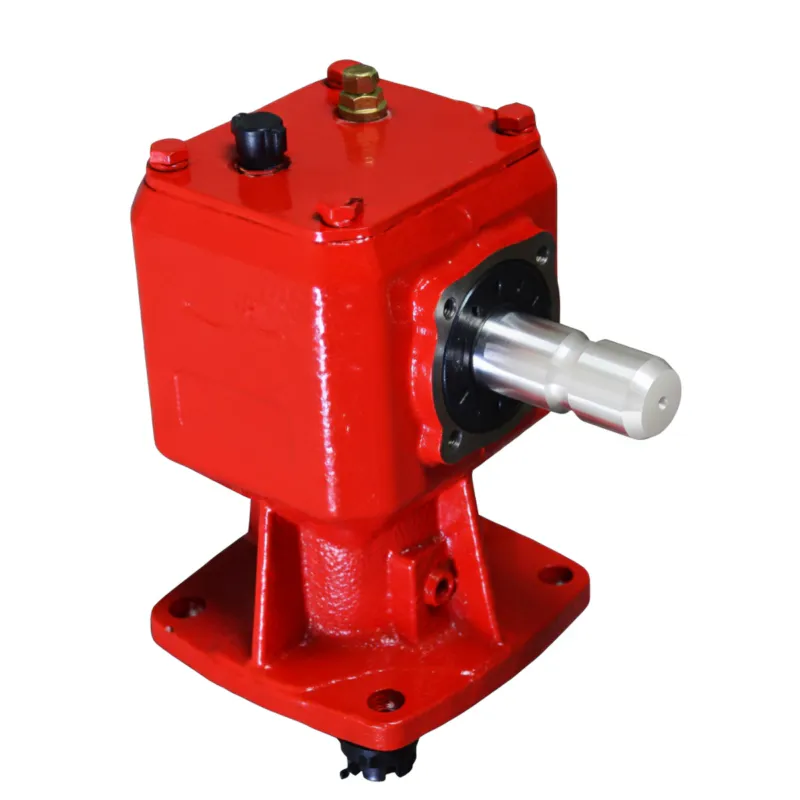
EP-Rotary Mower Gearbox-Replacement of Comer Code TF-285B
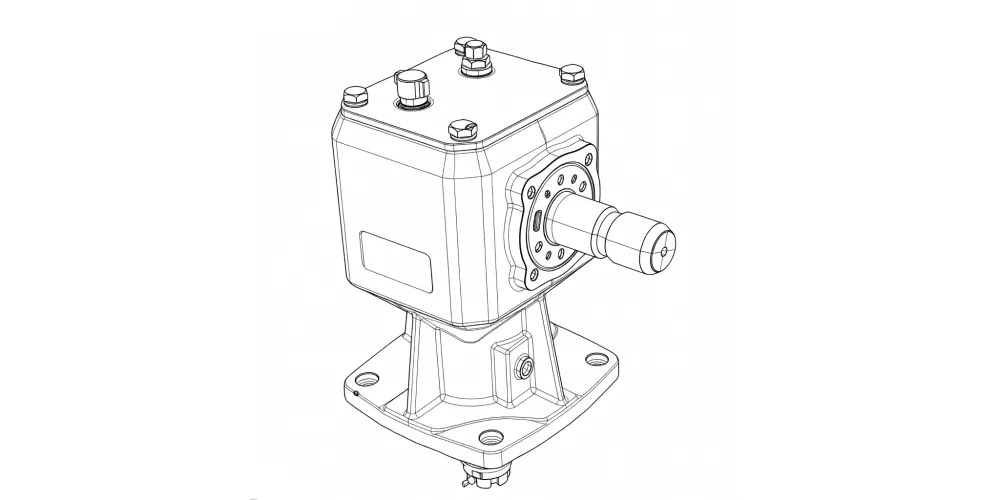
The EP-Rotary Mower Gearbox is a precision-engineered right-angle bevel gear drive rated at 91.9 kW (approximately 123 HP), designed as a direct bolt-on replacement for the Comer Code TF-285B — one of the most widely referenced specifications in the commercial agricultural mowing industry. With a 1:1.86 gear ratio and 709 Nm of rated output torque, it delivers the power capacity required for demanding field cutting tasks including dense pasture, brush, and crop residue.
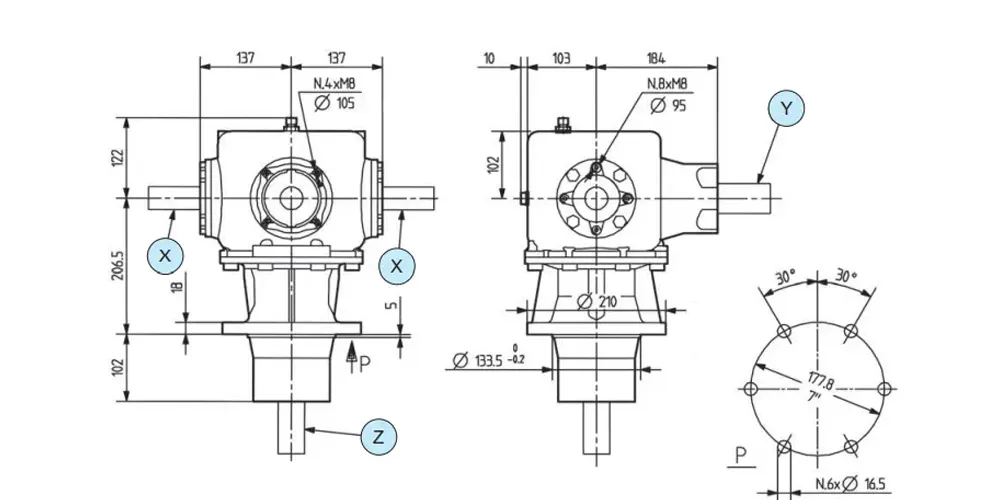
The gearbox accepts a 1,000 rpm PTO input via a 1‑3/4″ Z20 splined input shaft (Y‑type), and drives the blade carrier through a 1‑3/8″ Z21 splined output shaft (X‑type).
EP Series · Direct TF-285B Replacement
Rotary Mower Gearbox
Heavy-duty agricultural power transmission unit — 91.9 kW rated input, 1:1.86 gear ratio, 709 Nm output torque. Built as a field-proven replacement for the Comer Code TF-285B specification, serving farms, contractors, and implement dealers across the United States, Colombia, Australia, and global export markets.
1. Technical Specifications
The table below presents the complete engineering parameter set for the EP Rotary Mower Gearbox (TF-285B series). Procurement engineers and equipment compatibility teams can use these values to verify fitment with existing tractor and rotary cutter implement configurations before placing an order.
| i | N1[rpm] | P1[kW] | M2[Nm] | Shaft Type | Input | ||
| X | Y | Z | |||||
| 1.86 | 1000 | 91.9 | 709 | 1'' 3/8 Z21 | 1'' 3/4 Z20 | Hub connection | Y |
2. Five Key Technical Facts at a Glance
- 91.9 kW (≈123 HP) continuous rated input power — appropriate for row-crop and utility tractors in the 80‑130 HP operating class across all major PTO‑driven rotary cutter configurations.
- 1:1.86 gear ratio producing 709 Nm output torque at 1,000 rpm PTO input — optimized for clean cutting of dense tropical grass, standing brush, and fibrous crop stalks in a single pass.
- Direct TF-285B drop-in replacement — identical bolt pattern, shaft dimensions, and housing geometry to the original Comer unit. No adapter plates, no machining, no modification to the implement deck required.
- High-speed ball bearing units at both shaft exits — L10 bearing life exceeds 5,000 operating hours under rated load conditions per ISO 281 bearing life calculation methodology.
- Heat-treated 20CrMnTi alloy steel gears in a GGG‑50 ductile iron housing — gear surface hardness 58–62 HRC, meeting ISO 6336 material grade requirements for agricultural power transmission gearboxes at this power class.
3. About our EP-Rotary Mower Gearbox
The EP Rotary Mower Gearbox is engineered specifically for the demands of tractor-powered rotary cutting work. As a direct replacement for the Comer Code TF-285B, it maintains identical interface dimensions, shaft specifications, and mounting geometry, allowing field mechanics and equipment managers to exchange units without specialized tooling or structural modification to the implement deck. The gearbox operates at the standard 1,000 rpm PTO input speed found on most modern utility and row-crop tractors, directing power through a precision-cut bevel gear set to the blade-driving output shaft below the mower deck.
In real field conditions, a rotary mower gearbox of this specification handles the full range of rotary cutting demands: standing brush up to 50 mm in diameter, dense fescue and bahia grass pasture, corn and soybean stubble in the 30–40 cm height range, and mixed vegetation along drainage ditches and road verges on uneven, rocky terrain. The 91.9 kW power rating places this unit firmly in the heavy-duty commercial class, suitable not only for individual livestock operations but also for municipal contractors, highway vegetation management departments, and large agribusiness enterprises that require a mower gearbox capable of sustained daily use across extended mowing seasons — sometimes 10–12 hours per day in peak periods.
Every EP Rotary Mower Gearbox unit is assembled with heat-treated, precision-ground gears and matched shaft components. Internal clearances and gear backlash are set to OEM tolerances during final assembly at rated operating temperature. A standardized pre-shipment quality inspection covers gear mesh contact pattern, bearing preload, shaft runout (tolerance ≤0.05 mm), and oil seal integrity. This rigorous process ensures that every rotary cutter gearbox leaving production is ready to install and perform reliably from the first operating hour — an important guarantee for dealers who need to minimize warranty claims, and for farm operators who cannot afford mid-season equipment failures at critical mowing windows.
OEM and wholesale customers can also specify alternative gear ratios, modified output shaft configurations, non-standard bolt patterns, or reinforced housing options for high-shock applications. This engineering flexibility makes the EP series a preferred source for implement manufacturers developing purpose-built rotary cutting equipment for specialty agricultural markets where catalog solutions do not fully meet the application requirements.
4. Five Key Product Advantages
1. True Drop-In TF-285B Compatibility
The EP Rotary Mower Gearbox shares identical bolt hole positions, housing flange dimensions, input and output shaft specifications, and overall height with the original Comer Code TF-285B gearbox. There is no shimming, no adapter plate fabrication, and no modification to the implement frame required. For agricultural mechanics and equipment service shops, this translates directly into faster turnaround time on implement repairs and significantly lower labor cost per gearbox swap — a real competitive advantage during the busy spring and fall mowing periods.
2. Case-Hardened Precision Gear Set
Internal bevel gears are cut from 20CrMnTi low-alloy carburizing steel, carburized at 920 °C to a case depth of 0.8–1.2 mm, then quenched and tempered to achieve a surface hardness of 58–62 HRC with a tough, ductile core at 33–42 HRC. Finish grinding brings tooth profile accuracy to DIN 6 class. This material and process combination provides the surface fatigue resistance required for extended continuous operation at 91.9 kW, resisting pitting, scuffing, and tooth fracture under the high-torque, high-shock loading typical of agricultural rotary mower gearbox service.
3. Long-Life Ball Bearing Arrangement
Both the input and output shafts run on matched deep groove ball bearings selected for combined radial and axial load capacity at 1,000 rpm input speed. The bearing selection is validated against ISO 281 basic dynamic load rating calculations, confirming an L10 life exceeding 5,000 hours at rated conditions. This bearing service interval is substantially longer than the typical seasonal operating calendar for most farm mowing operations, meaning that in standard use, bearing replacement will occur as a planned maintenance event rather than an unscheduled field failure.
4. GGG-50 Ductile Iron Housing
The housing is cast from GGG-50 grade ductile (nodular) iron per DIN EN 1563 — a material that combines the castability of gray iron with a minimum tensile strength of 500 MPa and 7% elongation at break. In field mowing operations, rock strikes and stump contacts routinely transmit sudden shock loads into the gearbox housing. GGG-50 ductile iron absorbs these impacts without brittle fracture, maintaining gear bore alignment and bearing geometry across the full service life — a meaningful durability advantage over the gray iron housings found in lower-cost rotary cutter gearbox alternatives on the market.
5. OEM and Custom Configuration Support
Beyond the standard TF-285B specification, qualified implement manufacturers and wholesale distributors can request engineering support for alternative configurations: different gear ratios within the 1.5–2.2 range, modified output shaft profiles, alternate bolt patterns, and reinforced bearing arrangements for high-horsepower applications above 100 kW. Custom rotary mower gearbox manufacturing for OEM customers is supported with CAD design review, prototype testing, and production lot inspection documentation — providing the technical partnership that professional implement builders require from a long-term component supplier.
5. How the Rotary Mower Gearbox Works
At its mechanical core, the rotary mower gearbox is a right-angle bevel gear drive. Power enters through the Y-type input shaft — 1‑3/4″ diameter with Z20 spline engagement — rotating at 1,000 rpm as driven by the tractor power take-off. This rotating input engages a precision-machined bevel pinion gear inside the housing. The pinion meshes with a bevel ring gear mounted perpendicular to it on the output shaft, changing the plane of rotation by 90 degrees and increasing the output shaft speed by the 1.86 gear ratio factor to approximately 1,860 rpm at rated input. The conjugate spiral bevel tooth profiles used in this design maintain a smooth, consistent contact ratio across the full load range, which minimizes vibration, reduces heat generation, and distributes contact stresses evenly across the gear tooth face width.
The 709 Nm output torque at the X-type shaft (1‑3/8″ Z21 spline) drives the blade carrier assembly directly below the mower deck. In most commercial rotary cutter configurations, the blade hub is secured to the output shaft via a shear bolt or slip-clutch overload protection mechanism, which decouples the drive train momentarily when the blade strikes a solid obstruction such as a buried rock or large root mass. This protects both the rotary mower gearbox and the tractor PTO from sudden torque spikes that could otherwise cause gear tooth fracture or universal joint failure in the PTO shaft.
Inside the housing, the input and output shafts are each supported by a matched pair of deep groove ball bearings, seated in machined bores within the GGG-50 ductile iron housing. The bearing arrangement handles both the radial loads generated by gear tooth mesh forces and the axial thrust loads inherent to bevel gear geometry. The housing is filled with approximately 0.5 L of 80W90 GL-5 mineral gear oil. During operation, splash lubrication carries oil to all gear mesh contact zones and bearing raceways on every shaft revolution. Fluoroelastomer lip seals at both shaft exits retain the lubricant while blocking ingress of dust, soil particles, and moisture from the field environment — contamination that would otherwise accelerate bearing wear and pitting of the gear tooth surfaces.
6. Materials & Construction
Material selection is the single most consequential engineering decision in a heavy-duty rotary mower gearbox designed for agricultural use. Components that fail prematurely under field loads create direct replacement costs, but the more damaging consequence in commercial mowing operations is the lost productivity during unplanned downtime — particularly when equipment failure occurs at a peak window like spring pasture preparation or pre-harvest crop residue management. The EP TF-285B gearbox is built around a material specification that addresses each failure mode systematically.
The housing is cast from GGG-50 grade ductile iron conforming to DIN EN 1563. Ductile (nodular) iron achieves its improved mechanical properties through the addition of magnesium during casting, which causes the graphite in the iron microstructure to solidify as spherical nodules rather than the flake structures found in gray iron. This spheroidal graphite morphology dramatically improves tensile strength (minimum 500 MPa), yield strength (minimum 320 MPa), and elongation at break (minimum 7%), giving the housing the toughness to withstand rock-impact shock loads without catastrophic fracture while maintaining the excellent machinability and casting precision needed for accurate bearing bore geometry.
Internal gears are produced from 20CrMnTi low-alloy case-hardening steel, a widely specified material for heavily loaded agricultural gear sets throughout the global drivetrain manufacturing industry. After precision hobbing and profile grinding to DIN 6 accuracy class, gear blanks are carburized at 920 °C, then quenched and tempered to achieve surface hardness of 58–62 HRC and a ductile core at 33–42 HRC. Shafts are machined from AISI 4140 (42CrMo) alloy steel with induction hardening at bearing seating zones to resist fretting wear. Bearings are deep groove ball type per ISO 15, dynamic load rating selected to ISO 281 bearing life calculations. Oil seals are fluoroelastomer (Viton-equivalent) grade, retaining their sealing performance from ‑20 °C to +200 °C — well beyond the thermal range of any agricultural field environment, including tropical operations in Colombia and Southeast Asia where sustained high ambient temperatures are the norm.
7. Application Scenarios
The EP Rotary Mower Gearbox serves a broad range of tractor-mounted cutting operations across agriculture, infrastructure maintenance, and land management. The following scenarios represent the primary sectors where this PTO gearbox for rotary mower applications delivers consistent, production-grade performance.
Pasture & Cattle Farm Mowing
Cattle operations in the US Southern Plains, Colombia’s vast llanos and Antioquia highlands, and Australian rangeland properties require consistent annual pasture cutting to manage weed pressure, stimulate grass regrowth, and prevent bush encroachment on productive grazing land. A heavy-duty rotary mower gearbox rated at 91.9 kW is the correct specification for cutting dense tropical grasses where single-stem stalks at the base can reach 25 mm or more — loads that quickly destroy undersized gearbox units. The EP TF-285B gearbox’s 709 Nm output torque maintains blade tip speed through these high-drag cutting events without stalling or overloading the drivetrain.
Hay Production & Forage Management
Hay and silage producers across North America, Europe, and the Southern Cone of South America rely on tractor rotary mower gearboxes as the primary power transfer component in their disc mower and drum mower systems. The TF-285B shaft configuration appears in a broad range of commercial hay mowing platforms, and the EP replacement gearbox’s matching dimensions allow it to be used in scheduled maintenance replacement cycles for fleet operators who standardize on this configuration across multiple implements. Reliable power transfer at 1,000 rpm PTO input is critical for maintaining cut quality, conditioning roller performance, and overall field throughput per hour.
Roadside & Municipal Vegetation Control
Highway departments and municipal contractors operating PTO-driven boom mowers and offset rotary cutters along road verges, drainage ditches, and utility right-of-way corridors encounter mixed vegetation conditions combined with frequent rock and debris impacts. The ductile iron housing and high-speed ball bearing arrangement of this tractor rotary cutter gearbox make it well suited to the unpredictable shock loading that characterizes roadside mowing. US state DOTs, county highway departments, and international road agencies operating commercial mowing contractors are a consistent market for heavy-duty rotary cutter gearbox replacement units.
Crop Residue Management
After corn, sorghum, and soybean harvest, standing field residue must be cut and incorporated before the next planting season. Rotary cutters equipped with a high-torque mower gearbox are used across the US Corn Belt, Brazilian cerrado, Argentine pampas, and Colombian grain-growing regions to process stubble efficiently. The 709 Nm output torque produced by this rotary cutter gearbox maintains blade rotational speed through the high-drag conditions created by thick, fibrous corn stalks — a cutting task that easily exceeds the capacity of lighter-duty gearboxes operating at the same PTO power input.
Orchard & Vineyard Floor Management
Low-profile rotary mower systems used between orchard rows and under vineyard trellises require a compact, reliable gearbox that can be mounted close to the cutting deck without excessive vertical clearance above the blade carrier. The TF-285B housing’s standardized compact form factor makes it adaptable to several commercial under-trellis mowing platforms used in California wine country, European viticulture zones, South African wine estates, and the emerging specialty crop operations developing in Colombia’s temperate Andean highland regions where altitude-grown fruit and wine-grape production is expanding rapidly.
8. Legal & Regulatory Compliance by Region
Agricultural machinery components, including rotary mower gearboxes and complete rotary cutter implements, are subject to regulatory requirements that vary by destination market. Equipment importers, dealers, and operators should verify that the gearbox and complete implement assembly meet the applicable standards in their region before placing units in commercial service.
United States
Complete rotary cutter implements must meet ASABE standard S210 (Safety for Agricultural Equipment) and ASABE S203.12 governing PTO shaft interface safety. OSHA 29 CFR 1928 regulates safe agricultural machinery use in the workplace. Gearbox replacement parts are not individually OSHA-certified, but the complete installed implement system must retain its original safety guard configuration. State DOTs contracting roadside mowing typically require OSHA-compliant guarding and operator training records as conditions of contract compliance.
European Union
Complete rotary mowing implements sold within the EU must carry CE marking under the Machinery Directive 2006/42/EC and conform to EN ISO 4254-1 (agricultural machinery safety — general requirements). Technical Construction Files must demonstrate conformity with essential health and safety requirements. PTO connections must conform to EN ISO 11684 regarding safety signs and minimum safety distances. Replacement gearbox parts used in CE-marked implements do not require individual CE marking, but must not compromise the implement’s original CE conformity declaration.
Canada
Agricultural machinery safety in Canada falls under provincial jurisdiction. Most provinces reference CAN/CSA Z432 (safeguarding of machinery) for PTO-driven implement guarding requirements. Federal Hazardous Products Act regulations govern the import and sale of machinery components. Key agricultural provinces — Ontario, Alberta, Saskatchewan, and Manitoba — each maintain provincial agricultural equipment safety codes that equipment dealers and large farming operations should review before placing commercial mowing fleets into service.
Australia
Agricultural machinery safety in Australia is governed by AS 4024 (Safety of Machinery series) and the model Work Health and Safety Act as adopted by each state and territory. Safe Work Australia’s Code of Practice for plant in the workplace provides guidance on rotary mowing equipment safe use on Australian farms and stations. Importers of agricultural machinery must comply with the Australian Border Force import requirements and confirm that machinery meets relevant Australian standards before commercial distribution through dealers or direct to farm customers.
Colombia
Agricultural machinery in Colombia is regulated by the Ministry of Agriculture and Rural Development (MADR). ICONTEC (Instituto Colombiano de Normas Técnicas y Certificación) administers Colombian NTC standards applicable to farm machinery safety. Importers of rotary mower gearboxes and complete rotary cutter implements must comply with DIAN customs requirements and may be subject to phytosanitary inspection by ICA (Instituto Colombiano Agropecuario) for machinery arriving with residual soil or biological material. Environmental regulatory bodies in sensitive agricultural zones may require additional documentation for mowing equipment deployed near protected wetland areas or protected Andean highland ecosystems.
United Kingdom
Following the UK’s exit from the European Union, England, Scotland, and Wales now require UKCA (UK Conformity Assessed) marking for machinery placed on the Great Britain market. Northern Ireland continues to accept CE marking under the Windsor Framework. Rotary mowing implements must comply with The Supply of Machinery (Safety) Regulations 2008. PUWER (Provision and Use of Work Equipment Regulations 1998) governs the ongoing safe maintenance of rotary cutting equipment on UK farms, estates, and highway maintenance contractor fleets.
Brazil & Mercosur
Brazil’s agricultural machinery sector is governed by ABNT (Associação Brasileira de Normas Técnicas) standards, with ABNT NBR 16069 and ABNT NBR 14643 applicable to agricultural equipment safety. INMETRO oversees conformity assessment for imported machinery components in regulated categories. Mercosur trade agreement provisions facilitate machinery component import from qualifying countries with preferential tariff treatment, which is relevant to dealers importing replacement rotary mower gearboxes for resale across Argentina, Uruguay, Paraguay, and Brazil simultaneously.
9. Installation Guide — Step by Step
The following procedure covers replacement installation of the EP TF-285B rotary mower gearbox into a standard rotary cutter implement. Always disengage the PTO, place the tractor transmission in park, shut the engine off, and allow all rotating components to come to a complete stop before beginning any gearbox service work.
- Disconnect the PTO shaft. Release the locking collar on the PTO shaft universal joint at the tractor stub and disconnect the shaft from the gearbox input. Inspect the U-joint cross and needle bearing cups for wear or corrosion before reinstalling.
- Remove the blade and blade hub assembly. Secure the output shaft with a spline driver bar to prevent rotation, then remove the central retention bolt. Slide the blade hub and blade carrier off the shaft. Store blades safely — edge down in a stand or on the ground away from the work zone.
- Drain the existing gear oil. Remove the drain plug and collect all used oil in an approved collection container. Dispose of used 80W90 gear oil in compliance with local environmental regulations — most US states, Canadian provinces, EU member states, and Colombian ANLA requirements prohibit discharge to soil or water.
- Remove the old gearbox. Unbolt the four or six mounting fasteners securing the gearbox flange to the mower deck. Note the unit’s installed orientation before lifting it clear of the deck — the replacement must be installed in the identical position and angular relationship to the deck structure.
- Install the EP replacement rotary mower gearbox. Lower the new unit onto the mounting flange, aligning all bolt holes. Hand-tighten all fasteners first to ensure even seating, then torque to the implement manufacturer’s specification — typically 90–110 Nm for M12 Grade 8.8 fasteners. Do not torque individual bolts to full value before all bolts are started.
- Fill with fresh gear oil. Add approximately 0.5 L of 80W90 GL-5 gear oil through the fill port. Verify level against the level plug or fill mark. Do not overfill — excess oil volume increases operating temperature and accelerates oil seal failure at the shaft exits.
- Reinstall the blade hub assembly. Slide the hub fully onto the Z21 output shaft splines, verifying complete spline engagement depth. Install and torque the central retention bolt to specification. Check blade tip clearance and confirm the blade carrier rotates freely by hand without contact with the deck discharge opening.
- Reconnect the PTO shaft and conduct a running test. Engage the locking collar fully on the PTO shaft yoke. From the tractor seat, engage the PTO at low engine speed (approx. 600 rpm) for 2–3 minutes. Listen for abnormal bearing noise or gear whine, and inspect the shaft seals for oil weeping before advancing to full rated PTO speed and returning the implement to field service.
10. About Us
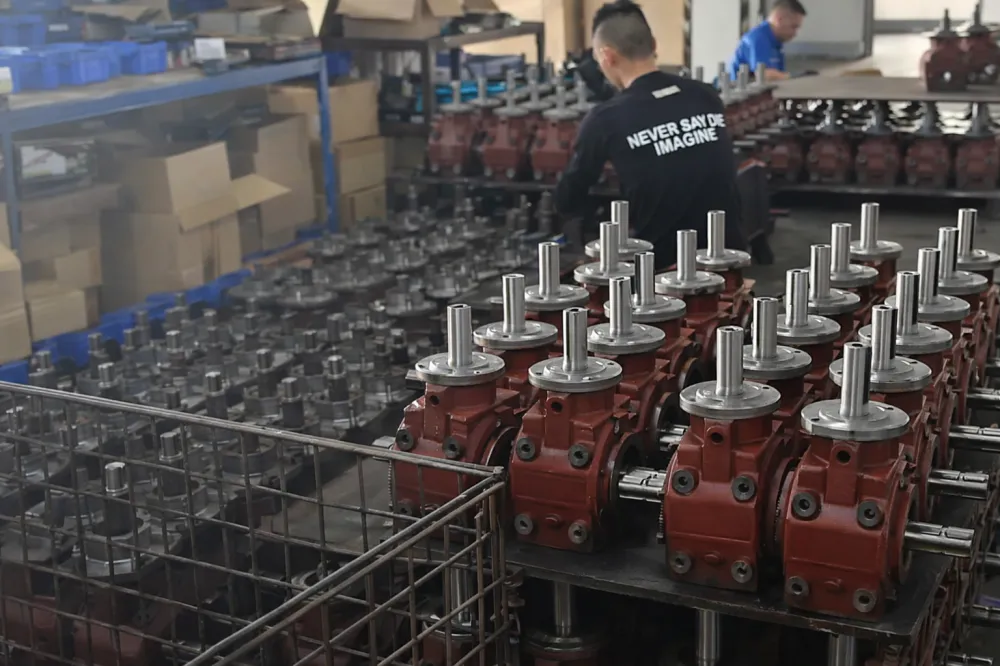
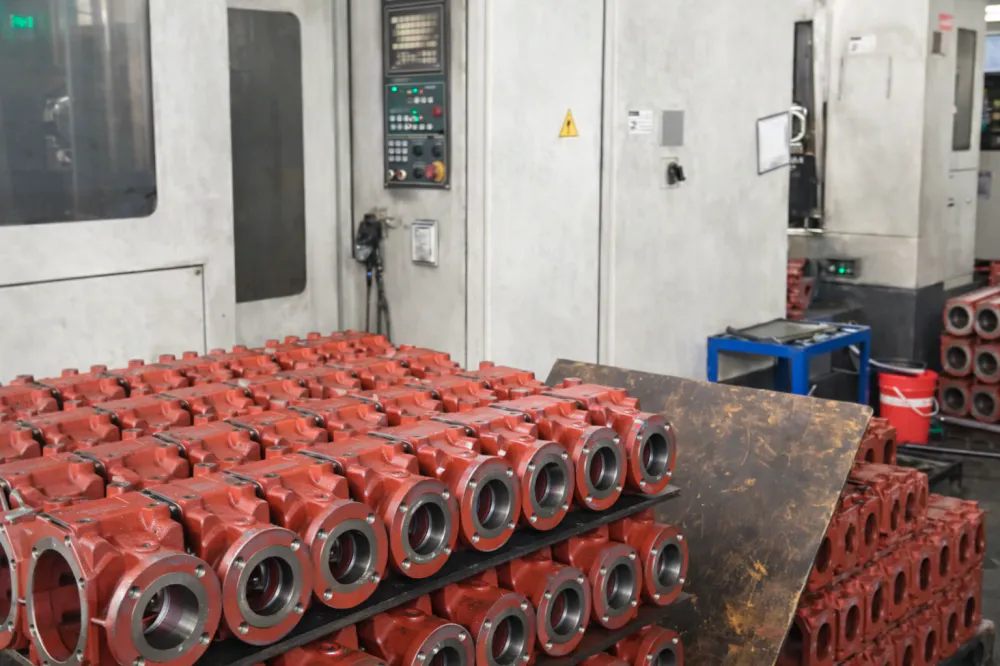
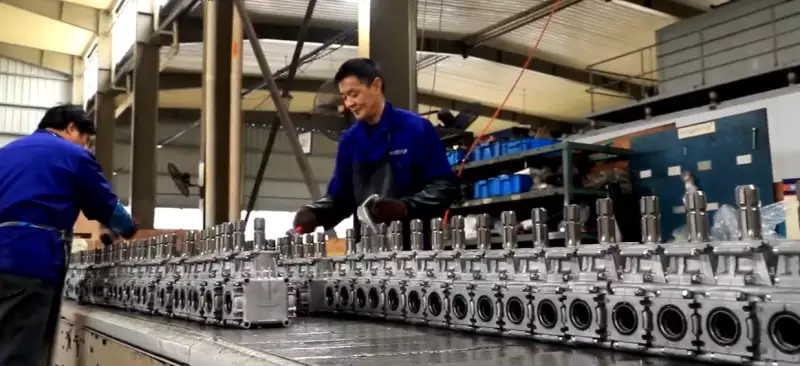
We are a specialized agricultural power transmission manufacturer with more than decades of focused experience in gearbox engineering for farm machinery. Our production facility operates CNC gear hobbing centers, precision profile grinding machines, and coordinate measuring equipment that ensures every shaft, gear, and housing dimension meets the specified engineering tolerances before assembly begins.
Our engineering team actively collaborates with implement OEM customers and end-user operations to respond to evolving field requirements: higher continuous power ratings for larger tractors, improved sealing systems for tropical operating environments, reduced weight targets for compact utility tractor applications, and wider selectable gear ratio ranges for specialty crop and orchard mowing platforms.
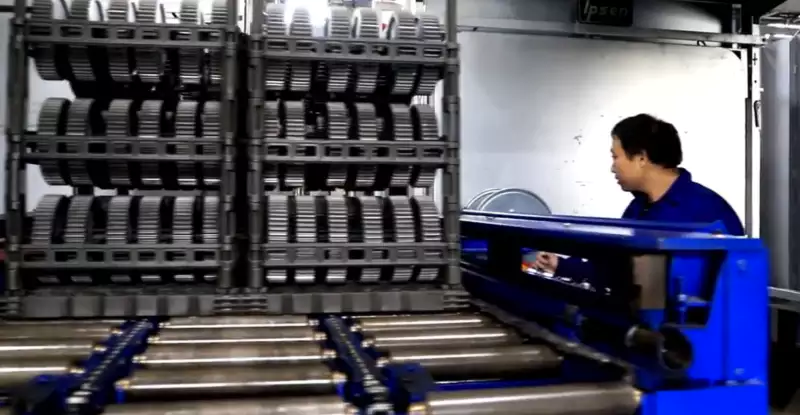
WorkShop
11. Related Agricultural Drivetrain Components
A complete PTO-driven rotary cutter system depends on more than just the mower gearbox. We supply a full range of compatible agricultural drivetrain components, enabling implement manufacturers and equipment distributors to source the complete powertrain from a single supplier — simplifying logistics, guaranteeing interface compatibility, and reducing the administrative burden of managing multiple component vendors across a complex supply chain.
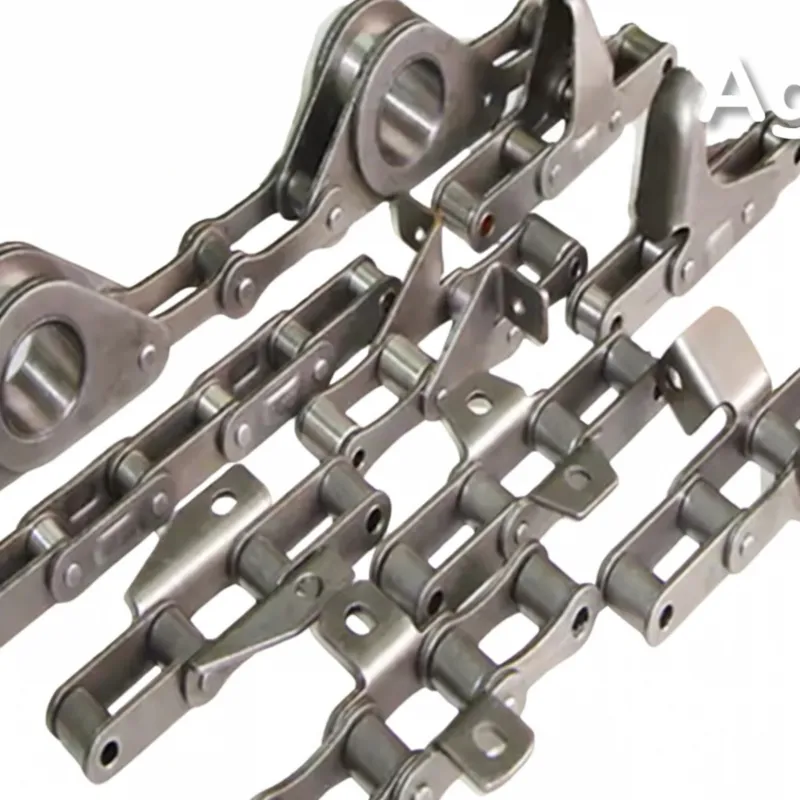
Agricultural Chain
Heavy-duty agricultural roller chain in ANSI and ISO pitch standards for rotary cutter drive systems, feed conveyor transmissions, and implement power transfer applications. Available in single-strand and duplex configurations with heat-treated side plates and precision-matched pin and bushing tolerances for long service life in field conditions. Compatible with standard agricultural sprocket stock across common drive ratios.
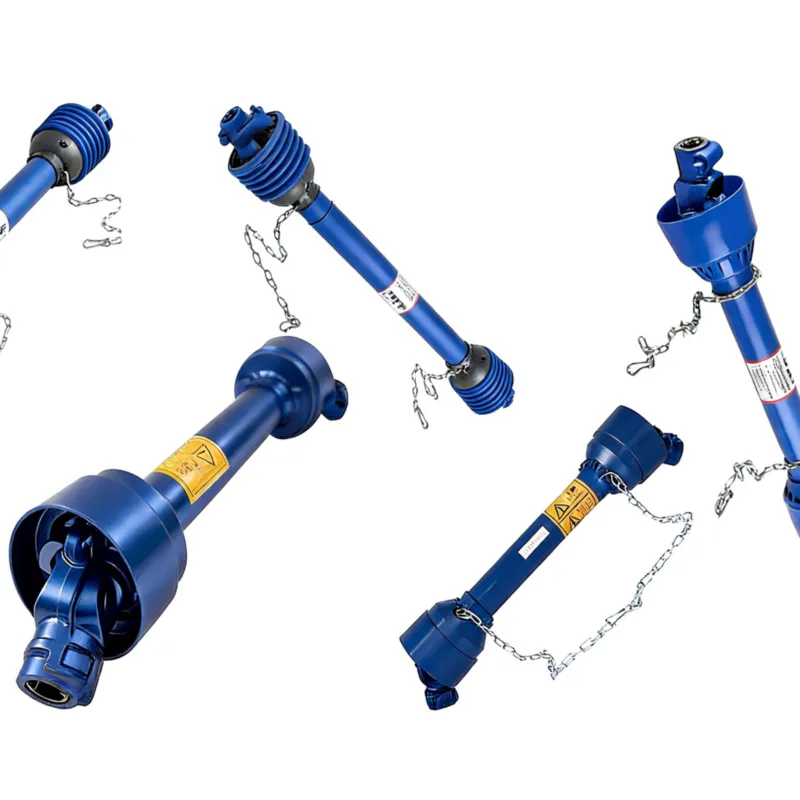
PTO Shafts
Telescoping PTO shaft assemblies with integrated overrun clutch, shear bolt protection, and full-length plastic safety guard conforming to EN ISO 11684. Available in end configurations matching 1‑3/4″ Z20 and 1‑3/8″ Z21 spline standards — direct compatibility with the TF-285B rotary mower gearbox input shaft. Lengths available from 800 mm to 2,000 mm with cross-and-needle universal joints rated for the full 91.9 kW power class.
Agricultural Sprockets
Full range of agricultural sprockets in ANSI 40 through ANSI 100 chain pitch standards, covering single-strand, double-strand, and idler sprocket configurations for rotary cutter and harvesting implement drive systems. Material options include flame-hardened medium carbon steel and cast iron for high-load drives, with custom bore and keyway specifications available to match existing shaft dimensions in both new implement builds and replacement component programs. System compatibility with agricultural chain stock ensures consistent engagement geometry and predictable drive component wear rates across the service life of the implement.
Frequently Asked Questions
Q1. What is the exact gear ratio and output torque rating of the EP Rotary Mower Gearbox TF-285B replacement unit?
The EP Rotary Mower Gearbox TF-285B series operates at a 1:1.86 gear ratio, producing 709 Nm of output torque at 1,000 rpm rated PTO input speed and 91.9 kW input power. These figures are matched directly to the Comer Code TF-285B original specification. At rated input, the output shaft delivers approximately 1,860 rpm to the blade carrier assembly, providing the blade tip speed required for clean cutting of dense pasture and brush material in commercial agricultural mowing operations.
Q2. Which tractor PTO speed and shaft spline standard is compatible with this rotary cutter gearbox input?
This rotary mower gearbox is designed for 1,000 rpm PTO input, the standard high-speed PTO configuration found on tractors above approximately 40 kW (55 HP). The input shaft is 1‑3/4″ (44.45 mm) diameter with Z20 spline engagement per ASABE S201.1 — the spline profile used by all major tractor platforms including John Deere, Case IH, New Holland, Kubota, and Massey Ferguson for their 1,000 rpm PTO stubs. A 540 rpm PTO tractor can drive this gearbox only with an intermediate step-up gearbox that increases PTO output from 540 rpm to 1,000 rpm before the rotary cutter input shaft.
Q3. How do I replace a rotary mower gearbox on my tractor-mounted rotary cutter without needing a specialist?
The EP TF-285B is designed for field-level replacement by anyone with standard agricultural mechanic skills and basic hand tools. Disconnect the PTO shaft, drain the old gear oil, unbolt the four or six mounting fasteners securing the gearbox flange to the mower deck, lift the old unit clear, and install the new EP gearbox in the same orientation. Because the bolt pattern, shaft dimensions, and housing flange profile are identical to the original Comer unit, no adapter machining or shimming is needed. Refer to our complete 8-step Installation Guide in the section above for oil fill volume, fastener torque values, and the recommended first-run PTO engagement procedure.
Q4. How does a tractor rotary mower gearbox maintain cutting efficiency on rough terrain across South American farming regions?
On the uneven terrain characteristic of South American cattle land — rolling hills, drainage gullies, and volcanic stone-strewn pasture common in Colombia’s Andean foothills — the rotary mower gearbox experiences continuous pitch-and-roll motion relative to the tractor as the implement follows the ground. This introduces combined radial and axial shaft loading that changes direction multiple times per minute. The deep groove ball bearing arrangement in the EP Rotary Mower Gearbox is specifically selected to handle this dynamic combined loading, maintaining bearing film thickness and gear mesh geometry even as the implement pitches on side slopes up to 20 degrees. The ductile iron housing does not develop the hairline fatigue cracks that sometimes appear in gray iron housings subjected to repeated shock-plus-bending loading on rough terrain.
Q5. What materials inside a heavy-duty rotary mower gearbox make it suitable for demanding pasture and brush-cutting conditions?
The two material choices that most directly determine durability under heavy mowing conditions are the gear material and the housing material. The EP Rotary Mower Gearbox uses 20CrMnTi alloy steel gears, carburized and case-hardened to 58–62 HRC surface hardness per ISO 6336-5, giving the gear teeth strong resistance to pitting, scuffing, and fracture under the high-torque shock loads generated by blade strikes on rocks and woody brush stems. The GGG-50 ductile iron housing absorbs these same shock loads at the structural level without cracking. Both material specifications exceed what ISO 6336 requires for this power class in agricultural applications.
Q6. How often should I change the oil in my rotary mower gearbox, and which gear oil grade performs best in hot climates?
The standard oil change interval for the EP Rotary Mower Gearbox is every 500 operating hours under normal conditions, or at the start of each mowing season if annual hours are lower. The recommended lubricant is 80W90 GL-5 mineral gear oil, fill volume approximately 0.5 L. For tropical operations in Colombia, Brazil, Southeast Asia, or Australia’s northern stations where ambient temperatures regularly exceed 38 °C, some operators move to 90W140 GL-5 to maintain adequate film thickness at elevated sump temperatures. Always drain oil while the gearbox is warm from operation — warm oil flows completely and carries suspended metallic wear particles out of the housing more effectively than cold oil.
Q7. Which quality certifications should a rotary cutter gearbox meet for use in US agricultural and roadside mowing fleets?
For US agricultural applications, the key quality and interface standards applicable to a rotary mower gearbox are: ISO 9001:2015 at the manufacturing quality system level, AGMA 2001-D04 for gear design and rating (agricultural bevel gearboxes), and ASABE S201.1 for PTO shaft interface compatibility. The gearbox itself does not carry individual OSHA implement certification, but the complete rotary cutter system must conform to ASABE S210 (Safety for Agricultural Equipment). US state DOT roadside mowing contracts often additionally require documentation confirming OSHA-compliant PTO guarding and operator training records as standard contract conditions.
Q8. What is the practical difference between a rotary mower gearbox and a flail mower gearbox for agricultural cutting work?
A rotary mower gearbox drives a horizontal blade carrier rotating at high speed in a single horizontal plane below the mower deck — the rotating blade’s impact energy does the cutting work. A flail mower gearbox drives a horizontal rotor shaft with multiple small free-swinging flail blades (Y-knives or hammer blades) attached around its perimeter; these blades shred material on contact and on the rotor housing backwall. The TF-285B is a rotary cutter gearbox specification, not interchangeable with flail mower gearbox configurations, which use different shaft dimensions, housing geometry, and often different gear ratios. Specifying the correct gearbox type before ordering prevents incorrect purchases that result in costly return freight charges.
Q9. What is the maximum rated input power this PTO rotary mower gearbox handles, and is it compatible with tractors above 100 HP?
The EP Rotary Mower Gearbox carries a continuous rated input of 91.9 kW, which corresponds to approximately 123 HP. This falls comfortably within the operating range of 100–120 HP utility and row-crop tractors — the most common class paired with commercial-scale rotary cutters in the United States, Australia, and South America. Some operators run this gearbox with tractors producing up to 130 HP at the PTO, but sustained operation above the 91.9 kW rated input is not recommended as it reduces both gear tooth fatigue life and bearing L10 life below the design specification, increasing the risk of premature in-season failure.
Editor: PXY