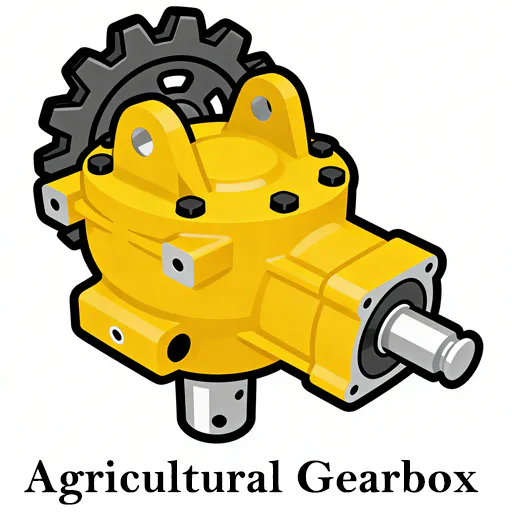
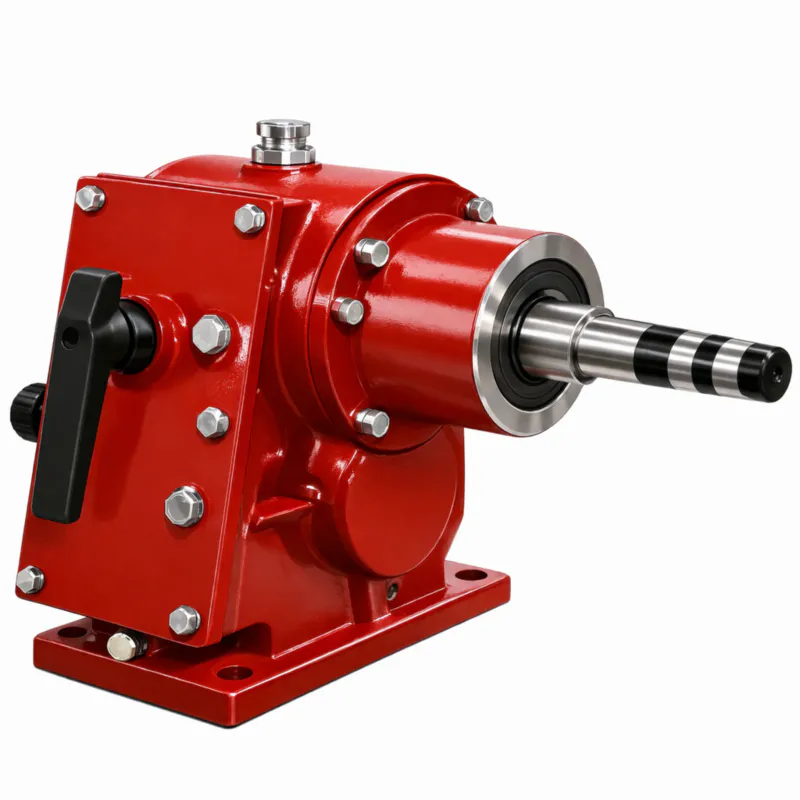
EP-Agricultural Sprayer Gearbox – Replacement of Comer Code D-7A/D-7B
The EP Agricultural Sprayer Gearbox – Replacement of Comer Code D-7A/D-7B is a robust, precision-machined drivetrain component engineered to restore full operational capacity to field spraying systems that originally ran on the Comer Industries D-7A or D-7B gearbox code.
1. Technical Specifications
Model D-7A – Agricultural Sprayer Gearbox
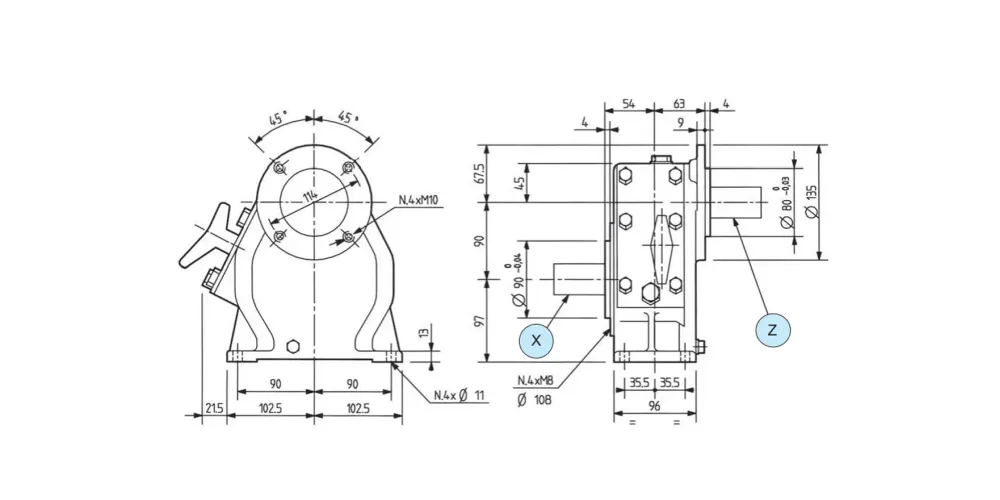
| Gear Ratio (i) | Input Speed N1 [rpm] | Input Power P1 [kW] | Output Torque M2 [Nm] | Input Shaft Type |
|---|---|---|---|---|
| 5.82 | 540 | 16.2 | 48 | 1″ 3/8 Z6 |
| 4.36 | 540 | 21.3 | 84 | 1″ 3/8 Z6 |
| 4.00 | 540 | 21.7 | 93 | 1″ 3/8 Z6 |
Model D-7B – Agricultural Sprayer Gearbox
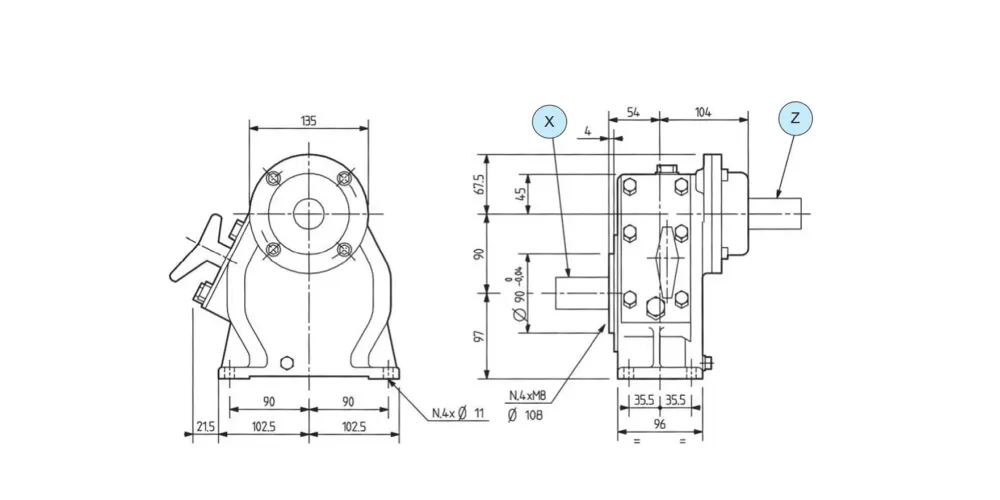
| Gear Ratio (i) | Input Speed N1 [rpm] | Input Power P1 [kW] | Output Torque M2 [Nm] | Input Shaft Type |
|---|---|---|---|---|
| 5.25 | 540 | 20.6 | 67 | 1″ 3/8 Z6 |
| 4.36 | 540 | 21.3 | 83 | 1″ 3/8 Z6 |
| 4.00 | 540 | 21.7 | 95 | 1″ 3/8 Z6 |
2. Why choose our Agricultural Sprayer Gearbox?
Across Colombia, where coffee cultivation, cut-flower production, banana plantations, and sugar cane estates collectively represent millions of hectares under active crop protection management, a dependable agricultural sprayer gearbox is not a background component — it is the mechanical heart of the spraying operation. Inconsistent pump speed caused by worn gears translates directly into uneven droplet coverage, which leads to both under-treated zones prone to disease and over-treated areas that waste expensive agrochemical inputs. For growers operating in the Valle del Cauca, Antioquia, Cundinamarca, or the Caribbean coastal zones, where spraying seasons align tightly with rainfall windows, unexpected gearbox failure during the application period carries real yield consequences. This tractor sprayer gearbox is built to keep that risk low — with sealed housing, hardened internal gearing, and three selectable gear ratios in each model variant that allow operators to match pump speed precisely to the nozzle type and chemical formulation in use.
The replacement gearbox is offered in two distinct configurations: the D-7A and the D-7B. Both share a 1″ 3/8 Z6 input shaft standard — the most widely distributed PTO connection across the Colombian farm tractor fleet — and both operate at a standard 540 rpm input speed. The D-7A delivers gear ratios of 5.82, 4.36, and 4.00, while the D-7B covers ratios of 5.25, 4.36, and 4.00. This breadth of gear ratio options within a single housing design makes the unit adaptable to a wide range of sprayer pump specifications, from low-volume diaphragm units used on highland coffee holdings to high-flow centrifugal pumps found on large trailing boom sprayers used on the flat plains of the Llanos Orientales. Sprayer gearbox replacement parts Colombia sourcing is also supported through an established spare parts inventory that covers seals, bearings, and shaft components, reducing total downtime when individual elements require service.
3. Five Key Product Advantages
Engineered to precisely replicate the Comer D-7A and D-7B dimensional envelope, this gearbox installs directly onto existing mounting brackets and connects to the original pump shaft and PTO interface without modification. Farm operations avoid costly machining work or downtime sourcing bespoke adapters. The result is a clean, efficient field swap that gets the sprayer back into operation within a single maintenance window — particularly valuable during Colombia's tight agrochemical application seasons.
Both the D-7A and D-7B variants are available across three gear ratio options. The D-7A covers 5.82, 4.36, and 4.00; the D-7B covers 5.25, 4.36, and 4.00. This sprayer gearbox custom gear ratio flexibility lets operators match pump output speed to the nozzle configuration and chemical viscosity in use — whether spraying broad-spectrum fungicide on banana crops or applying low-volume insecticide on highland coffee plantations. Selecting the right ratio directly reduces chemical waste and improves coverage uniformity across varying terrain.
The internal gear train is manufactured from case-hardened alloy steel treated to resist both mechanical wear and the surface corrosion that develops when gearbox seals are exposed to organophosphate pesticides, herbicide concentrates, and liquid fertilizers over prolonged operational periods. This is not a cosmetic upgrade — corrosion-driven gear failure is one of the most common causes of premature agricultural sprayer gearbox replacement in humid tropical and Andean farming conditions, and it is the failure mode this construction directly addresses.
The 1″ 3/8 Z6 input shaft specification is the standard PTO connection used across the vast majority of farm tractors operating in Colombia and the broader Andean agricultural region — including widely deployed Massey Ferguson, John Deere, New Holland, and AGCO platforms. This PTO sprayer gearbox interface standard eliminates the compatibility research burden typically associated with sourcing a replacement unit and ensures a reliable torque path from the tractor's PTO stub to the sprayer pump without requiring shaft adapters or custom couplings.
This farm sprayer gearbox is not limited to a single sprayer type. Its compact, symmetrical housing integrates cleanly into tractor three-point hitch-mounted sprayers, PTO-driven trailing boom units, and self-propelled sprayer platforms. The sealed design protects internal components from the field dust, moisture ingress, and chemical splash that characterize outdoor spraying operations on Colombian farms — from the dry Cauca valley corridors to the moisture-laden Caribbean lowlands. Spare parts for seals, bearings, and shafts are stocked to support long-term after-sales maintenance.
4. Key Components of the Agricultural Sprayer Gearbox
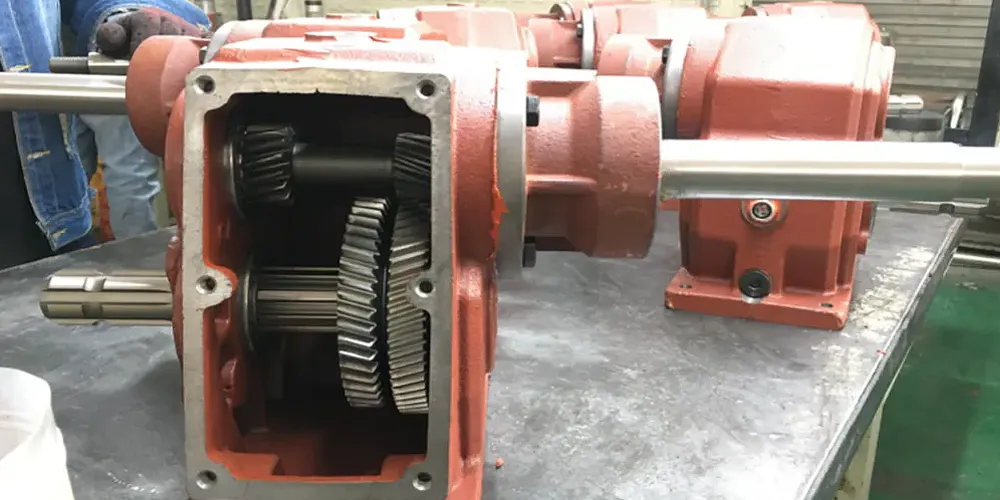
Understanding the internal architecture of this agricultural sprayer gearbox helps maintenance teams make better decisions when scheduling service intervals and identifying early-stage wear. Below is a component-by-component breakdown covering materials, function, and service considerations.
5. How the Agricultural Sprayer Gearbox Works
The power flow through this PTO sprayer gearbox follows a logical sequence from the tractor's engine through to the sprayer pump. Each stage in that sequence has a distinct engineering purpose, and understanding it helps operators diagnose irregularities before they develop into failures.
- PTO Power Takeoff: The sequence begins when the tractor operator engages the PTO. The tractor's transmission delivers engine power through the PTO output stub — typically at 540 rpm for field sprayer applications — and into the gearbox's 1″ 3/8 Z6 splined input shaft. The input shaft is secured via a coupling that can include a shear bolt or overrunning clutch to protect the drivetrain from shock loads when the pump encounters a sudden pressure spike.
- Torque Transmission Through the Input Shaft: The input shaft carries rotational energy into the housing, where it engages the first gear stage. The shaft is supported on precision bearings at both ends to maintain coaxial alignment and minimize flex under load. Any misalignment at this stage increases noise and creates uneven gear contact patterns that accelerate wear on the tooth flanks.
- Gear Mesh and Speed Reduction: The input gear meshes with a larger output gear. The size difference between the two gears creates the speed reduction defined by the gear ratio — 5.82:1, 4.36:1, or 4.00:1 depending on the selected model variant. Higher ratios produce a slower but more forceful output, which suits high-pressure piston pumps. Lower ratios yield a faster output better suited to high-volume centrifugal pumps used on large trailing boom sprayers.
- Torque Amplification: As speed is reduced through the gear mesh, torque is amplified by the inverse of the gear ratio. A 5.82:1 ratio multiplies input torque by 5.82 — meaning that even a relatively low-power PTO input can develop the sustained turning force required to drive a diaphragm pump at consistent working pressure. This torque multiplication is what allows a modest tractor to reliably power a farm sprayer gearbox across an entire spraying shift.
- Power to the Output Shaft: The output gear is keyed to the output shaft, which exits the housing through a sealed bearing journal. The output shaft connects directly to the pump drive coupling. Its dimensions and spline or keyway specification must match the pump input; this is why verifying shaft compatibility before ordering a replacement unit is essential for a smooth installation.
- Pump Operation and Chemical Distribution: The pump converts the mechanical rotation from the output shaft into hydraulic pressure, which forces the chemical solution through the sprayer hoses and boom to the nozzles. Consistent gearbox output speed ensures stable pump pressure, which in turn delivers a uniform droplet spectrum across the spray width — the fundamental agronomic outcome the entire drivetrain is engineered to achieve.
6. Material Quality and Construction
The materials used in this agricultural sprayer gearbox are selected to balance mechanical strength, corrosion resistance, and serviceability across the full range of operating environments encountered in Colombian and South American agriculture. The outer housing is cast from ductile iron or die-cast aluminum alloy — ductile iron where maximum rigidity and impact tolerance are required, aluminum alloy where weight reduction is the priority on lighter trailing sprayers. Both materials receive a phosphate and enamel surface treatment to resist rust and chemical attack in the field.
Internal gears and shafts are produced from SAE 8620 or equivalent case-hardening steel. After rough machining, the gear blanks are carburized and quench-hardened to a surface hardness of approximately 58–62 HRC, while the core remains tough and shock-resistant. This dual-property microstructure — hard surface, tough core — is what allows the gears to carry high cyclic loads without surface pitting while also absorbing the occasional shock load from pump pressure surges or field debris ingestion. Bearings are sourced to ISO dimensional standards with C3 internal clearance for applications involving thermal cycling. Seals are NBR for standard chemical environments and FKM for operations involving chlorinated or aromatic solvent-based agrochemicals. All external fasteners are zinc-electroplated carbon steel or AISI 304 stainless steel, both suitable for the humidity levels typical across Colombia's diverse agricultural zones.
7. Application Scenarios
Coffee Plantation Pest Control – Colombia
Colombia's coffee belt spans Huila, Nariño, Antioquia, and Caldas, where high rainfall and dense plant canopy create ideal conditions for coffee leaf rust and berry borer infestations. Operators using tractor sprayer gearbox-driven boom units on inter-row paths depend on consistent pump pressure to achieve canopy penetration. The 4.36:1 gear ratio on the D-7A provides a balanced output that suits medium-flow diaphragm pumps commonly used on compact slope tractors in these regions.
Cut-Flower Crop Protection – Cundinamarca and Antioquia
Colombia is the world's second-largest cut-flower exporter, and the farms concentrated on the Bogotá Savanna require precise, low-drift fungicide and insecticide application to meet phytosanitary standards for fresh-cut exports. The agricultural automatic sprayer systems used in this segment typically run on 540 rpm PTO drives with high-pressure nozzle configurations. The D-7B at a 4.00:1 ratio supports the elevated output torque needed to maintain stable pressure through multi-nozzle booms running over multiple greenhouse bays.
Sugar Cane Herbicide Application – Valle del Cauca
In the flat sugar cane estates of the Valle del Cauca, trailing boom sprayers with tank capacities exceeding 2,000 litres are pulled by high-horsepower tractors at relatively high field speeds. These operations require a sprayer gearbox for large farm operations Colombia that can sustain maximum output torque over multi-hour application runs without thermal buildup or lubricant breakdown. The high M2 output of the D-7B at 4.00:1 (95 Nm) makes it well-suited to the high-flow pumps used in these large-scale boom applications.
Banana Plantation Fungicide Spraying – Urabá and Magdalena
Sigatoka control on banana plantations in Urabá and the Magdalena river basin requires frequent, precise fungicide applications scheduled around rainfall windows. Sprayer systems in these operations are often self-propelled or mounted on narrow-gauge cable carriers, but many smaller holdings still use PTO-driven units on platform tractors. The sealed construction and chemical-resistant seal materials of this agricultural sprayer gearbox are specifically beneficial in these high-humidity, high-application-frequency environments where component degradation accelerates rapidly.
Tractor-Mounted Boom Sprayer Retrofit
Many farm operations across Latin America retrofit older sprayer frames with new pumps and boom sections when upgrading their chemical application capability without investing in a completely new machine. When the original Comer gearbox in such a system has worn past serviceability, fitting this direct replacement allows the retrofit project to proceed without changing the power take-off interface or the pump mounting geometry. The result is a modernized farm sprayer gearbox system at a fraction of the cost of a new sprayer platform.
Orchard and Vineyard Mist Spraying
Air-blast orchard sprayers used in tropical fruit orchards and experimental vineyard projects across Colombia's highland valleys use axial fans driven by a separate PTO-based gearbox, while the chemical pump is driven by a second unit. This agricultural sprayer gearbox replacement fills the pump drive role in such systems, providing the measured speed reduction needed to operate roller or piston pumps at optimal discharge pressure while the fan gearbox handles the airflow delivery side of the application independently.
8. Maintenance and Lubrication Guidelines
Consistent maintenance is what separates a sprayer gearbox that delivers five or more seasons of reliable service from one that fails mid-season at the worst possible time. The following schedule is recommended for operations in tropical and subtropical farming conditions such as those prevalent across Colombia.
- Pre-Season Inspection: Before the first application of each spraying season, drain and refill the gear oil, inspect all external seals for cracking or swelling, check shaft end-play by hand, and verify that the vent plug is clear. Replace any seals showing visible deterioration. Document the inspection date and the oil brand used.
- Lubricant Selection and Change Intervals: Use an SAE 90 GL-4 or GL-5 rated gear oil, or the viscosity grade specified on the gearbox nameplate. In warm tropical climates above 30°C ambient, an SAE 140 grade may be appropriate to maintain adequate film thickness at operating temperature. Change the oil at least once per year — or after every 500 operating hours — whichever comes first. In dusty or wet field conditions, change intervals should be shortened.
- External Cleaning: After each working day, wipe down the gearbox exterior with a damp cloth to remove chemical residue and field dust. Avoid directing a high-pressure washer jet at seals or the vent opening. Accumulated chemical deposits on the housing surface will attack paint and begin pitting the casting if left in contact over several weeks.
- Seal and Gasket Checks: Inspect lip seals for oil weeping around the shaft exits at each oil change. A thin film of oil at the seal lip is normal; a steady drip indicates seal wear. Replace seals in pairs (both ends of each shaft) even if only one side is actively leaking, as the unrepaired side is likely close behind in wear state.
- Gear and Bearing Inspection: When the gearbox is open for an oil change, use a flashlight to inspect the gear tooth faces visible through the drain hole or filler port. Uniform, lightly polished tooth faces are healthy. Pitting, scoring, or chipped edges indicate that a full disassembly and gear replacement is required before the next operating season.
- Vent Plug Maintenance: The breather vent must remain unobstructed at all times. A blocked vent causes internal pressure to build during operation, forcing lubricant past the lip seals even when those seals are in good condition. Check and clean the vent at every oil change.
9. Selecting the Right PTO Shaft for Your Sprayer Gearbox
The PTO shaft connects the tractor's power output to the agricultural sprayer gearbox input. Choosing the correct shaft specification is as important as selecting the right gearbox gear ratio — a shaft that is too short, too long, under-rated in torque capacity, or fitted with the wrong spline profile will undermine the entire spraying system's reliability and may create a hazardous operating condition.
- Match the Spline Profile: This gearbox uses a 1″ 3/8 Z6 input — meaning 1 and 3/8 inch nominal diameter with 6 splines. Confirm that the PTO shaft you select has the same male spline profile. The 1″ 3/8 Z6 standard is the default for category 1 PTO-rated tractors in the 18–65 kW power band, which covers the majority of tractors operated on Colombian small to medium-scale farms.
- Measure the Working Length: Measure the distance between the tractor's PTO stub and the gearbox input flange with the sprayer at full working height and the tractor at maximum articulation angle. Add 10–15% to this figure to account for telescoping overlap when the tractor straightens. A shaft that bottoms out when the tractor turns will transfer axial shock loads into the gearbox input bearing, causing premature failure.
- Overload Protection Device: Specify a PTO shaft fitted with a shear bolt collar or friction slip clutch. When the pump encounters a blockage or pressure spike, these devices disconnect the driveline before the torque spike can damage the gearbox gears or the tractor's PTO output shaft. This protection is especially important for sprayer gearbox for large farm operations Colombia where extended operational runs increase the statistical frequency of pressure events.
- Shielding Integrity: Verify that the full-length plastic safety shield covering the PTO shaft is intact and rotates freely around the shaft when the shaft is spinning. Colombian agricultural safety regulations, like those of many other countries, mandate the use of PTO shaft guards. A missing or cracked shield is both a regulatory non-compliance issue and a serious entanglement hazard for operators working near the driveline.
10. Compliance with Agricultural Machinery Regulations
Operators and distributors sourcing agricultural sprayer parts Colombia and related machinery components should be aware of the regulatory framework that governs agricultural equipment safety and agrochemical application across multiple jurisdictions.
Colombia
The Instituto Colombiano Agropecuario (ICA) regulates the registration, import, and use of agricultural machinery and crop protection products under Decree 1071 of 2015 and related resolutions. Sprayer systems used to apply registered pesticides must be maintained to a standard that prevents off-target chemical drift — a requirement that directly links gearbox condition to regulatory compliance. The ICONTEC (Instituto Colombiano de Normas Técnicas) maintains NTC standards for agricultural machinery that align with ISO 4254 series norms, covering safety requirements for tractor-mounted implements including sprayers. Operators are also subject to Colombia’s Law 1196 of 2008, which governs the safe handling of persistent organic pollutants and associated equipment.
European Union
Agricultural machinery including sprayer gearboxes placed on the EU market must comply with the Machinery Directive 2006/42/EC, which mandates CE marking and requires that all components capable of transmitting mechanical power to moving parts incorporate appropriate guards. The directive also requires conformity documentation — a Declaration of Conformity and a Technical Construction File — to be maintained by the manufacturer. ISO 4254-6 specifically covers the safety requirements for self-propelled and mounted boom sprayers within the EU framework.
United States
In the U.S. market, agricultural sprayer equipment is subject to OSHA 29 CFR Part 1928 (agricultural operations), which covers PTO-driven equipment guarding requirements. ASABE (American Society of Agricultural and Biological Engineers) standards including ASABE S205.1 govern PTO shaft and gearbox connection safety standards. Sprayer systems applied to food crops may also be subject to EPA pesticide equipment regulations under the Federal Insecticide, Fungicide, and Rodenticide Act (FIFRA).
International ISO Standards
ISO 9001:2015 quality management certification is the baseline quality assurance standard relevant to agricultural machinery gearboxes manufacturing. ISO 11684 governs the design and application of safety signs on agricultural and forestry machinery — applicable to gearbox nameplates and warning labels. ISO 4254-6 covers field-sprayer safety requirements applicable across all jurisdictions that align with ISO agricultural standards, including most South American agricultural markets.
11. About Our Manufacturing Facility
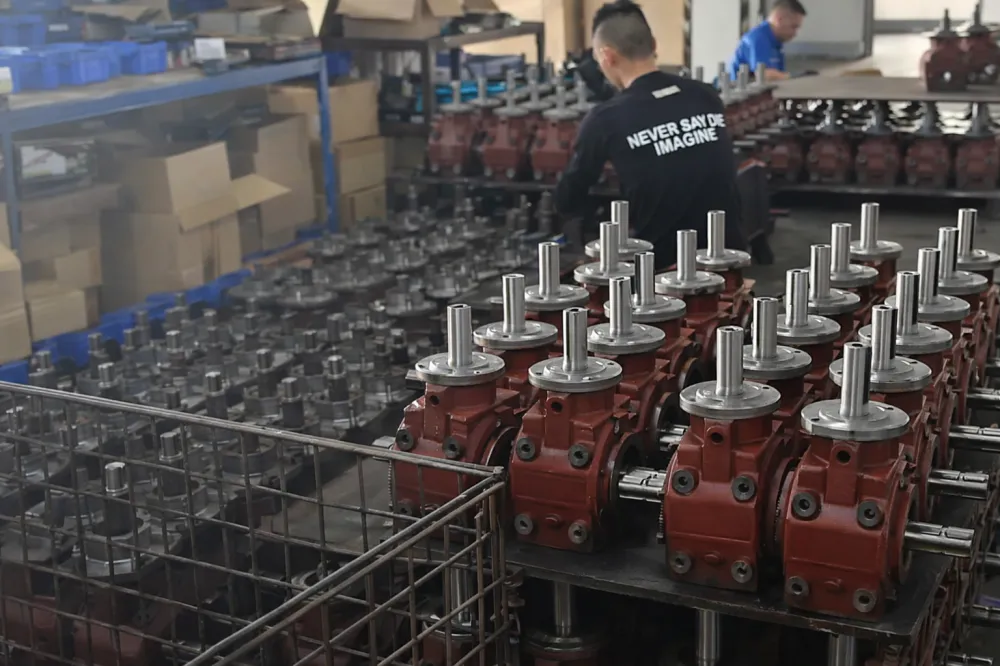
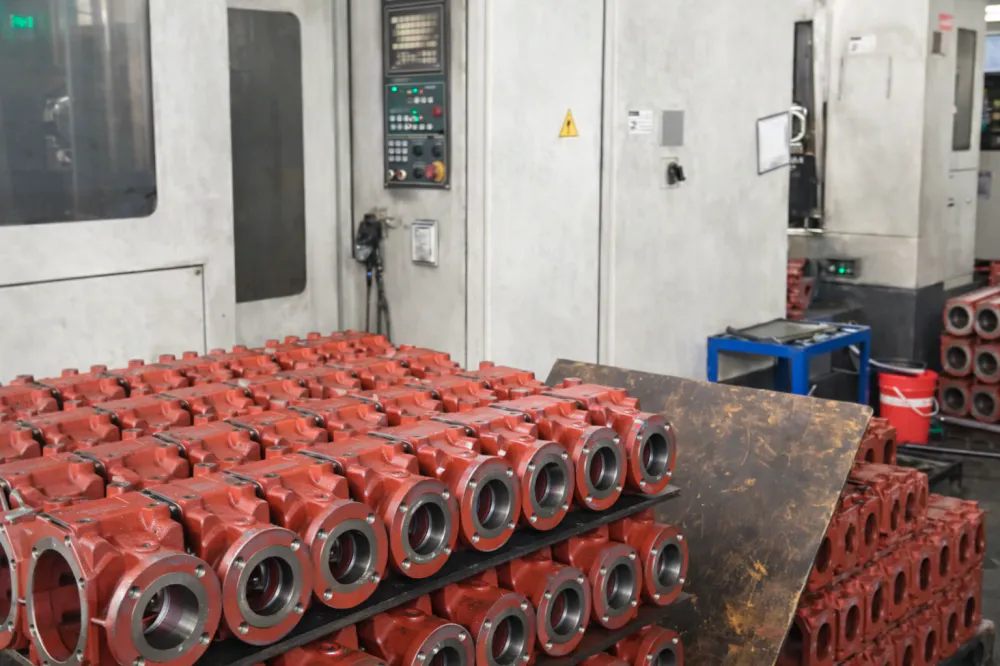
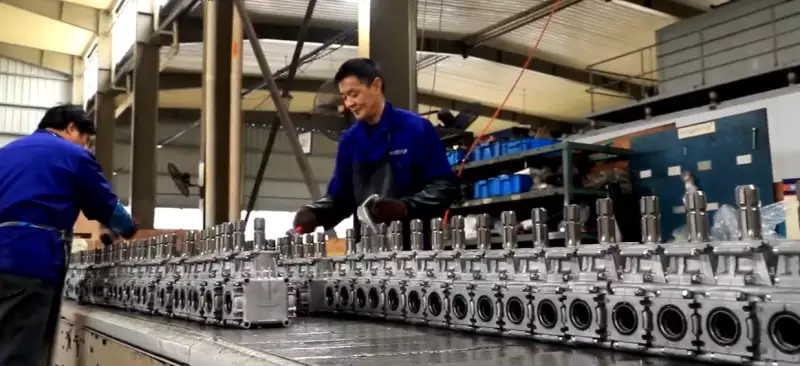
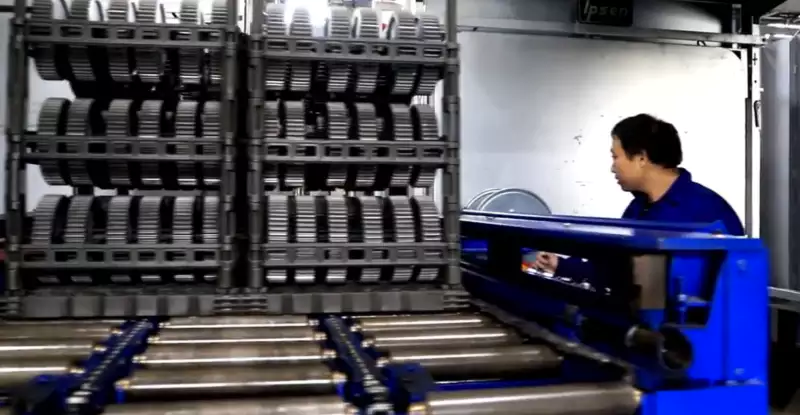
Our manufacturing operation specializes in the design, production, and export of a comprehensive range of agricultural machinery gearboxes — from rotary cutter and flail mower gearboxes through to round and square baler transmissions, irrigation reel drives, rotary rake gearboxes, manure spreader drives, and the full family of agriculture gearbox products used in field crop protection sprayer systems. With more than 15 years of accumulated production experience in this segment, the facility has developed an in-house engineering team responsible for product development, customer-specific customization, and ongoing quality assurance testing in a dedicated laboratory environment.
Advanced CNC machining centers, precision gear grinding equipment, and heat treatment furnaces are integrated within the production floor to maintain dimensional consistency across production batches. Every agricultural sprayer gearbox that leaves the facility has passed a loaded run-in test at rated input speed and a leak check under static pressure before packaging.
WorkShop
12. Related Products & Full-System Compatibility
A reliable spraying system is built from compatible components that share load ratings, interface dimensions, and service schedules. We supply the full range of drivetrain components that work alongside the agricultural sprayer gearbox in a complete sprayer powertrain — allowing buyers to consolidate sourcing with a single supplier and simplify inventory management across their equipment fleet.
PTO Driveshafts
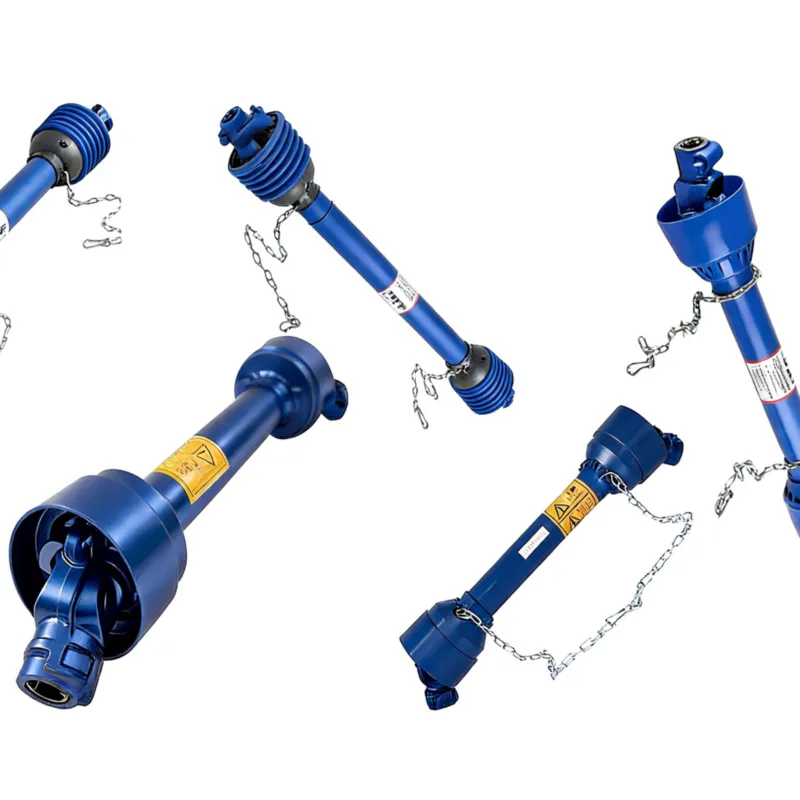
The PTO shaft bridges the gap between the tractor output and the gearbox input. We stock a full range of PTO driveshafts for agricultural sprayer and implement applications, covering standard 1″ 3/8 Z6 and 1″ 3/4 Z20 spline profiles in multiple series and working lengths. Shaft options include shear bolt collars, friction clutches, and overrunning clutches to match your overload protection requirement. Selecting the shaft and gearbox from the same source ensures dimensional compatibility and simplifies warranty claims if an issue arises.
Agricultural Roller Chains
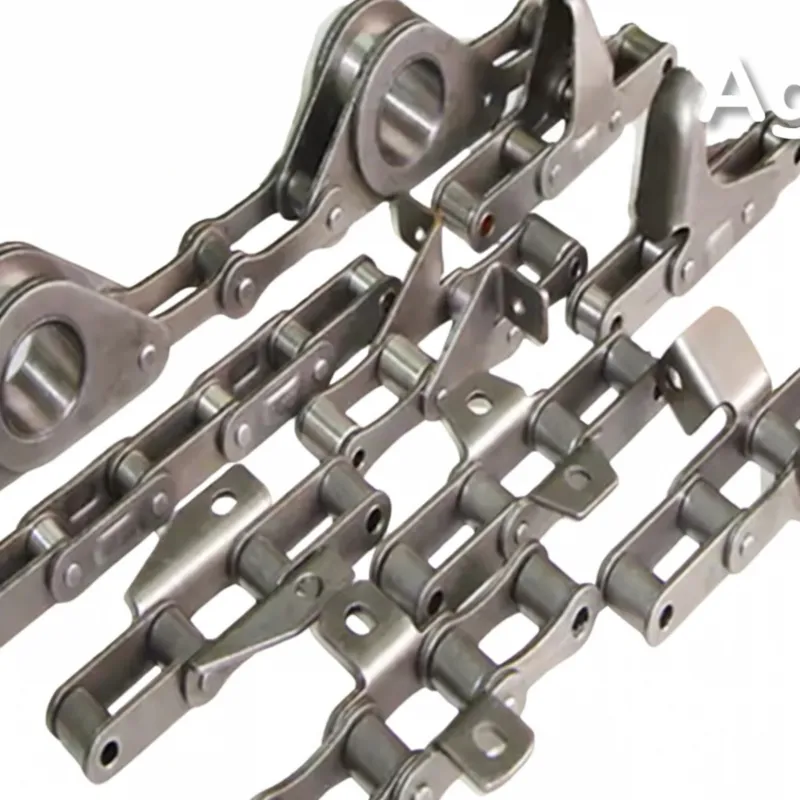
Where the sprayer pump or supplementary equipment is driven by a chain transmission stage rather than a direct shaft connection, the quality of the agricultural roller chains for farm equipment drives directly determines the torque delivered to the pump. We supply standard and heavy-duty agricultural chain in ANSI and ISO pitch sizes, with pre-stretched and standard-tolerance options available for both new builds and replacement applications. Using chains from the same supplier as the gearbox simplifies sprocket pitch matching and reduces the risk of chain-to-sprocket wear incompatibility.
Sprockets and Drive Components
Sprockets paired with agricultural roller chain drives form the final stage of power transmission on many baler, mower, and sprayer-mounted pumping systems. We produce sprockets in both standard and custom tooth counts to match a wide range of drive reduction requirements across all common agricultural chain pitches. Our full-system supply capability — gearboxes, PTO shafts, chains, and sprockets — is designed to give farm operations and machinery distributors across Colombia and South America a one-stop procurement path for drivetrain components, eliminating the coordination overhead of managing multiple international suppliers simultaneously.
Frequently Asked Questions
Q1. What should I check before buying a replacement agricultural sprayer gearbox for a Comer-equipped sprayer operating on a large Colombian farm?
Q2. How do I tell whether the D-7A or D-7B agricultural sprayer gearbox model is the right one for my existing tractor-mounted boom sprayer?
Q3. Which gear ratio is recommended for a high-pressure boom sprayer applying herbicides on sugarcane fields in Colombia's Valle del Cauca?
Q4. What are the key differences between the D-7A and D-7B agricultural sprayer gearbox models when used on tractor-mounted sprayer systems?
Q5. How does the 1″ 3/8 Z6 input shaft on this sprayer gearbox connect to a standard tractor PTO in Colombia, and what makes it compatible with most farm tractor brands?
Q6. What type of gear oil should be used in a PTO sprayer gearbox running on a coffee farm at high altitude in the Colombian Andes?
Editor: PXY