EP-Rotary Cutter Gearbox | Replacement of Omni Code RC-71
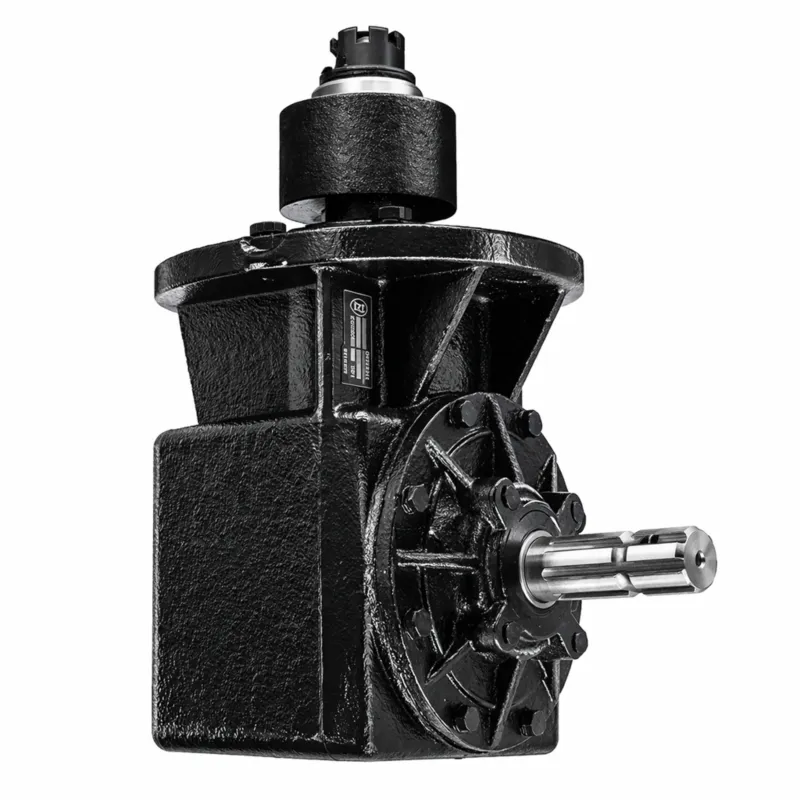
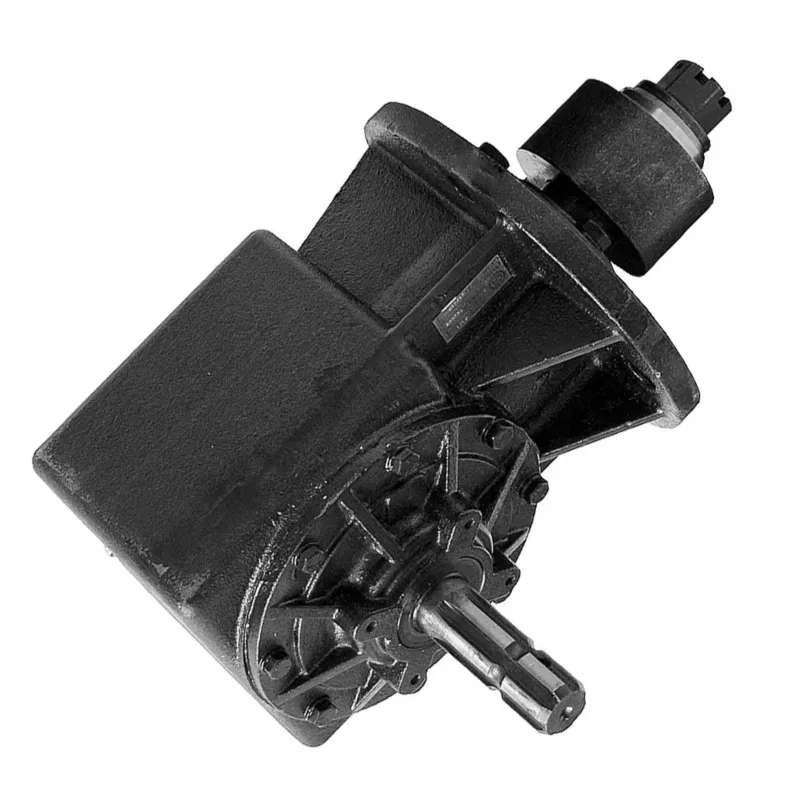
The EP-RC-71 rotary cutter gearbox is a precision-engineered power transmission component built as a direct drop-in replacement for the Omni Code RC-71 configuration. It is positioned at the critical junction between a tractor’s PTO shaft and the rotary cutter’s blade assembly, channeling mechanical energy with minimal loss across a range of gear ratios suited to different horsepower requirements and terrain conditions. The bevel gear design redirects input rotation by 90 degrees while simultaneously delivering the torque multiplication needed to drive heavy cutting blades through dense vegetation, shrubs, and overgrown pasture.
EP – Rotary Cutter Gearbox | Replacement of Omni Code RC-71
Heavy-duty PTO-driven power transmission · Bevel gear · Triple lip seal · Designed for demanding field operations
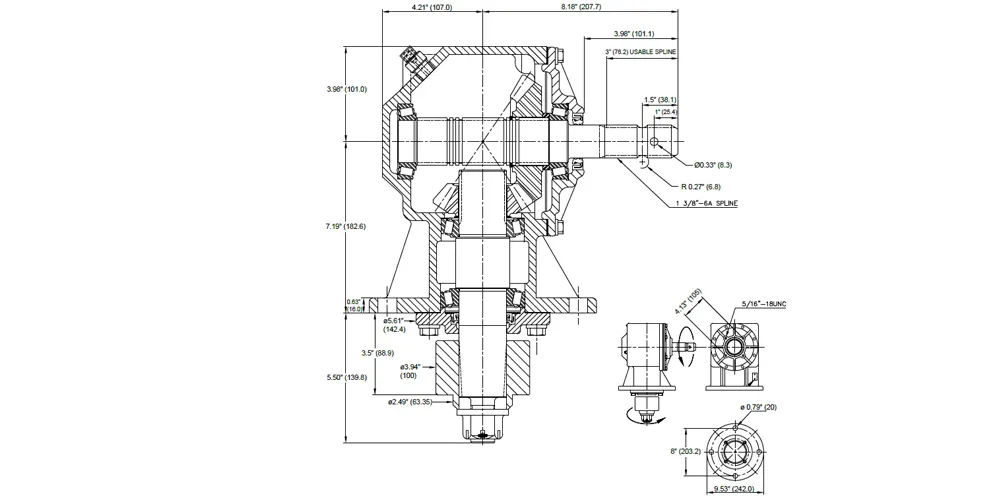
1. RC-71 Rotary Cutter Gearbox – Technical Specifications
| Parameter | Specification |
|---|---|
| Model | EPT-RC71 Rotary Cutter Gearbox |
| Torque Output | 4,083 – 9,683 lb.-in. (461 – 1,093 Nm) |
| Available Gear Ratios | 1.21:1 | 1:1 | 1:1.21 | 1:1.46 | 1:1.93 |
| Gear Type | Bevel |
| Seal Type | Triple Lip Spring Loaded |
| Bearing Type | Tapered Roller |
| Oil Capacity | 35 oz. (1.04 L) |
| Weight | 83 lbs. (37.7 kg) |
| Compatibility | Direct replacement for Omni Code RC-71 |
| Typical HP Range | 75 HP – 100 HP and above |
2. Five Key Advantages of the RC-71 Rotary Cutter Gearbox
01 · High-Torque Bevel Gear Architecture
The precision-ground bevel gear set transmits up to 9,683 lb.-in. (1,093 Nm) of torque, enabling the rotary cutter to power through dense tropical vegetation, thick brush, and hardened crop stubble without overheating or stalling. This output capability makes it one of the most capable heavy duty rotary cutter gearbox options available for high-demand agricultural operations in Colombia's diverse cropping regions.
02 · Triple Lip Spring-Loaded Sealing
Moisture ingress and contaminant infiltration are among the most common causes of rotary cutter gearbox failure in tropical and humid environments. The triple lip spring-loaded seal system forms three independent sealing barriers around both the input and output shafts, preventing mud, water, and fine crop debris from reaching the internal gear train and bearing surfaces. This seal design extends service intervals significantly in wet, debris-heavy conditions typical of Colombian farmland.
03 · Five Gear Ratio Options
With five available ratio configurations — 1.21:1, 1:1, 1:1.21, 1:1.46, and 1:1.93 — the RC-71 series covers the requirements of a wide range of PTO-driven rotary cutters. Whether paired with a 40 HP compact tractor for light orchard work or a 100 HP row-crop tractor handling heavy pasture clearing, operators can select the ratio that optimises blade tip speed and cutting efficiency for their specific machine and task.
04 · Tapered Roller Bearing Load Capacity
The tapered roller bearing configuration handles combined radial and axial loads simultaneously — a critical requirement when cutting blades strike rocks, embedded roots, or uneven terrain. This bearing type outperforms standard ball bearings in shock-load scenarios, maintaining shaft alignment and gear mesh geometry under impact. The result is a longer operational lifespan for both the bearing set and the bevel gears they support, reducing the frequency of rotary cutter gearbox parts replacement.
05 · Direct Drop-In RC-71 Replacement
Engineered to the precise dimensional tolerances of the original Omni RC-71 specification, this gearbox fits existing deck mounting patterns, input shaft spline configurations, and blade shaft dimensions without modification. Equipment dealers and fleet operators across Colombia can source this rotary cutter gearbox replacement with confidence, knowing that installation requires only standard tools and the same procedures as the original unit. Downtime is minimised and compatibility risk is effectively eliminated.
3. How the RC-71 Rotary Cutter Gearbox Works
The fundamental task of a PTO rotary cutter gearbox is energy redirection and torque conversion. When the tractor's power take-off shaft engages — typically at 540 RPM for smaller implements or 1,000 RPM for high-output units — it drives the gearbox input shaft at the same speed. Inside the housing, a precision-ground bevel gear on the input shaft meshes with a corresponding bevel gear on the perpendicular output shaft. This 90-degree change in drive direction is what allows a vertically-oriented tractor PTO to drive a horizontally-spinning blade assembly.
The gear ratio selected at the time of purchase determines the relationship between input speed and output speed. A 1:1.93 ratio, for example, means that for every revolution of the input shaft, the output shaft completes 1.93 revolutions — effectively increasing blade tip speed for applications requiring a finer cut, such as finish mowing or forage conditioning. Conversely, a 1.21:1 ratio reduces output speed while increasing torque, which is more suitable for heavy brush clearing or cutting woody stalks where blade force is more important than speed.
The tapered roller bearings on both shafts manage the significant radial and axial forces generated during cutting. Axial forces (thrust loads) are particularly high in bevel gear systems; tapered rollers distribute these loads across a conical contact surface far more effectively than deep-groove ball bearings, which is why this bearing specification is standard in 100 hp rotary cutter gearbox designs. The sealed oil bath — 35 oz. (1.04 L) of gear oil — circulates continuously around the gear teeth and bearing races during operation, carrying heat away from friction surfaces and preventing metal-to-metal wear under sustained load.
The triple lip spring-loaded seals on the input and output shafts serve a dual purpose: they retain the oil inside the housing and prevent ingress of water, fine clay particles, and crop debris from outside. In practical terms, this seal design is what makes the difference between a gearbox that lasts one or two seasons and one that provides five or more years of reliable field service — particularly in the wet tropical lowlands and highland rain-shadow areas of Colombia where equipment faces continuous moisture exposure.
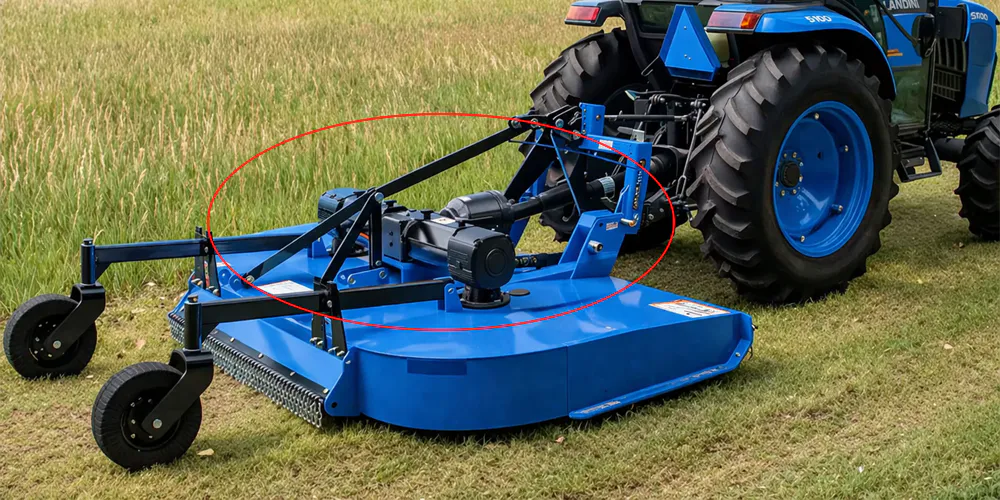
4. EP-RC-71 Gearbox Design Features
Every structural and material decision in the RC-71 design prioritises longevity under field-realistic stress rather than cost minimisation. The housing is cast from high-grade grey iron, chosen for its combination of compressive strength, vibration damping, and resistance to thermal distortion. Unlike aluminium housings that can flex under peak torque loads, the cast iron construction of this rotary cutter gear box maintains precise gear mesh geometry throughout the working life of the unit. The housing surfaces are sealed with chemical-resistant coatings to inhibit corrosion in humid tropical environments.
Key design details include:
- Durable Cast Housing: Grey iron casting resists deformation under peak torque and protects internal components from impact damage when the implement contacts rocks or stumps.
- Sealed Lubrication Circuit: Factory-filled gear oil combined with the triple lip seal system creates a closed lubrication environment that resists contamination across multi-season use.
- High-Ratio Gear Options: Five ratio choices allow the same gearbox platform to serve light finish-mowing through to heavy brush cutter gearbox applications, simplifying dealer inventory management.
- External Maintenance Access: Grease nipples, a top-fill oil port, and a bottom drain plug are all externally accessible, making routine servicing practical without disassembly.
- Integrated Driveline Protection: The input shaft interface includes provision for standard slip-clutch PTO shaft connections, helping absorb shock loads before they reach the gear train.
- Multiple Shaft Configurations: Input and output shaft options accommodate different PTO spline standards and blade hub designs, supporting compatibility across the most common tractor and implement combinations used in Colombia and across Latin America.
5. Materials & Construction Standards
Material selection for the RC-71 series follows the engineering logic that agricultural gearboxes operate in one of the harshest mechanical environments imaginable: sustained high-torque load, intermittent shock loading from blade strikes, continuous vibration, exposure to water and agrochemical residue, and temperature cycling between cool mornings and hot afternoon sun in tropical climates. Each material in the assembly is chosen to meet this combined set of demands.
The housing is produced from dense grey iron (typically GG25 grade or equivalent), which provides the compressive strength needed to contain bevel gear reaction forces without flexing. The bevel gears themselves are machined from case-hardened alloy steel — typically 20CrMnTi or equivalent — with tooth profiles ground to ISO 5 or better accuracy class to ensure quiet operation and long fatigue life. The case-hardening process creates a hard, wear-resistant tooth surface over a tough, impact-absorbing core, a combination that handles both the steady cutting load and the intermittent shock loads inherent to rotary cutting operations.
Input and output shafts are turned from medium-carbon alloy steel, heat-treated to achieve the torsional strength and surface hardness required for splined PTO connections. The tapered roller bearings conform to ABEC-3 or equivalent tolerance grades, sourced to meet dimensional and load rating standards consistent with ISO 355 and ANSI/ABMA 19.2. Seals are manufactured from nitrile rubber (NBR) compounds rated for continuous operation in gear oil at temperatures up to 120°C, providing a working temperature range consistent with the thermal conditions generated by sustained PTO-driven operation.
The specified rotary cutter gearbox oil fill is a GL-4 or GL-5 rated gear oil in the 80W-90 or 85W-140 viscosity grade, depending on ambient temperature conditions. In Colombia's highland zones above 1,500 m where temperatures drop at night, an 80W-90 viscosity allows adequate oil flow on cold starts. In lower, hotter zones closer to sea level, an 85W-140 fill maintains the oil film thickness needed to protect gear and bearing surfaces at sustained operating temperatures. Correct rotary cutter gearbox oil capacity — 35 oz. / 1.04 L — should always be verified before returning the unit to service after a seal replacement or after draining for storage.
6. Application Scenarios
Agricultural Field Clearing
Across Colombia's cattle ranching regions and mixed crop farms, the RC-71 rotary cutter gearbox is a core component in implements used for pasture renovation, fence-line clearing, and end-of-season stubble management. The high torque output handles mature grasses and field weeds that would stall lower-rated gearbox models. PTO-driven rotary cutters equipped with this gearbox can cover several hectares per hour under typical Colombian flatland conditions.
Landscaping & Municipal Maintenance
Municipal park departments and professional landscaping contractors in Colombian cities such as Bogotá, Medellín, and Cali rely on rotary cutters for maintaining green corridors, roadside verges, and public recreation areas. The multiple gear ratio options in the RC-71 series allow operators to select a ratio that delivers a controlled, clean cut suitable for high-visibility public spaces, rather than simply maximising throughput speed.
Forestry & Land Clearance
In the Amazonian foothills and Pacific lowlands of Colombia, land preparation for agroforestry or conservation programmes often requires clearing dense secondary growth — bamboo, ferns, and pioneer shrub species. The heavy duty rotary cutter gearbox torque range of the RC-71 unit, combined with its tapered roller bearing shock resistance, makes it a preferred choice for this demanding application where lighter gearbox models frequently overheat or suffer premature bearing failure.
Coffee & Sugarcane Farm Maintenance
Colombia's coffee and sugarcane industries require regular vegetation management between rows and on access tracks throughout the growing season. The RC-71 gearbox's reliability under sustained daily use is particularly valued in these high-frequency applications, where a gearbox failure during harvest preparation can translate directly into crop loss. The sealed lubrication system reduces the risk of failure from moisture exposure during the wet season typical of Colombia's primary coffee-growing departments.
Construction Site Vegetation Management
Pre-construction site clearance in semi-urban and rural expansion areas often involves cutting mixed vegetation that includes both soft grasses and woody regrowth. The RC-71's brush cutter gearbox torque capability and cast iron housing make it a practical solution for contractors who need a single implement to handle varied vegetation types without damaging the gearbox on harder materials encountered during the cut.
7. How to Replace a Rotary Cutter Gearbox
Replacing a worn or damaged rotary cutter gearbox is a task that most experienced operators or farm mechanics can complete with standard tools. Following the correct sequence ensures safe removal of the old unit and correct installation of the replacement. Always refer to the implement manufacturer's torque specifications for mounting hardware and verify that the replacement gearbox matches the original shaft dimensions and bolt pattern before beginning work.
- Disconnect the PTO shaft from the tractor — engage the park brake, switch off the tractor, and allow all rotating components to come to a complete stop before touching any driveline components.
- Remove the blade pan assembly — unbolt the blade pan from the rotary cutter deck and detach the blades from the output hub. Place blades safely aside and note the orientation of any blade carriers for reassembly.
- Drain the gearbox oil — position a container beneath the drain plug and allow the oil to drain completely before removing the gearbox mounting bolts. This prevents oil spillage during removal and allows responsible disposal of used lubricant.
- Remove the old gearbox — support the gearbox weight with one hand or a strap and remove the mounting bolts systematically. Lower the old unit carefully; at 83 lbs. (37.7 kg) the gearbox is heavy enough to cause injury if dropped unexpectedly.
- Install the replacement gearbox — position the new RC-71 unit onto the deck, aligning the mounting holes, and hand-tighten the bolts before final torquing. Verify that the output shaft engages the blade carrier hub fully before tightening.
- Reinstall the blade pan and blades — torque blade bolts to manufacturer specification and confirm that the blade assembly rotates freely without binding.
- Fill with fresh gear oil — add 35 oz. (1.04 L) of the correct grade gear oil through the fill port, check the level, and seal the fill plug securely.
- Reconnect the PTO shaft and verify proper engagement. Run the implement at low PTO speed for the first few minutes and check for oil leaks, unusual noise, or vibration before returning to full operating load.
If the installation reveals misalignment between the new gearbox output shaft and the blade carrier, stop immediately and recheck that the correct RC-71 replacement was supplied. Forcing misaligned shafts will damage the new bearings within the first operating hours. When in doubt, consult a qualified agricultural equipment technician or contact your regional rotary cutter gearbox supplier Colombia for technical support.
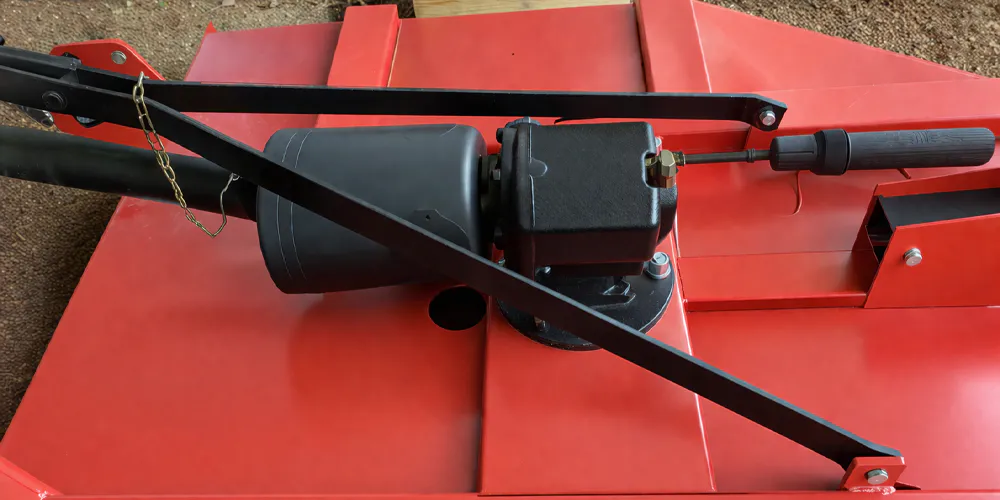
8. Regulatory Compliance & Industry Standards
Procurement and use of rotary cutter gearboxes in Colombia and key export markets is subject to a number of regulatory frameworks that define safety, environmental, and quality requirements. Understanding these requirements helps buyers verify that the products they source meet the standards required by their local regulatory authorities and end-user industry sectors.
Colombia
In Colombia, agricultural machinery and its components are subject to oversight by the ICA (Instituto Colombiano Agropecuario) for biological risk and phytosanitary considerations, while equipment safety standards are developed and maintained by ICONTEC (Instituto Colombiano de Normas Técnicas y Certificación). The NTC series of technical standards published by ICONTEC aligns closely with ISO international standards for agricultural machinery. Importers and distributors of PTO rotary cutter gearbox Colombia products should verify that their equipment complies with applicable NTC standards and INVIMA or DANE import documentation requirements. Additionally, under Resolution 40687 and related Ministry of Agriculture instruments, agricultural machinery used in registered farm operations may be subject to periodic technical inspection requirements.
European Union
Equipment supplied into EU member states must comply with the EU Machinery Directive 2006/42/EC, which establishes essential health and safety requirements for machinery placed on the European market. Agricultural gearboxes as sub-assemblies are typically covered under this directive when incorporated into a complete implement. The CE marking on compliant equipment confirms conformity with the directive's requirements. RoHS 3 (Directive 2015/863/EU) imposes restrictions on hazardous substances in electrical and electronic components; while this applies more directly to electronic controls, buyers specifying complete automated implements should verify RoHS compliance of any electronic elements.
United States & Canada
In North America, agricultural equipment safety guidelines are developed by ASABE (American Society of Agricultural and Biological Engineers) — relevant standards include ASABE S419 (rotary cutters) and ASABE S203 (PTO drives). OSHA 29 CFR 1928 covers agricultural field operations safety in the US context. Canadian buyers should also reference CSA Z150 series and provincial occupational health and safety codes applicable to farm equipment operation. Rotary cutter gearbox Canada buyers sourcing for professional agricultural or construction use should confirm that their complete implement assembly meets Transport Canada guidelines for trailed and mounted equipment used on public roads.
International Quality Standards
Regardless of destination market, ISO 9001:2015 quality management certification provides buyers with confidence in the manufacturing process consistency behind the gearboxes they source. ISO 14001 environmental management certification is increasingly required by large agricultural corporations and cooperatives as part of their supplier qualification criteria. Buyers seeking long-term supply relationships for rotary cutter gearbox wholesale Colombia procurement should request copies of relevant quality system certificates as part of the supplier evaluation process.
9. PTO Shaft Compatibility & Selection
A properly matched PTO shaft is as important to the operational reliability of the complete rotary cutter system as the gearbox itself. The PTO shaft must match both the tractor's output spline specification and the gearbox input shaft requirement, and it must be the correct length for the working distance between the tractor hitch point and the implement gearbox — an incorrect length causes either binding during sharp turns or dangerous driveline extension during backing manoeuvres.
PTO shafts for use with the RC-71 gearbox typically feature a 1-3/8" or 1-3/4" splined connection to the tractor output and a corresponding splined or keyed connection to the gearbox input shaft. Shafts incorporating slip-clutch or shear-bolt overload protection are strongly recommended, as they absorb sudden shock loads — such as blade contact with a submerged rock — before that energy reaches the gearbox gear train. A shear-bolt shaft that breaks under shock load costs a fraction of the price of replacing a rotary cutter gearbox damaged by a direct impact event.
For a complete selection of agricultural PTO drive shafts compatible with rotary cutter gearboxes across a range of horsepower ratings, including telescoping wide-angle shafts and heavy-duty series with integrated overload protection, visit our dedicated PTO shaft product range. Sourcing both the gearbox and the matched PTO shaft from a single supplier simplifies the specification process and ensures dimensional compatibility from the outset.
10. About Us
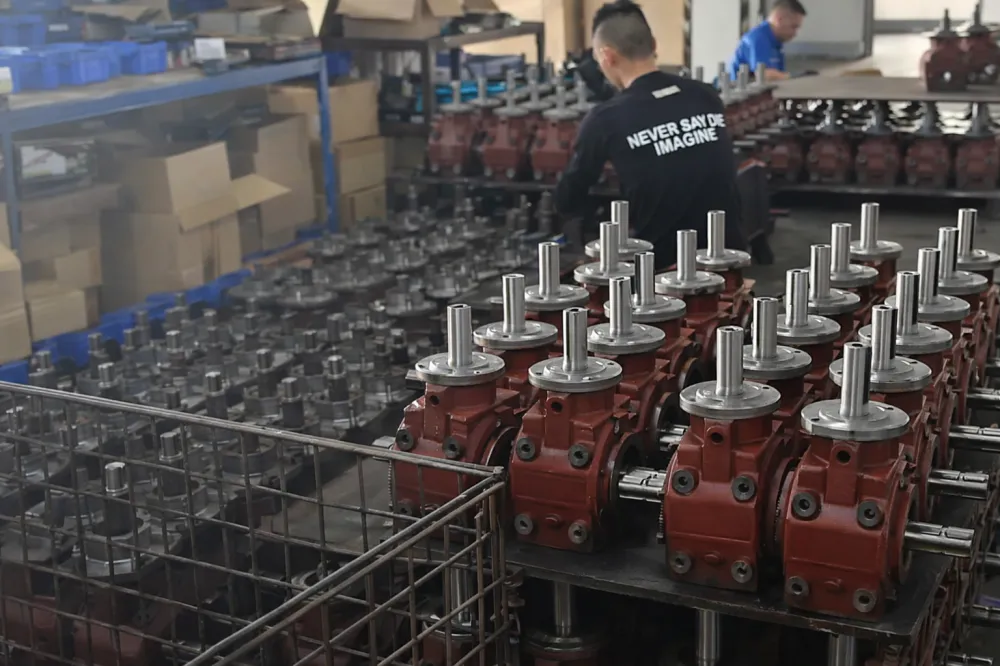
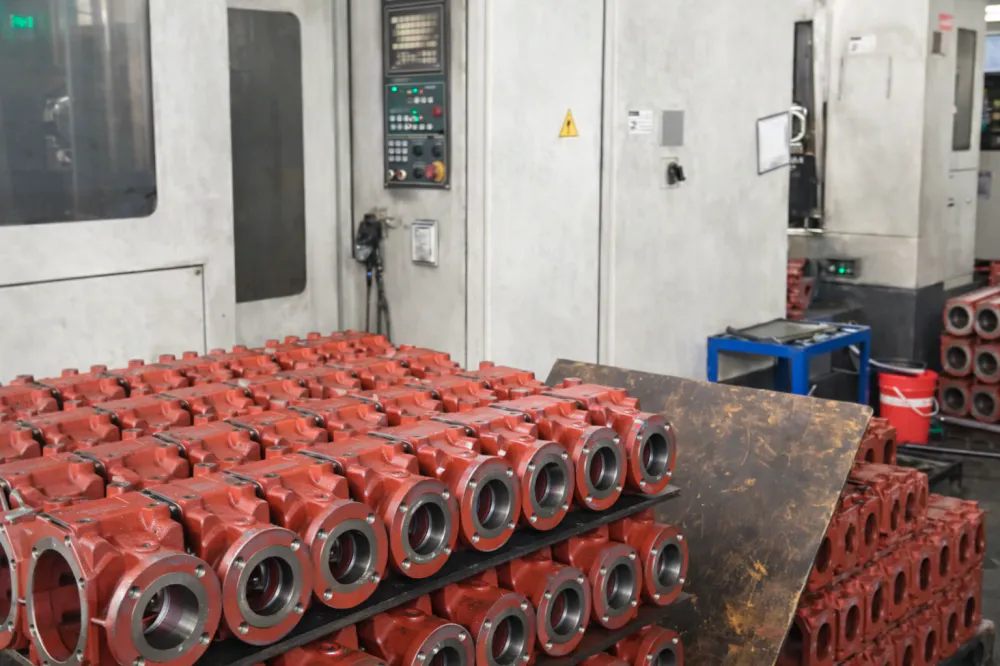
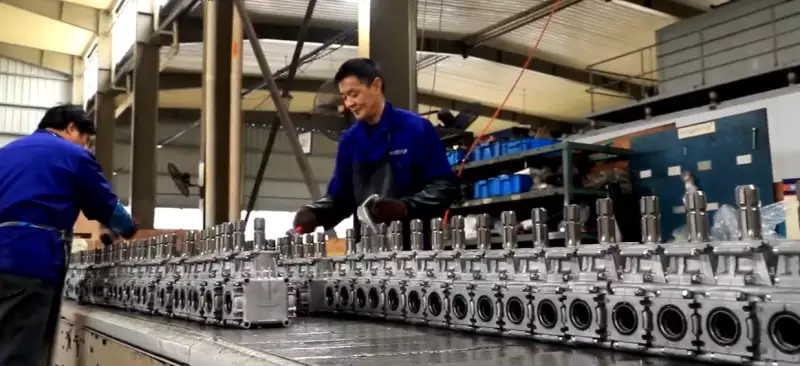
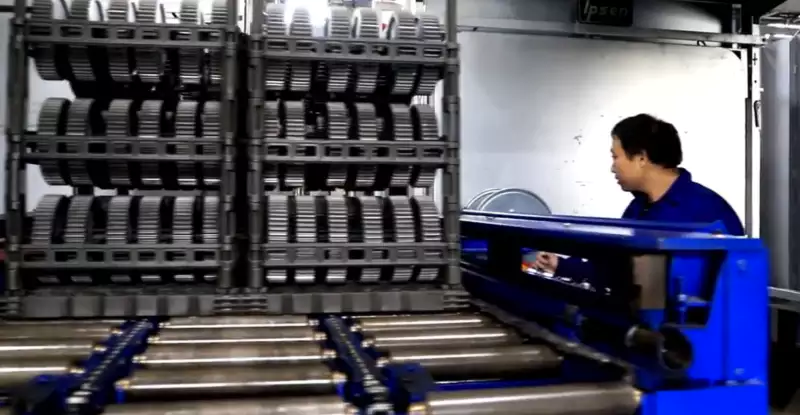
We are a specialist manufacturer of agricultural power transmission components, operating production facilities dedicated to the design, manufacture, and quality assurance of gearboxes for the global agricultural equipment market. Our product range covers rotary cutter gearboxes across the full spectrum from 40 HP to over 100 HP, including the RC series, tillers, forage mowers, and application-specific custom configurations. Over more than two decades of production experience, our engineering team has accumulated deep practical knowledge of the failure modes and performance requirements that differentiate a gearbox that survives one season from one that provides reliable service across many years of demanding field use.
Our facilities hold ISO 9001:2015 quality management certification, and all production processes — from incoming raw material inspection through machining, heat treatment, assembly, and final leak testing — are conducted under documented quality procedures that ensure batch-to-batch consistency. We supply agricultural equipment manufacturers, regional distributors, and aftermarket parts dealers across Latin America, North America, Europe, and Southeast Asia. For buyers in Colombia seeking a reliable rotary cutter gearbox manufacturer Colombia relationship, we offer technical consultation, OEM and OEM-compatible supply configurations, and responsive logistics support to meet seasonal demand patterns in the agricultural calendar.
Our commitment to EEAT principles — demonstrated expertise, authoritative production capability, and documented quality assurance — underpins the trust that agricultural equipment professionals place in our gearbox products for the most demanding environments in their supply territories.
WorkShop
11. Complete Agricultural Drivetrain Solutions
A rotary cutter gearbox performs at its best when every element of the drivetrain is correctly matched and properly maintained. Beyond the gearbox itself, the efficiency and longevity of your complete implement depends on the quality of associated components — PTO shafts, drive chains, and sprockets — all of which we supply as part of a comprehensive one-stop agricultural drivetrain product range. Sourcing these components together eliminates compatibility risk and simplifies the ongoing maintenance procurement process for dealers and large fleet operators alike.
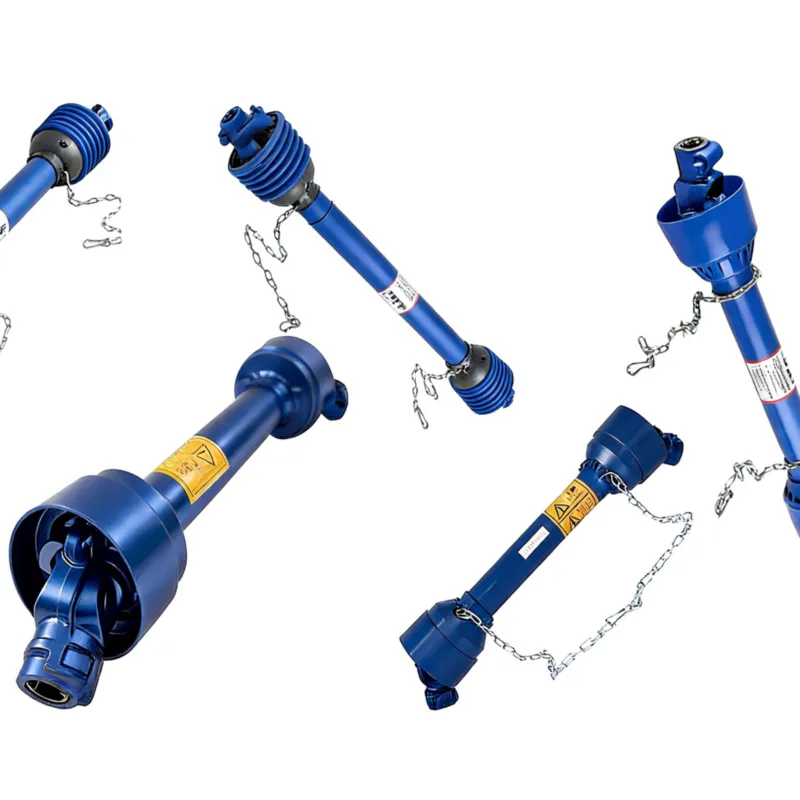
Agricultural PTO Shafts
Telescoping and wide-angle tractor PTO drive shafts matched to standard gearbox input splines. Available with slip-clutch and shear-bolt overload protection for rotary cutter applications across 40–100+ HP tractor pairings.
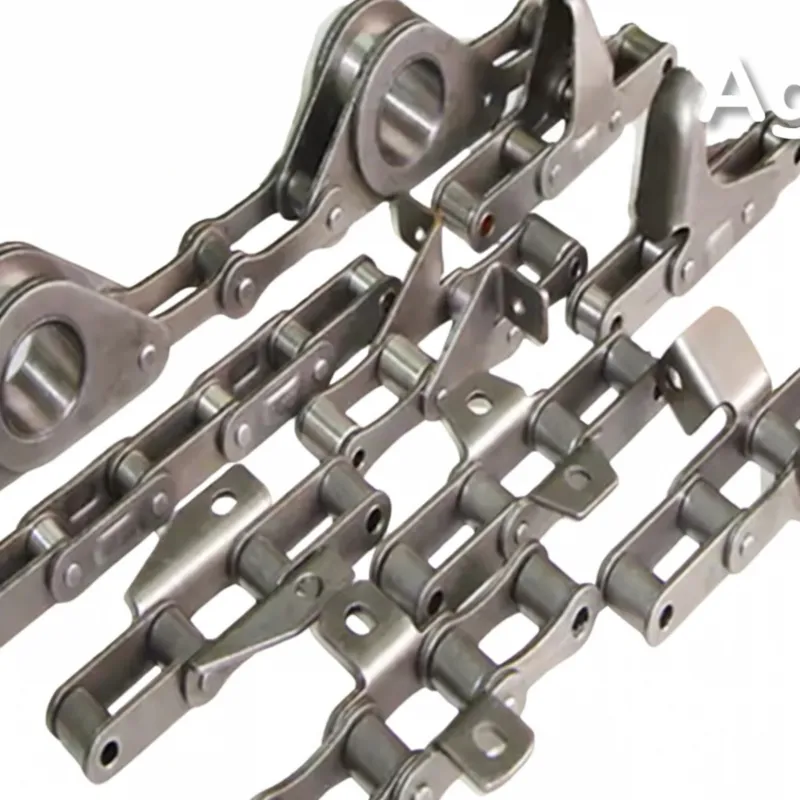
Agricultural Drive Chains
Heavy-duty agricultural roller chains for secondary drive systems in balers, mowers, and forage equipment. Precision-pitched for system compatibility with standard agricultural sprockets across standard ANSI and ISO chain series.
Full Gearbox Range
Beyond the RC-71, our agricultural gearbox catalogue covers rotary tillers, flail mowers, hay tedders, and baler drives. Whether you need a 40 hp rotary cutter gearbox, a 75 hp rotary cutter gearbox, or a 100 hp rotary cutter gearbox, our range spans the full power spectrum used in modern agricultural operations across Colombia and Latin America.
Frequently Asked Questions
Q1. What gear ratio should I choose for a heavy duty rotary cutter gearbox operating in Colombian tropical pastures?
For heavy-duty pasture clearing in Colombia's tropical lowlands where vegetation is dense and growth is rapid, a 1:1.46 or 1:1.93 ratio is generally preferred. These ratios increase blade tip speed relative to PTO input, helping the blades slice cleanly through tall, matted grass without pushing or dragging. If you are primarily dealing with woody brush rather than soft grass, a lower speed ratio (such as 1:1 or 1.21:1) that trades blade speed for torque may produce cleaner results with less shock loading on the gearbox.
Q2. How often should I change the rotary cutter gearbox oil in humid Colombian farming conditions?
In humid tropical environments — including Colombia's Pacific coast lowlands and Amazon foothills where daily temperature swings cause condensation cycling — it is advisable to check the rotary cutter gearbox oil condition at the start of each season and change it at least once per year or every 150–200 operating hours, whichever comes first. If the oil appears milky or discoloured, it has absorbed moisture and should be drained and replaced immediately, regardless of hours run. Always use the correct rotary cutter gearbox oil grade (typically GL-4 or GL-5 rated 80W-90) to the specified 35 oz. / 1.04 L capacity.
Q3. Which rotary cutter gearbox model is the right replacement when my PTO-driven bush cutter keeps overheating during daily use on a Colombian cattle farm?
Persistent overheating in a PTO-driven bush cutter gearbox during Colombian high-season operations most commonly indicates one of three issues: the existing gearbox is undersized for the tractor horsepower and cutter width combination; the gear oil is at insufficient level or has degraded; or the gear ratio is creating excessive blade-tip speed for the vegetation type being cut, generating more blade friction heat than the gearbox oil bath can dissipate. Before replacing the gearbox, verify the oil level and condition. If the oil is correct and the unit still overheats, the RC-71 with its higher torque rating and larger oil capacity (compared to lower-rated RC models) may be the appropriate upgrade. Confirm the horsepower and cutter deck dimensions with the supplier before ordering.
Q4. What are the signs that my rotary cutter gearbox seals need replacement before the next growing season?
Indicators that rotary cutter gearbox seals require attention include: visible oil weeping or dripping from around either shaft exit point; oil staining on the gearbox housing exterior that was not present after the last service; abnormal noise (whining or rumbling) during operation that coincides with recent exposure to standing water or heavy mud; or a visually detectable oil level drop between services with no obvious external leak. Early rotary cutter gearbox seal replacement — before total seal failure — costs a fraction of the gearbox rebuild or replacement that results from running the unit dry after a seal blowout. Triple lip seals in the RC-71 are a replaceable service item and should be inspected as part of any pre-season maintenance routine.
Q5. Is this RC-71 replacement gearbox compatible with John Deere, Bush Hog, and Land Pride rotary cutters used on Colombian farms?
The RC-71 gearbox platform was originally developed by Omni as an OEM standard that was adopted across multiple implement manufacturers. This replacement unit is designed to the Omni RC-71 bolt pattern and shaft specification, which matches the deck mounting geometry and blade hub dimensions used by several major brands in their rotary cutter models of the appropriate HP class. However, compatibility must always be confirmed against the specific model year and serial number of the cutter in question, as manufacturers sometimes revised mounting or shaft specifications within a product line. It is good practice to verify the bolt circle diameter, shaft spline count, and shaft diameter against your existing gearbox before ordering.
Q6. What rotary cutter gearbox size or model is best suited for a 75 HP tractor running a 6-foot brush cutter in Colombia?
For a 75 hp rotary cutter gearbox application with a 6-foot (1.83 m) cutting width, the RC-71 series is generally appropriate when operating at standard 540 RPM PTO. The RC-71's torque range of 461–1,093 Nm covers the typical blade load generated by a 6-foot cutter on a 75 HP tractor across most Colombian terrain types, including the rocky volcanic soils of Nariño and the mixed-grass pastures of Boyacá and Cundinamarca. For operators running at 1,000 RPM PTO on wider (7 to 8 foot) cutters with a 75 HP tractor, consult with the supplier to verify whether the RC-71 or the higher-rated RC series is more appropriate for the specific combination of cutter width, blade mass, and intended vegetation type.
Q7. What is the rotary cutter gearbox oil capacity for the RC-71, and which oil grade is recommended for Colombian highland farms above 2,000 metres?
The RC-71 rotary cutter gearbox oil capacity is 35 oz. (1.04 L). For highland farms in Colombia's Eje Cafetero, the Altiplano Cundiboyacense, or the high-altitude pasturelands of Nariño (where working elevations can exceed 2,000–3,000 m and overnight temperatures regularly drop to 5–10°C), an 80W-90 GL-5 gear oil is preferred because its lower viscosity at cold temperatures allows adequate oil flow during cold morning start-ups. An 85W-140 grade — while appropriate for hot lowland conditions — can be too viscous to circulate effectively on cold starts at high altitude, leading to boundary lubrication conditions in the first few minutes of operation. Always check the oil level with the gearbox on level ground, and re-check after the first hour of operation following an oil change to allow for any air bleed from the fill circuit.
Editor: PXY