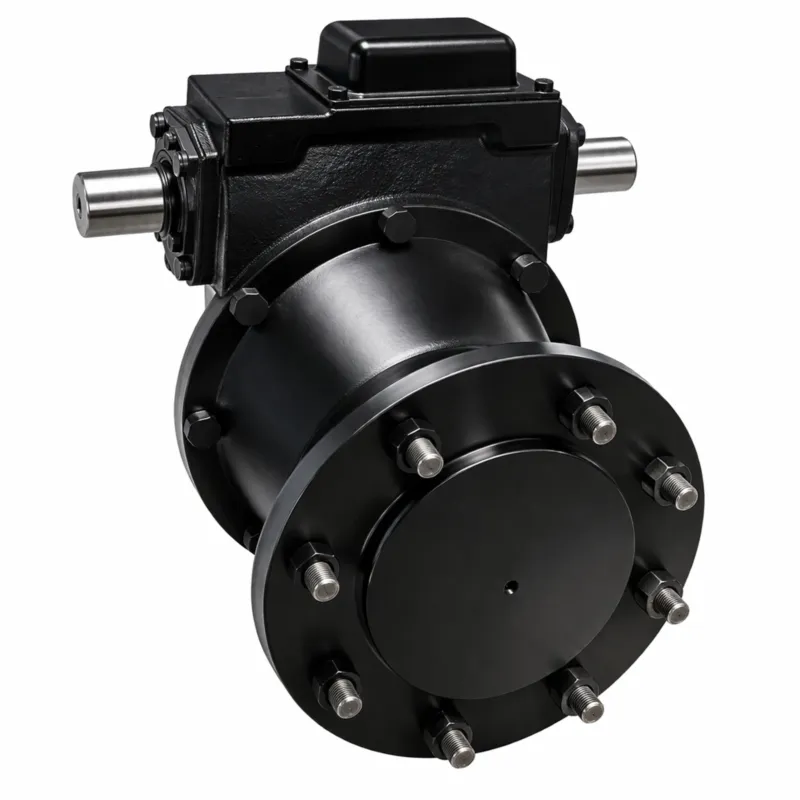
EP-Irrigation Wheel Drive Gearbox – AEP-1 Series (Irrigation Final-Drive Gearbox)
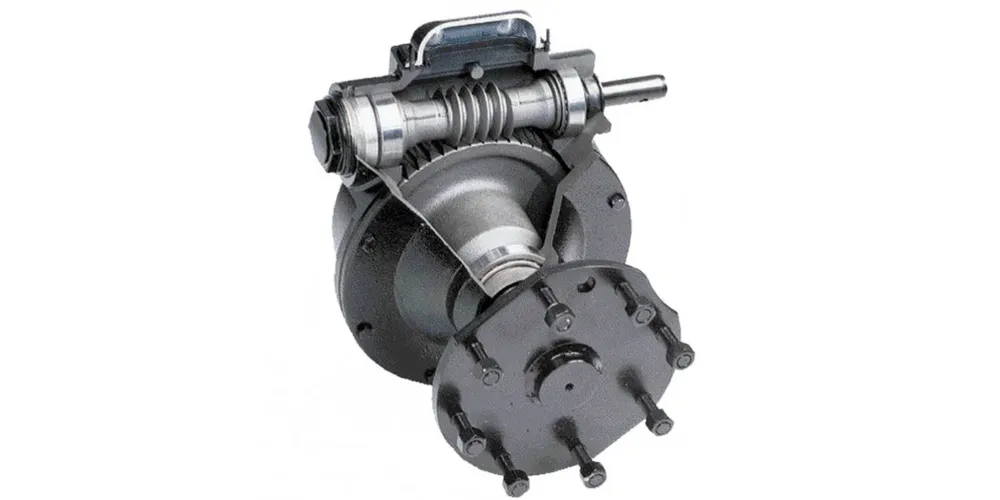
The EP-Irrigation Wheel Drive Gearbox, AEP-1 Series, is a purpose-built final-drive transmission unit engineered for agricultural irrigation systems that demand consistent power output, long service intervals, and mechanical reliability under continuous field operation. Also specified as an Irrigation Final-Drive Gearbox, this unit sits at the interface between the tower drive motor and the ground-contact wheels of center pivot and linear move irrigation equipment — translating rotational motor input into the controlled wheel torque needed to propel the system reliably across varying terrain throughout the irrigation season.
1. Technical Specifications – AEP-1 Series Irrigation Wheel Drive Gearbox
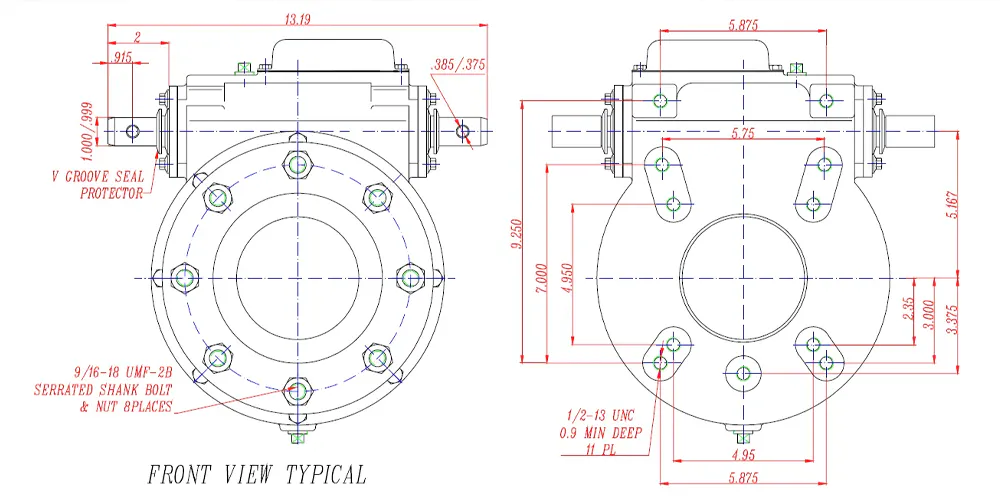
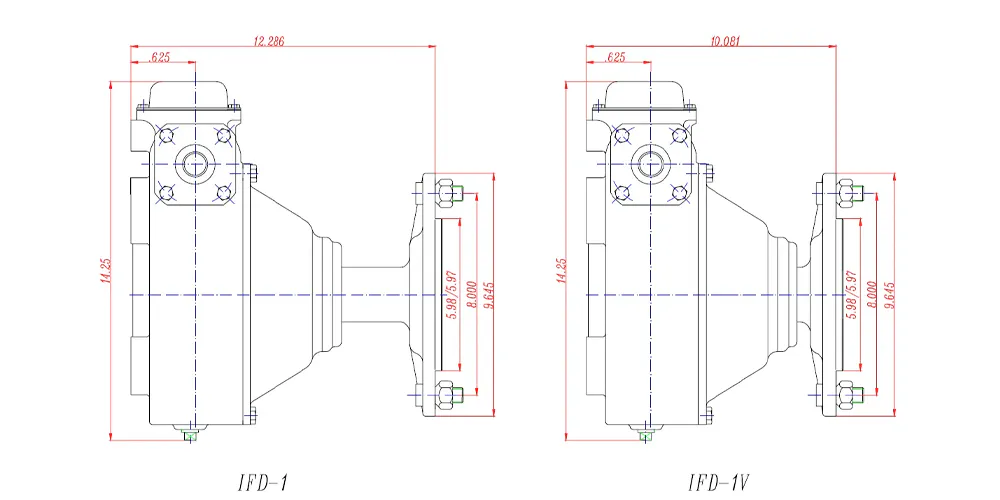
| 1 | Torque capacity: 69,000 lb.in (7800 N.m) |
| 2 | Ratio: 50:1, 52:1 (others available). |
| 3 | Universal mount bolt pattern, allows usage on virtually all pivots. |
| 4 | High-strength steel worm, gear, and output shaft. |
| 5 | Shipped with oil. |
| 6 | Includes special external crop guard seals. |
| 7 | High-strength cast iron box and end caps. |
| 8 | Includes serrated shank carriage bolts with wheel nuts. |
| 9 | Full cycle expansion chamber; bellows-type expansion diaphragm. |
| 10 | Tapered roller bearings. |
| 11 | Input shaft seals fitted with triple lip for maximum protection. |
| 12 | Worm and gear are either precision finished for higher efficiency rating. |
| 13 | Totally enclosed light weight easy-to-access top junction box. |
| 14 | Weight: 104 lbs (47.5 Kg). |
| 15 | Oil capacity: 1.0 gal (3.9L). |
2. Five Key Performance Advantages of the AEP-1 Series
① Exceptional Torque Output for Demanding Field ConditionsThe AEP-1 Series delivers a peak torque capacity of 69,000 lb·in (7,800 N·m), positioning it among the higher-rated units in its class for large-diameter center pivot applications. This torque headroom ensures that the irrigation wheel drive gearbox continues to drive wheels reliably even when soil conditions present elevated rolling resistance — waterlogged clay, soft sandy loam after heavy tropical rainfall, or partially rutted field surfaces. For Colombian agricultural operations in flood-prone lowland regions or high-humidity coastal zones, this torque margin translates directly into reduced motor overload incidents and fewer mid-season mechanical stops that could compromise irrigation scheduling and crop uniformity.
② Universal Mounting Pattern for Multi-Brand CompatibilityThe AEP-1 Series uses a universal bolt pattern on its mounting flange, engineered to fit the tower frame interface of virtually all commercially significant center pivot brands without modification plates or custom adapters. This compatibility is a material advantage for large agribusinesses in Colombia that operate mixed-brand irrigation fleets across multiple farm properties. When a single gearbox model covers the entire fleet, spare parts inventory is simplified, field technician training is consolidated, and procurement leverage increases — all of which contribute to reduced total cost of ownership across the irrigation season.
③ Triple-Lip Input Shaft Sealing Against Environmental IngressAgricultural environments subject gearbox seals to simultaneous exposure to irrigation water, fertilizer residue, soil particles, and agrochemical spray. The AEP-1 addresses this directly by fitting the input shaft with a triple-lip oil seal — three sequentially positioned sealing lips that create redundant barriers against inward contamination and outward lubricant loss. External crop guard seals are included as standard hardware, deflecting crop material and debris before it reaches the primary sealing interfaces. In tropical climates such as those found throughout Colombia's major agricultural regions, this sealing architecture substantially extends mean time between seal replacements compared with single-lip designs.
④ Full-Cycle Bellows Expansion Chamber for Thermal StabilityThermal cycling is one of the leading causes of premature seal failure in enclosed gearboxes. As operating temperature rises during pivot travel, oil volume expands and internal pressure builds. When the unit cools between irrigation cycles, the pressure differential reverses. The AEP-1 Series integrates a full-cycle bellows-type expansion diaphragm that passively accommodates these volumetric fluctuations, preventing internal over-pressure conditions that would otherwise stress the shaft seals beyond their design limits. This feature is particularly relevant in tropical climates where ambient temperature swings between early morning and peak afternoon operation can be significant, and where irrigation systems may run continuously through the hottest part of the day.
⑤ Tapered Roller Bearings for Combined-Load Service LifeThe AEP-1 Series uses tapered roller bearings at all critical shaft support positions. This bearing type is specifically selected for its ability to carry combined radial and axial (thrust) loads simultaneously — a requirement that standard ball bearings cannot meet at the same load rating within the same envelope. In the irrigation wheel drive application, the output shaft bears eccentric loading from the wheel hub offset, axial thrust from gear reaction forces, and shock loading from terrain irregularities during pivot travel. Tapered roller bearings handle this load combination with a service life that consistently outperforms ball-bearing alternatives under equivalent field conditions, reducing the frequency of bearing replacement interventions over the product service life.
3. How the Irrigation Wheel Drive Gearbox Works
Understanding the operating principle of the irrigation wheel drive gearbox is useful for correct system integration, maintenance scheduling, and accurate fault diagnosis when unexpected behavior occurs during field operation. The AEP-1 Series is based on a worm gear reduction drive — one of the most reliable gear architectures for high-ratio power transmission in a compact housing.
1. Power Input: The gearbox receives rotational power from the tower drive motor, which may be a single-phase or three-phase electric motor, a hydraulic motor, or in some configurations a PTO-shaft-driven unit depending on the irrigation platform. The input shaft is coupled directly to the motor output shaft and receives the full motor RPM for reduction within the gearbox.
2. Input Shaft and Worm Gear: The input shaft carries a precision-ground steel worm — a helical screw-form gear — that meshes with the worm wheel positioned perpendicular to the input axis inside the housing. As the worm rotates, it drives the worm wheel at a speed reduced by the gear ratio. For the AEP-1-50, every 50 input shaft revolutions produce one output shaft revolution. For the AEP-1V-52, the ratio is 52:1. Torque is multiplied approximately in proportion to the gear ratio, delivering the high output torque required to drive the irrigation tower wheel against soil resistance.
3. Gear Train and Lubrication: The worm and worm wheel operate partially submerged in the oil bath maintained at 1.0 gal (3.9 L) capacity. The rotating worm lifts oil from the reservoir and distributes it across the meshing tooth surfaces and to the tapered roller bearings at both shaft ends. This splash lubrication approach requires no separate oil pump, eliminating an additional failure mode and simplifying maintenance. The full-cycle bellows expansion diaphragm manages internal pressure changes caused by oil temperature variation, passively absorbing volume changes without allowing seal blowout during temperature cycling between shutdown and full operating temperature.
4. Output and Wheel Drive: The worm wheel is mounted on the output shaft, which exits the housing through a sealed bearing arrangement and connects to the irrigation tower wheel hub via the serrated shank carriage bolt assembly included with the unit. As the output shaft rotates, it drives the wheel, propelling the tower span across the field at the design travel speed corresponding to the selected gear ratio and motor RPM. The totally enclosed, top-access junction box houses the electrical connections for the drive motor, providing weatherproof protection and convenient field access without requiring gearbox removal from the tower frame.
4. Materials and Build Construction
The long service intervals and low maintenance frequency associated with the AEP-1 irrigation wheel drive gearbox are a direct result of deliberate material selection at every structural, tribological, and sealing interface within the unit. Each component material is chosen for the specific loading and environmental conditions present in continuous agricultural irrigation service.
Housing and End Caps – High-Strength Cast Iron: The primary enclosure and both end caps are manufactured from high-strength gray cast iron. Cast iron offers excellent vibration damping compared with fabricated steel housings, which matters in pivot applications where resonance from motor vibration and ground irregularities can accelerate bearing fatigue. The material also provides a favorable surface finish for precision bore machining, ensuring accurate bearing seat alignment that is maintained throughout the service life of the unit. In the high-humidity environments common across Colombia's tropical agricultural zones, cast iron with appropriate surface treatment resists the surface oxidation that can affect structural integrity over multi-year service periods.
Worm and Worm Wheel – High-Strength Steel, Precision Finished: Both elements of the worm gear pair are manufactured from high-strength alloy steel and undergo precision surface finishing as a standard production step. The precision finish optimizes the contact pattern across the meshing tooth faces, reducing operating temperature by minimizing sliding friction losses and extending the load-carrying capacity of the gear interface. This finishing process is consistent with AGMA quality grade requirements for enclosed worm gear drives.
Output Shaft – High-Strength Steel: The output shaft is forged from high-strength steel and ground to close tolerances at all bearing seating surfaces and the wheel mounting interface. Ground surfaces maintain dimensional accuracy under the eccentric loading profile imposed by the wheel hub, which applies both radial and moment loads to the shaft during travel over uneven terrain.
Bearings – Tapered Roller Type: All shaft bearing positions use tapered roller bearings selected for their combined radial and axial load capacity. This bearing type is the appropriate engineering choice for the load conditions in the output shaft position, where axial thrust from worm gear reaction forces combines with radial loading from the wheel weight and propulsion forces.
Seals – Triple-Lip Input Seal and Crop Guard: The input shaft oil seal uses three sealing lips manufactured from elastomeric material compatible with the specified ISO VG 220 gear oil and the agrochemical residues commonly present in irrigation water. External crop guard seals — included as standard with every AEP-1 unit — provide a physical first-stage barrier against crop material, chaff, and soil debris accumulating around the gearbox face during travel through standing crops.
5. Application Scenarios
Center Pivot Irrigation Systems
Center pivot irrigation is the dominant mechanized irrigation format in large-scale Colombian agriculture, particularly for corn, soybean, and sugarcane production across the Llanos Orientales and the flat river plains of the interior regions. The center pivot irrigation wheel drive gearbox in the AEP-1 Series is installed at each tower wheel unit to provide the propulsion torque needed to move the pivot span at a controlled travel speed. The universal mount pattern accommodates standard and legacy pivot frames from multiple manufacturers, making the AEP-1 a practical choice for both new system builds and pivot rehabilitation and re-drive projects. Its pre-filled shipping condition and included hardware reduce installation time significantly in field conditions where minimizing downtime during the irrigation season is a priority.
Linear Move (Lateral Move) Systems
Linear move irrigation systems travel in a straight line across rectangular fields, with each tower requiring an independent wheel drive unit. These systems are used in Colombia for irrigated rice cultivation in the lowland production areas of the Pacific and Caribbean coastal zones, and for high-intensity vegetable production under precision management. The AEP-1 irrigation final-drive gearbox provides consistent drive output across all tower positions simultaneously, which is critical for maintaining lateral machine alignment. Inconsistent drive speed across towers causes steering deviation and uneven water application pattern — problems that the matched torque output of identically-specified AEP-1 units across a machine's tower fleet effectively prevents.
Traveling Gun Sprinkler Systems
Traveling gun irrigation systems deploy a high-pressure sprinkler on a wheeled cart that moves progressively across the field during operation. In drive-powered cart configurations, the irrigation wheel drive gearbox provides wheel propulsion, allowing the operator to set travel speed and coverage pattern for a specific field block. These systems are widely used for supplemental irrigation of pasture and forage crops in the cattle ranching regions of Colombia, where portability and operational flexibility across irregular field shapes are key requirements. The AEP-1 Series sealed housing construction provides reliable operation through the soil and moisture conditions encountered in pasture environments.
Hose Reel Irrigation Systems
Hose reel irrigation systems wind and unwind a flexible supply hose from a rotating drum as a sprinkler carriage travels across the field, drawing the hose behind it. The wheel drive mechanism on the carriage requires a compact, high-torque gearbox capable of pulling the cart and attached hose through dense crop canopies and over uneven ground. The AEP-1 Series meets this requirement with its 69,000 lb·in torque rating and crop guard sealing system, which prevents the organic debris typical of heavy canopy crops from migrating into the drive unit during extended travel. These systems are used for sugar cane pre-sprouting irrigation and for specialty crop blocks in Colombian highland growing regions.
Self-Propelled Irrigation Machines
Advanced self-propelled irrigation platforms integrate automatic steering, GPS-guided travel control, and multiple driven towers into a single coordinated machine capable of fully autonomous operation across large field areas. Each driven tower in such a system relies on a dedicated wheel drive gearbox for traction and speed synchronization. The AEP-1 Series is well-matched to these applications because its predictable torque output at the specified gear ratio simplifies the speed synchronization logic across multiple tower drive controllers, and its sealed, low-maintenance construction supports the extended autonomous operating cycles — sometimes running continuously for 12 to 24 hours — that self-propelled systems routinely execute during critical irrigation windows.
6. Compliance, Industry Standards, and Regulatory Context
Agricultural irrigation equipment and the mechanical drive components within it are subject to technical standards, safety regulations, and import requirements that vary by region. Buyers sourcing an irrigation final drive gearbox for sale or planning procurement of center pivot irrigation final drive gearbox units for Colombian or international projects should confirm applicable compliance requirements before finalizing their specification.
AGMA Standards (USA): The design and performance of the AEP-1 Series is consistent with AGMA (American Gear Manufacturers Association) standards governing enclosed worm gear drives. AGMA 6034-B92 addresses practice for enclosed cylindrical worm gear speed reducers and gearmotors, while AGMA 2001 provides the base methodology for gear load capacity calculation. These standards define acceptable gear quality grades, housing structural requirements, and service factor selection — all of which are reflected in the AEP-1 engineering specification.
ISO 9001:2015 Quality Management: Manufacturing processes are conducted within an ISO 9001:2015 certified quality management system, covering incoming material qualification, in-process dimensional inspection, gear contact pattern verification, leak testing, and final assembly documentation. ISO 6336 defines the formal calculation methodology for gear load capacity and is applied in the design verification of the worm gear pair used in the AEP-1 Series.
EU Machinery Directive – CE Marking (2006/42/EC): For irrigation equipment exported or installed in European Union member states, the Machinery Directive 2006/42/EC mandates CE marking for self-propelled and powered drive machinery. The AEP-1 gearbox, as a mechanical subcomponent, is supplied with the technical documentation required for integration into CE-marked irrigation machinery assemblies by the system manufacturer or integrator.
RoHS Directive and REACH Regulation: Buyers supplying European markets should note that irrigation control and junction box electrical components integrated into the AEP-1 top box must comply with the RoHS Directive 2011/65/EU (restriction of hazardous substances) and the REACH Regulation (EC) 1907/2006 (chemical substance safety). Compliance documentation for electrical subcomponents is available on request.
Colombia – ICONTEC / NTC Framework: In Colombia, technical standardization is administered by ICONTEC (Instituto Colombiano de Normas Técnicas y Certificación). Agricultural machinery safety requirements are addressed under the applicable NTC standards framework. Complete irrigation systems incorporating the AEP-1 drive gearbox should be reviewed for compliance with NTC standards relating to agricultural equipment operator safety and machinery guarding. The Ministerio de Agricultura y Desarrollo Rural (MADR) issues guidance on agricultural mechanization requirements relevant to large-scale irrigation infrastructure projects, and buyers implementing center pivot irrigation projects in Colombia under MADR-funded or FINAGRO-financed programs should confirm documentation requirements applicable to their project category.
Brazil – ABNT NBR Standards: Agricultural machinery for the Brazilian market is subject to ABNT NBR standards including NBR 15985 and related machinery safety standards. Drive components used in pivot irrigation equipment for Brazilian operations should carry documentation supporting NBR compliance verification by the equipment integrator.
Argentina – IRAM Standards: The Argentine standardization body IRAM (Instituto Argentino de Normalización y Certificación) administers standards for agricultural machinery applicable to pivot irrigation equipment. Buyers supplying Argentine operations should confirm IRAM documentation requirements for imported mechanical drive components.
Environmental Compliance – Lubricant Disposal: The AEP-1 Series uses ISO VG 220 gear oil (or equivalent approved lubricant) in a sealed cast iron housing with a 3.9 L service capacity. Oil changes at the specified service interval generate used oil that must be disposed of in accordance with applicable waste oil regulations. In Colombia, the framework for industrial waste oil handling is established by DECRETO 4741 of 2005 (hazardous waste management) and the guidelines issued by Ministerio de Ambiente y Desarrollo Sostenible. Operators should engage licensed waste oil collectors for proper disposal at each service interval.
7. About Our Manufacturing Facility
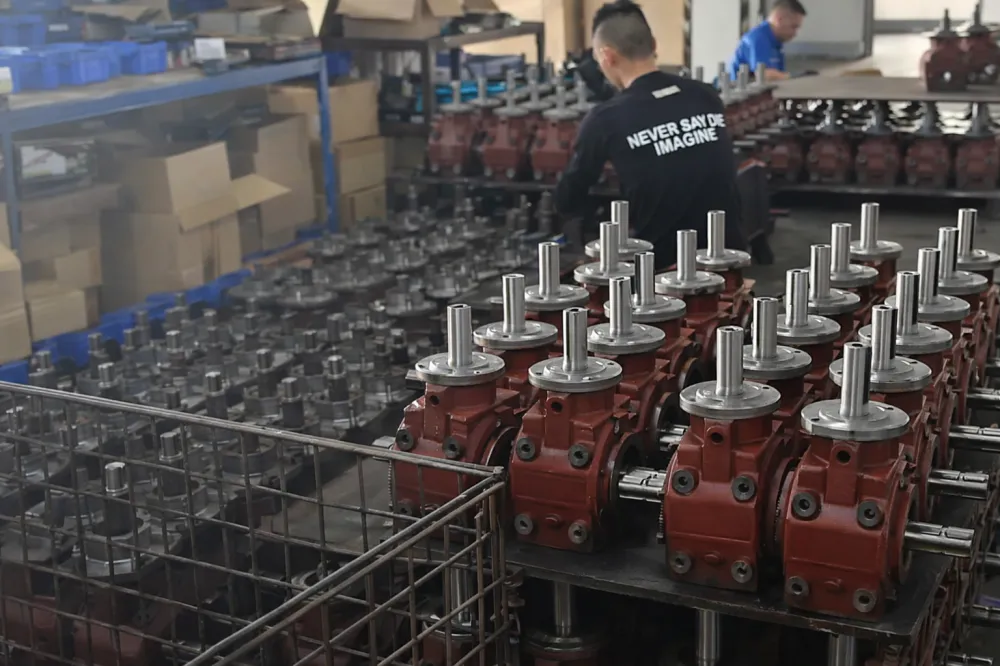
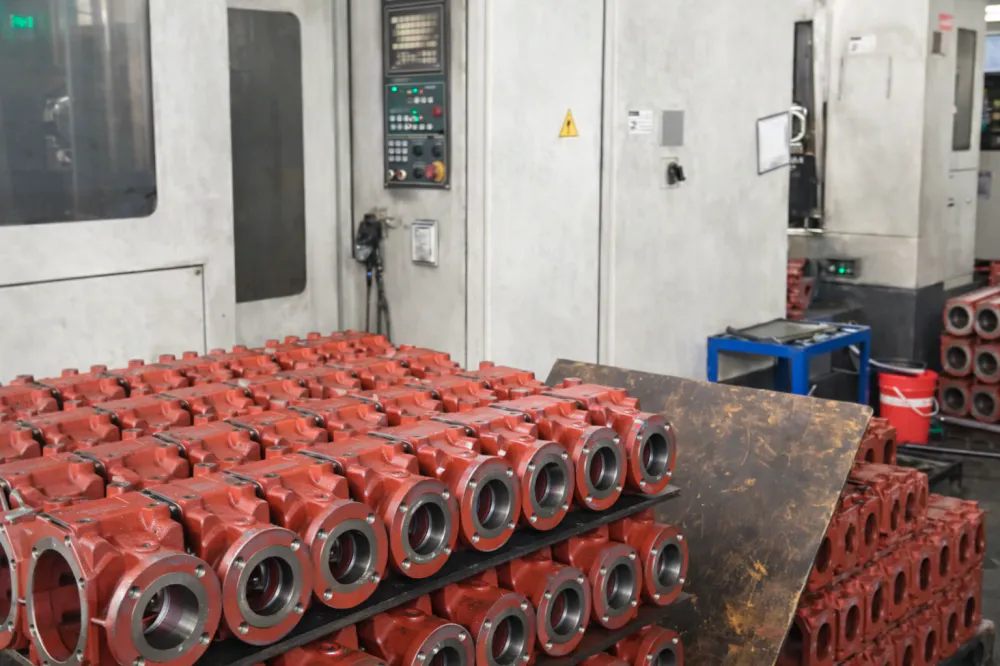
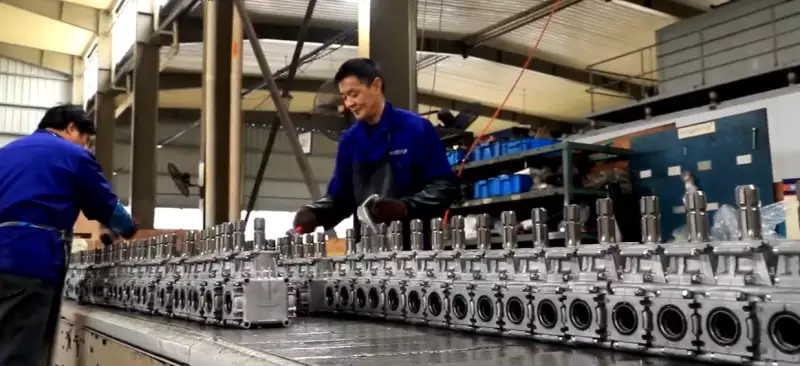
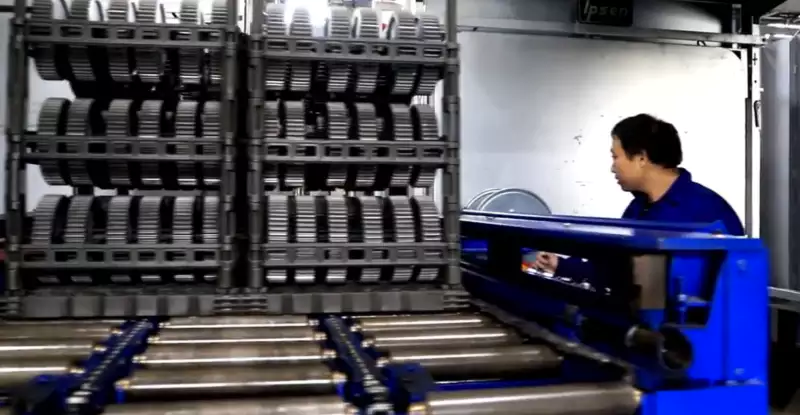
Our manufacturing facility is a dedicated agricultural gearbox production center with over two decades of engineering and production experience in irrigation drive components, PTO gearboxes, and agricultural transmission systems. We serve OEM irrigation manufacturers, regional agricultural equipment distributors, and direct procurement programs across more than 60 countries — with a growing network of irrigation wheel drive gearbox supplier Colombia relationships and agricultural equipment partners throughout Latin America.
Production is carried out on CNC gear hobbing, precision grinding, and automated assembly verification equipment. Every completed irrigation wheel drive gearbox undergoes a multi-stage outgoing inspection that includes dimensional verification of critical shaft and bore features, gear contact pattern analysis, static leak testing under pressure, and a final torque cycle check before packaging. Units are shipped pre-filled with oil and include all necessary mounting hardware as standard.
We hold ISO 9001:2015 certification for our quality management system. Our engineering team maintains documentation aligned with AGMA, ISO, and regional standard requirements for international export markets. Spanish-language technical documentation, installation guides, and pre-sales engineering support are available for customers in Colombia and across Latin America. We supply both standard catalog products and OEM-specified variants with custom gear ratios, modified shaft configurations, and application-specific sealing packages to meet customer-defined performance requirements.
Workshop
8. Compatible Agricultural Driveline Components
An irrigation wheel drive gearbox performs as part of a larger mechanical and hydraulic system. We supply a complete range of agricultural transmission components and driveline accessories designed for compatibility with irrigation equipment and field machinery across the full production cycle. Whether you are specifying a new system build, replacing individual worn components, or sourcing a full driveline package for an OEM irrigation assembly, our product range supports consolidated procurement across gearboxes, PTO shafts, roller chain, and sprockets — reducing the number of suppliers you need to manage and simplifying the logistics of your equipment supply program.
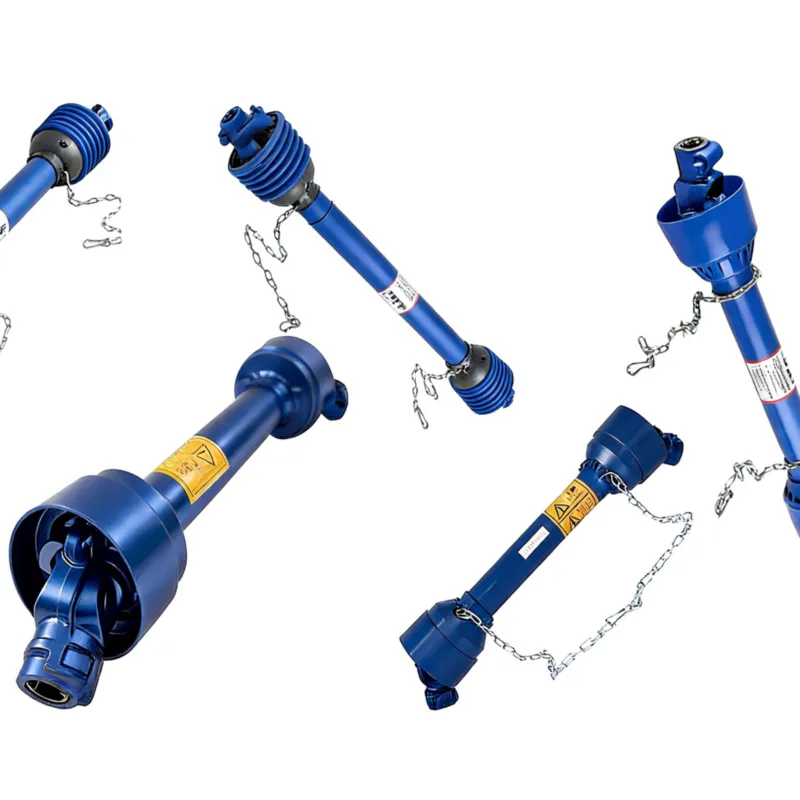
Agricultural PTO Shafts
Power Take-Off shafts connect tractor output to irrigation pumps, drive gearboxes, and a wide range of field machinery. Our range of agricultural PTO driveshafts covers cross-joint, constant-velocity, and overrunning clutch variants in standard and custom lengths for tractor-powered irrigation and harvesting equipment. Full range of connection sizes and torque ratings available for agricultural driveline integration. Designed for compatibility with major tractor PTO standards including 540 RPM and 1,000 RPM output configurations.
Agricultural Drive Chain
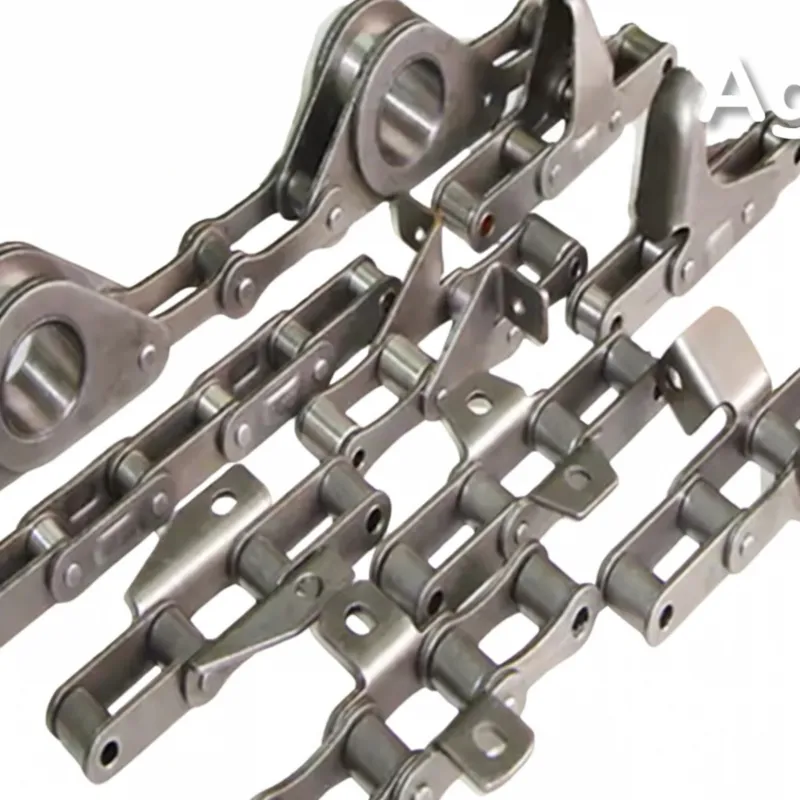
Heavy-duty roller chain for feed conveyors, seeding equipment, and field machinery drivelines. Our agricultural roller chain selection covers standard ANSI and ISO chain sizes alongside heavy-gauge variants for high-shock load applications in harvesting, tillage, and materials handling machinery. Corrosion-resistant and stainless options are available for wet or chemical exposure environments such as irrigation system mechanical drive circuits and fertilizer handling conveyors.
Agricultural Sprockets
Matching sprockets for ANSI and ISO metric roller chain in a full range of bore sizes, hub styles, and tooth counts. We supply hardened-tooth sprockets suited for high-wear applications across grain handling, irrigation equipment, and tillage machinery. Available as matched sets with our agricultural chain offering, these sprockets are optimized for specific chain pitch and design load combinations to provide a complete chain-and-sprocket driveline package from a single supplier.
Frequently Asked Questions
Q1. How do I select the correct irrigation wheel drive gearbox ratio for my center pivot system in Colombia?
The correct gear ratio depends on your tower drive motor operating speed, your wheel diameter, and the required pivot travel speed for your irrigation scheduling. For the majority of standard single-phase and three-phase electric motor center pivot installations, the AEP-1-50 at 50:1 is the appropriate selection. If you are replacing existing Valley-brand drives, the AEP-1V-52 at 52:1 is the correct direct replacement specification. For any installation where motor specifications, travel speed requirements, or pivot brand are uncertain, submit your motor nameplate data, existing drive model number, and pivot brand to our technical team before finalizing the order — an incorrect gear ratio selected at the sourcing stage cannot be easily corrected in the field.
Q2. Which AEP-1 configuration is best suited for rice irrigation center pivots operating in the Colombian Llanos?
For center pivot irrigation in the Colombian Llanos Orientales, where rice paddies and seasonally flooded grasslands present soft, waterlogged soils with high wheel-slip resistance and where pivots often run continuously through the growing season, the AEP-1-50 with its full 69,000 lb·in torque capacity is the recommended specification. The triple-lip input shaft seal and included crop guard seals are critical for this application — the combination of standing water, saturated soil, and crop stubble creates a particularly aggressive environment for gearbox sealing. Buyers should also confirm that the drive motor rating on their pivot towers is adequate to develop the required torque at the specified travel speed when operating in paddy conditions, as motor overloading under elevated rolling resistance is a common secondary issue in these environments.
Q3. What warning signs indicate that an irrigation wheel drive gearbox needs replacement before complete failure?
Field observations that should prompt immediate gearbox inspection and likely replacement include: audible grinding or clicking from the gear housing during wheel rotation, indicating progressive gear surface wear or bearing race degradation; visible oil leakage at the input shaft seal, housing parting face, or end cap joint, indicating primary seal failure; milky or cloudy oil appearance on dipstick check, indicating water ingress through compromised seals; detectable output shaft lateral play beyond normal running clearance, indicating worn gear mesh or a failed bearing inner race; and elevated housing surface temperature during operation — a housing that is too hot to hold your hand on after a normal operating cycle suggests lubrication breakdown or internal friction increase from bearing pre-load loss. Any of these indicators observed during routine inspection should be treated as a replacement trigger to prevent secondary damage to the pivot tower drive frame or wheel hub assembly.
Q4. Which type of gear oil is specified for the AEP-1 Series irrigation final-drive gearbox?
The AEP-1 Series is designed for use with ISO VG 220 worm gear oil meeting AGMA 9005 specifications for enclosed worm gear drives. An EP (extreme pressure) additive package is recommended for the operating conditions typical of irrigation pivot service. Do not mix oil types or introduce friction modifiers unless they are specifically listed as approved by the gearbox manufacturer. The unit is shipped pre-filled with oil to the rated 3.9 L capacity — no additional oil should be added at installation unless oil was accidentally lost during transit or handling. In remote field locations where ISO VG 220 is not available, consult the maintenance documentation for approved alternative lubricants before field-filling with a substitute product.
Q5. How does the AEP-1V-52 function as a center pivot irrigation drive gearbox replacement for Valley systems?
The AEP-1V-52 is factory-configured at a 52:1 gear ratio to match the output speed specification originally defined for Valley-brand pivot drives. When used as a replacement, the AEP-1V-52 produces the same wheel travel speed as the original Valley drive at equivalent motor RPM, maintaining the irrigation system's calibrated travel and water application rate without requiring changes to the pivot control programming. The structural construction, torque rating, sealing design, bearing specification, and mounting bolt pattern are identical between the AEP-1-50 and AEP-1V-52. For non-Valley applications, the AEP-1-50 is the standard selection.
Editor: PXY