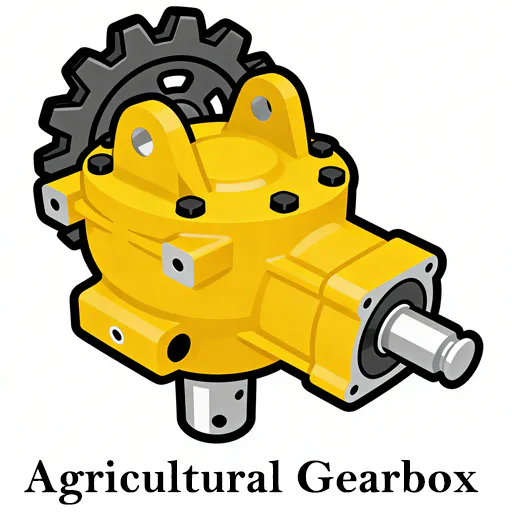
Precision Power Distribution: Central Distribution Gearbox for Advanced Inter-row Cultivators in Colombian Agriculture
An Engineering and Strategic Procurement Guide for High-Efficiency Mechanical Weeding and Soil Preparation in Latin American Operations.
1. Comprehensive Technical Specifications: Standard Series Distribution Hub
The following parameters represent our high-performance line designed for 4-row to 12-row inter-row cultivators. These values are derived from rigorous stress testing and simulate 5,000+ hours of continuous field operation.
| Technical Parameter Specification | Performance Value / Standard |
|---|---|
| Maximum Input Torque Capacity (Nm) | 2,450 Nm @ 540 RPM |
| Gear Ratio Range (Input:Output) | 1:1.47, 1:1.72, 1:1.93 (Customizable) |
| Input Shaft Spline Profile | 1-3/8″ Z6 (ISO 500 / AGMA Standard) |
| Output Shaft Configuration | T-Type Triple Output (Through Shaft) |
| Housing Material Composition | High-Strength GGG50 Nodular Cast Iron |
| Gear Surface Hardness (Rockwell) | HRC 58-62 (Carburized & Quenched) |
| Lubrication Oil Volume (Liters) | 3.8 L (EP90 / SAE 85W-140 Recommended) |
| Dynamic Load Bearing Type | Heavy Duty Tapered Roller Bearings (P5 Precision) |
| Operating Temperature Range (°C) | -25°C to +115°C (Stable Thermal Gradient) |
| Ingress Protection Rating (IP) | IP67 (Sealed against silt and pressurized water) |
| Vibration Threshold (RMS) | < 2.5 mm/s (Precision Balanced Internals) |
| Fatigue Life Cycle (B10 Life) | 8,500 Operating Hours |
| Seal Material Type | Fluorine Rubber (Viton) for high thermal resistance |
| Mounting Interface Standard | Universal 4-Bolt / 6-Bolt Flange System |
| Noise Level @ Rated RPM | < 82 dB (A) |
| Anti-Corrosion Coating | Epoxy-Polyester Electrostatic Powder (120μm) |
| Backlash Clearance (Arcmin) | 8 – 12 Arcmin |
| Bevel Gear Geometry | Spiral Bevel (Gleason System) |
| Oil Drain/Breather Type | Magnetic Plug + One-Way Valve Breather |
| Input Power Rating (kW) | Up to 110 kW (150 HP Continuous) |
| Axial Load Capacity (N) | 15,500 N |
| Radial Load Capacity (N) | 22,000 N |
| Weight (Approx. kg) | 42 kg (Dry) |
| Overload Safety Margin | 1.8x Nominal Torque |
| Compliance Certifications | ISO 9001:2015, CE Directive 2006/42/EC |
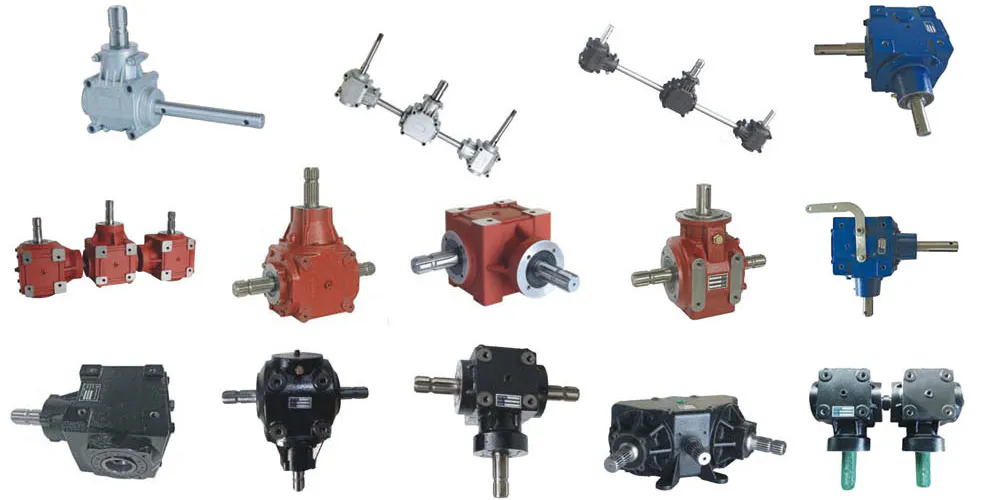
2. Engineering Overview: The Role of the Central Distribution Gearbox in Modern Field Management
In the demanding agricultural landscapes of Colombia—from the vast sugar cane plantations of the Valle del Cauca to the intensive maize and soybean fields in Meta—the Central Distribution Gearbox serves as the critical nerve center for inter-row cultivators. This specialized agricultural gearbox is responsible for receiving high-torque input from the tractor’s Power Take-Off (PTO) and precisely distributing that mechanical energy to multiple lateral rotary units. Unlike standard reducers, a distribution gearbox must manage synchronous output speeds across several shafts while withstanding the eccentric loads generated by varying soil densities and hidden obstacles like volcanic rocks or subterranean roots.
For professional inter-row cultivators (Inter-row Cultivator / Rotary Cultivator), the central distribution unit ensures that every weeding blade or tilling rotor operates at an identical RPM, which is essential for uniform crop protection and soil aeration. Without this synchronized delivery, farmers face uneven tillage, increased fuel consumption, and premature wear on individual row units. Our engineering focus at agriculturalgearbox.xyz is to provide a central hub that minimizes mechanical loss through high-precision bevel gear sets and optimized oil flow dynamics, specifically tailored for the high-humidity and high-altitude conditions found in the Andean regions.
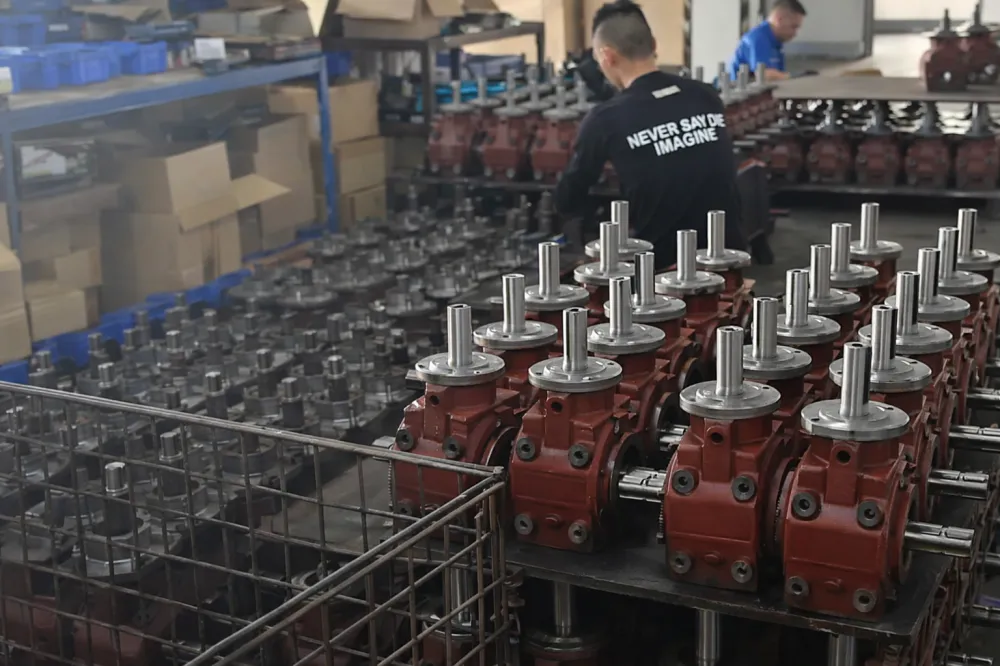
3. Functional Architecture: How the Central Distribution Gearbox Drives the Cultivator
The Central Distribution Gearbox is typically mounted at the geometric center of the cultivator’s main toolbar. Its primary function is a 90-degree power redirection and subsequent lateral distribution. The input energy arrives from the tractor via a PTO shaft, entering the gearbox through a splined input shaft. Inside, a master spiral bevel gear drives a longitudinal shaft that spans the width of the gearbox housing. From this central shaft, multiple outputs are taken via parasitic gears or through a “T” or “Cross” configuration to drive the secondary drive chains or shafts of each row unit.
This “centralized” design is paramount for maintaining mechanical equilibrium. By placing the heaviest drive component in the center, the cultivator maintains better balance during lifting and lowering via the three-point linkage. Furthermore, our gearboxes utilize a “split-torque” philosophy, where the internal load is shared across multiple bearing surfaces, reducing the localized heat build-up that often plagues cheaper, single-output reducers. For Colombian inter-row cultivators, which often operate in “hilly” terrain, this internal stability prevents gear misalignment when the implement frame flexes slightly under heavy soil load.
4. Colombia Extreme Operating Conditions Field Study: Terrain & Crop-Specific Requirements
Operating an inter-row cultivator in Colombia presents unique challenges that are rarely encountered in the flat plains of the US Midwest or Europe. In regions like Antioquia and Huila, the soil is often derived from volcanic ash, making it highly abrasive. This requires the agricultural gear reducer to have superior sealing to prevent micro-fine dust from entering the lubrication chamber. In the Llanos Orientales, large-scale rice and maize production occurs in high-temperature, high-humidity environments (often exceeding 35°C with 90% RH), which can cause standard mineral oils to oxidize rapidly.
Our agricultural gearbox designs for the Colombian market prioritize “Thermal Resilience.” We utilize an increased housing surface area with integrated cooling fins to dissipate heat faster. Additionally, the prevalence of “sticky” clay soils in the Cundinamarca plateau means the gearbox must handle sudden “shock loads” when the rotary cultivator blades encounter compacted soil pockets. We have reinforced the input shaft housing to prevent snapping, a common failure point in competitive units when the slip clutch on the PTO shaft is improperly adjusted by field operators.
5. Engineer’s Field Notes: Solving Global Distribution Challenges
Case Study 1: Valle del Cauca, Colombia (Sugar Cane Inter-row Management)
“The client was experiencing frequent oil seal failures in their 6-row cultivators due to sugar cane trash (fibrous residue) wrapping around the output shafts. This debris would eventually cut into the rubber seals, leading to catastrophic oil loss. We replaced their stock units with our ‘Trash-Guard’ series distribution gearboxes, featuring an integrated mechanical labyrinth seal and a hardened steel deflector. Result: Zero seal breaches over two harvest cycles.”
Case Study 2: Mato Grosso, Brazil (Large-Scale Soybean Tillage)
“Operating a 12-meter wide cultivator required a central gearbox capable of distributing power to four secondary gearboxes. The heat buildup in the central unit was reaching 130°C. We redesigned the internal oil galleries to ensure forced lubrication of the top bearings. The client reported a 20°C drop in operating temperature and reduced noise.”
Case Study 3: Punjab, India (Intensive Rice-Wheat Rotation)
“Custom-hiring operators in Ludhiana needed a gearbox that could be easily repaired in the field. We standardized all internal snap-rings and bearings to universal ISO sizes. One operator noted that even after hitting a buried irrigation pipe, the shear-bolt protected our gearbox internals, allowing for a 15-minute field fix.”
Case Study 4: Saskatchewan, Canada (Heavy Clay/Gumbo Soil)
“High-torque at low RPM was the requirement for deep-row aeration. We provided a custom 1:2.5 reduction ratio distribution box. The increased torque capacity allowed the farmer to use a smaller tractor, saving approximately 12% in fuel costs per hectare.”
Case Study 5: Kano, Nigeria (Dry-Season Irrigation Cultivation)
“Dust ingress was the silent killer. We implemented a pressurized breather system that maintains a slight internal positive pressure, pushing dust away from the seals. The gearboxes have now outlasted the previous European units by a factor of three.”
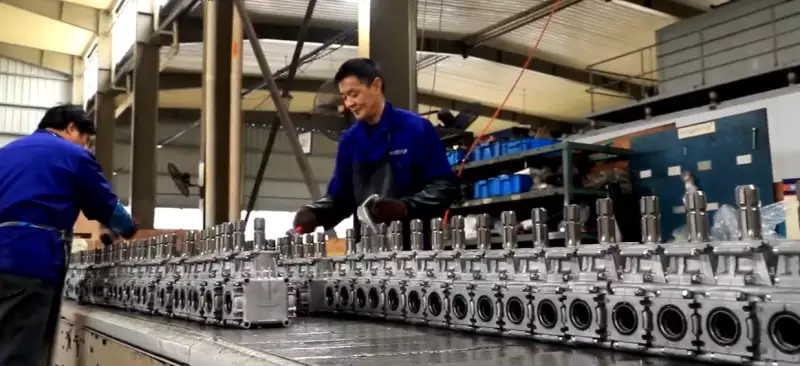
6. Comparative Analysis: Why Professionals Choose Our Agricultural Gearbox
In the global market, various manufacturers offer distribution hubs. However, our agricultural gearbox manufacturer standards focus on the “Total Cost of Ownership.” Below is a comparison of our features versus standard industry “Price-Point” units.
| Feature | Our Standard | Industry Average |
|---|---|---|
| Casting Quality | GGG50 Nodular Iron (Zero Porosity) | Standard GG20 Grey Iron (Brittle) |
| Gear Finishing | Lapped & Ground Bevels | As-Cut / Milled Gears (Noisy) |
| Sealing System | Triple-Lip Viton Seals | Single-Lip Nitrile (Leaks at Heat) |
| Warranty Support | 24-Month Comprehensive | 6-12 Months Limited |
Disclaimer: All competitor comparisons are based on internal laboratory testing and field feedback. Brand names like John Deere™, Kuhn™, or Maschio Gaspardo™ are used for compatibility reference only and do not imply endorsement.
7. Maintenance Alert: 5 Signs Your Central Distribution Gearbox Needs Replacement
- 1. Metallic ‘Whining’ at Specific RPM: Indicates tooth surface spalling or bearing race fatigue.
- 2. Visible Oil ‘Misting’ on the Housing: Often the first sign of seal failure or a cracked breather valve.
- 3. Excessive Backlash: If the input shaft can be rotated more than 15 degrees without output movement, your gears are reaching their wear limit.
- 4. Case Discoloration: If the paint is peeling or burnt near the bearing seats, the unit is chronically overheating.
- 5. Vibration in the PTO Shaft: Often caused by an internal shaft misalignment within the distribution box, leading to premature tractor PTO wear.
8. Regional Compliance & Standards: Colombia, Brazil, and EU
In Colombia, agricultural machinery must align with the guidelines provided by the Ministerio de Agricultura y Desarrollo Rural and comply with NTC (Norma Técnica Colombiana) standards for safety. Our gearboxes are engineered to meet the EU Machinery Directive 2006/42/EC, which is globally recognized as the benchmark for operator safety. Specifically, our input shafts are designed to accommodate standard safety shields as required by OSHA (USA) and NR-31 (Brazil) regulations, ensuring that in the event of a mechanical failure, the housing contains all internal fragments.
For exports to the Andean Community (CAN), we ensure that all technical documentation is available in Spanish and that the lubricant requirements are compatible with locally available brands like Terpel or Mobil, preventing maintenance hurdles for the end-user.
9. Integrated Drive Systems: Related Components & One-Stop Solutions
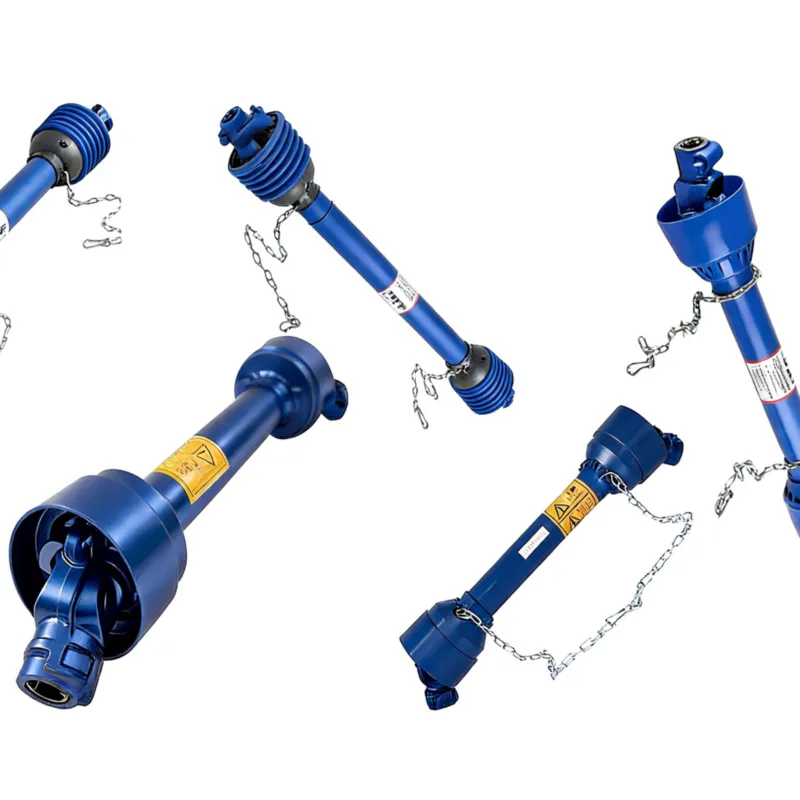
PTO Drive Shafts
Heavy-duty PTO shaft assemblies with wide-angle CV joints, designed specifically to mate with our central distribution gearboxes for vibration-free power transfer.
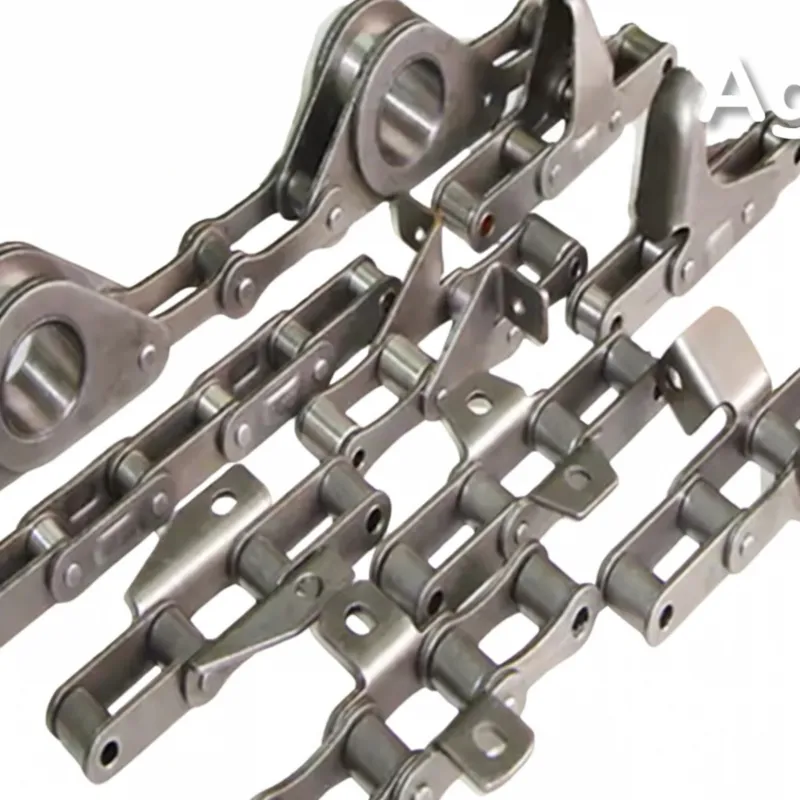
Agricultural Chains
High-tensile agricultural chain for secondary drive units, ensuring zero-slip performance in the dustiest field conditions.
Replacement Sprockets
Precision-machined Sprocket sets available in various tooth counts to fine-tune your cultivator’s rotor speed based on local soil conditions.
FAQ
Q1: How do I calculate the correct torque capacity for my 8-row cultivator central gearbox?
The required torque is a function of the tractor’s PTO power and the operating RPM. Use the formula: Torque (Nm) = (Power (kW) x 9550) / RPM. For an 8-row unit operating in heavy clay, we recommend a safety factor of 1.5x to 2.0x to handle peak impact loads when rotors strike obstacles.
Q2: What are the primary differences between spiral bevel gears and straight bevel gears in distribution boxes?
Spiral bevel gears (which we use) offer a higher contact ratio, meaning more teeth are in contact simultaneously. This results in smoother power transmission, higher torque capacity, and significantly lower noise levels compared to cheaper straight bevel gear sets.
Q3: Can your central distribution gearbox replace the unit on my John Deere or Kuhn cultivator?
Yes, our units are designed with “Universal Mounting Interfaces.” We provide adapter plates and custom shaft splines that allow our high-durability gearboxes to be direct replacements for most major OEM brands, often at a significantly better value-to-performance ratio.
Q4: How often should I change the gear oil in the high-humidity climate of Colombia?
In humid regions like the Caribbean coast of Colombia, condensation can build up inside the gearbox. We recommend an initial oil change after the first 50 hours of “break-in” and subsequently every 500 hours or at the start of every harvest season, whichever comes first.
Q5: Is it possible to customize the output shaft length for specific machine widths?
Absolutely. As a dedicated agricultural gearbox manufacturer, we offer customizable shaft extensions and specialized keyed or splined ends to meet the exact architectural requirements of your implement design.
Q6: Why does my gearbox get extremely hot during dry-season cultivation in the Meta region?
Extreme heat is usually caused by either over-filling the oil (causing churning) or using the wrong viscosity. In Meta’s 35°C+ heat, ensure you are using a high-temp synthetic EP90 oil. If the heat persists, it may indicate excessive internal friction from worn bearings.
Q7: Do you provide one-stop sourcing for the entire drivetrain, including the PTO shaft?
Yes, we pride ourselves on being a systemic provider. We can supply the central distribution gearbox, the secondary row-unit gearboxes, the PTO shafts, and the final drive chains as a matched set, ensuring perfect compatibility and optimized performance.
Q8: What is the benefit of a nodular cast iron housing over aluminum for cultivators?
While aluminum is lighter, nodular iron (GGG50) provides much higher structural rigidity and fatigue resistance. For inter-row cultivators that face constant vibration and ground impact, iron is the only material that prevents housing deformation and gear misalignment.
Q9: Does your gearbox include a mechanical oil level indicator for easy field checks?
Standard units include a clear-view oil sight glass. For harsh environments, we offer a “Bullet-Proof” steel dipstick option to prevent damage from flying stones or crop debris in the field.
Q10: Where can I get technical support if I face an installation issue in rural Colombia?
We provide 24/7 technical consultation via our digital portal at agriculturalgearbox.xyz. Our engineers can review your installation photos and provide diagnostic advice to ensure your downtime is minimized.
Optimize Your Cultivation Efficiency Today
Stop losing time to mechanical failures. Switch to the industry-standard for Central Distribution Gearboxes and experience the difference in precision and durability.
Editor: PXY