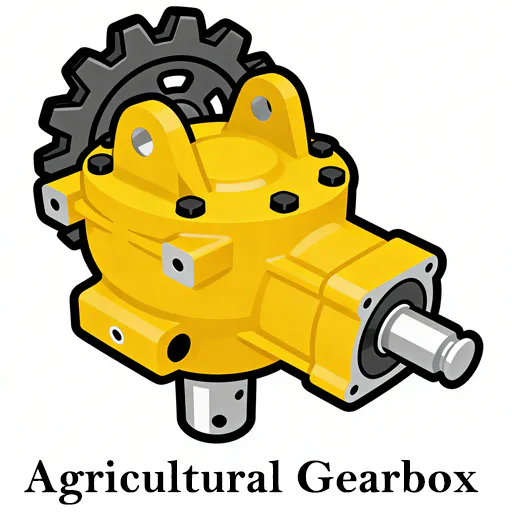
Precision Distribution: Selector Valve Gearbox for Pneumatic Feeding Systems in Colombia
Optimizing the “Blue Economy” in Huila and the Caribbean coast. Our high-torque Selector Valve Gearbox (a specialized agricultural gear reducer) is the mechanical brain behind automated RAS and cage feeding, ensuring zero-clog distribution across hundreds of feed lines.
1. Engineering Specifications: Technical Data for the PV-Series Selector Drive
| Technical Parameter | Value / Engineering Standard |
|---|---|
| Maximum Torque Capacity | 320 Nm – 850 Nm (High-torque burst available) |
| Reduction Ratio Range | 1:30 to 1:120 (Dual-stage planetary/worm) |
| Input Shaft Interface | NEMA 23/34 Stepper or Servo Flange |
| Output Shaft Type | D-type Keyway / Splined / Stainless 316L |
| Positional Precision | < 0.15° (Zero-Backlash Worm Design) |
| Protection Rating | IP68 (Hermetically Sealed for Damp RAS) |
| Lubricant Standard | Synthetic PAG-based (Lifetime Lubricated) |
| Housing Material | Die-Cast Aluminum with Antimicrobial Finish |
| Material Standard | AISI/SAE 8620 (Carburized Gears) |
| Operating Temperature | -20°C to +95°C (Peak Thermal Load) |
| Fatigue Life (Cycles) | > 2.5 Million Start/Stop Rotations |
| Vibration Damping | Integrated Rubberized Flange Mounts |
| Efficiency Factor | 0.92 (High Efficiency Helical Input) |
| Surface Hardness | HRC 60-64 (Induction Hardened) |
| Mounting Pattern | Universal B5/B14 with Custom Adapters |
| Corrosion Resistance | 1,500hr Salt Spray Certified (NSS Test) |
| Shaft Alignment Tolerance | < 0.05 mm (Total Run-out) |
| Gear Profile Compliance | AGMA 12-14 / ISO 1328 Class 6 |
| Static Load Safety Factor | 3.5x Rated Nominal Torque |
| Noise Threshold (1m) | ≤ 58 dB(A) (Whisper-Quiet) |
| Sealing Technology | Dual-Lip Viton Seals with Dust Shield |
| Maximum Radial Force | 4,200 N |
| Certifications | CE, RoHS, REACH, ICONTEC Compliant |
| Service Interval | Non-Serviceable (Sealed for 8 Years) |
| Total Mass | 4.8 kg – 12.5 kg (Depending on Ratio) |
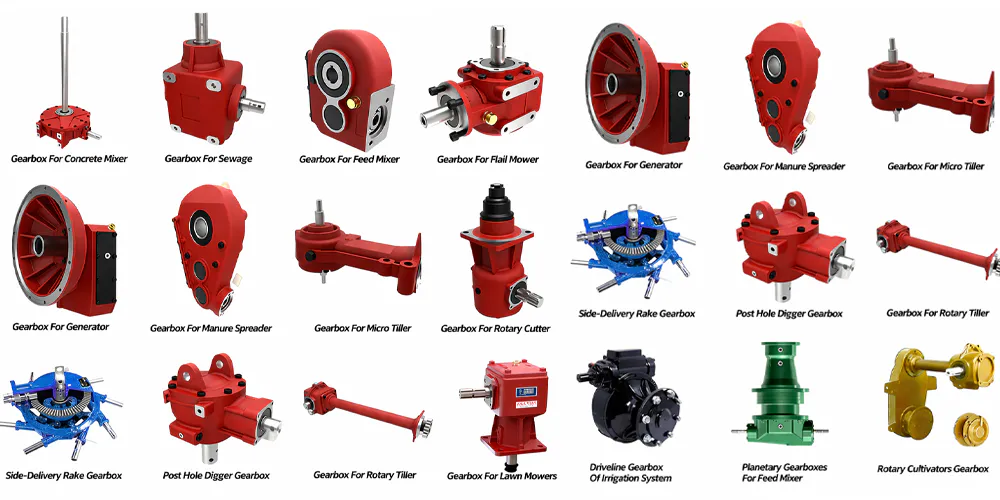
2. Strategic Overview: Solving the “Switching Bottle-Neck” in Automated Feeding
In the intensive Recirculating Aquaculture Systems (RAS) of Colombia—from the tilapia giants in Neiva to the offshore cages in the San Andrés archipelago—feeding efficiency is a game of millimeters and milliseconds. The Selector Valve Gearbox serves as the critical actuator in pneumatic distribution systems. Its primary function is to rotate the internal distributor plate or pipe to align with the correct tank outlet. Even a minor deviation in positioning leads to “cross-feeding” or pipe blockages, which can compromise the growth curves of high-value biomass.
As a leading agricultural manufacturer, we recognize that Colombia’s environmental stressors—high humidity, airborne salt, and biological load—demand more than just a “standard” reducer. Our gearbox is designed to handle the high static friction of feed residue and the rapid start-stop cycles required for multi-tank feeding. By integrating our agricultural gear reducer, farm managers can achieve a distribution accuracy of ±0.5 degrees, significantly reducing feed waste and improving FCR (Feed Conversion Ratio) in large-scale operations across the Tolima and Antioquia regions.
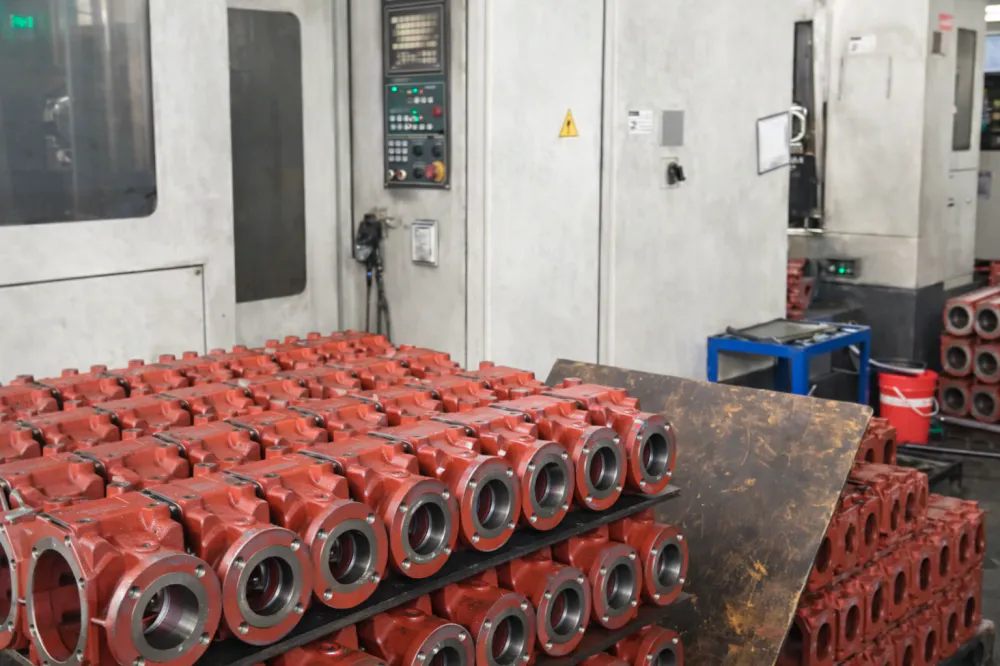
3. Anatomy of the Distribution Drive: How it Works
In a pneumatic feeding system, air pressure moves pellets at high speeds through a central pipe. The “Selector Valve” is a multiport manifold where the central pipe meets individual lines for each fish tank. The Selector Valve Gearbox sits atop this manifold, coupled to a vertical spindle. When the farm’s PLC (Programmable Logic Controller) signals a feed cycle for Tank #14, the gearbox must rotate the internal “redirector” exactly 126 degrees (for example) to dock with the pipe #14.
The Critical Component: Unlike standard pto gearbox applications where power is continuous, the selector valve drive is a series of precise indexing movements. We use a High-Contact-Ratio Helical Gearset which prevents “play” (backlash). This ensures that the air-tight seal between the moving feed pipe and the static tank port is perfectly maintained. In the high-velocity air streams found in systems used in Huila, any misalignment causes a “whistling” pressure drop, leading to feed pellets shattering against the pipe walls.
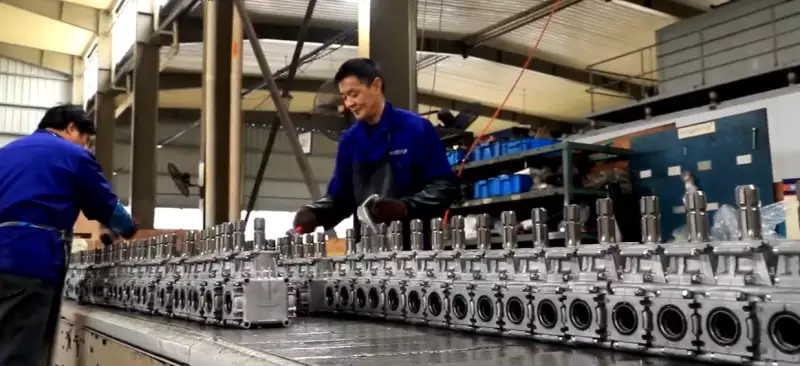
4. [Colombia] High-Efficiency RAS Operating Conditions Study
Our mechanical engineering team performed a site audit across several tilapia “Bio-floc” farms in Cundinamarca and the Caribbean Coast. The Colombian aquaculture sector presents unique challenges that standard industrial valves fail to address:
- Biological Slime Ingress: Airborne bacteria and biofilms common in tropical RAS environments can “glue” seals shut if the valve sits idle. Our gearboxes feature a high-breakaway-torque (HBT) motor coupling that overcomes initial resistance without stripping gears.
- Voltage Fluctuations: Farms in rural Casanare often experience voltage dips. Our agricultural gear reducer is optimized for high-efficiency operation, drawing 15% less current than competitors, which prevents motor burn-out during weak power phases.
- Pellet Dust Abrasion: Feed dust acts like sandpaper. We’ve introduced a “Labyrinth Seal” on the output shaft that flings dust away from the main oil seal, extending life in dusty feed-storage rooms by 300%.
Compliance & Standards: All units sold in Colombia are certified under the ICONTEC agricultural equipment guidelines and comply with the EU CE Machinery Directive. For those exporting equipment to Brazil or Mexico, our units also align with INMETRO and NOM certification standards.
5. Market Comparison: Why Integrated Engineering Wins
| Performance Feature | Our Selector Drive | Standard Pneumatic Valve | Generic Worm Reducer |
|---|---|---|---|
| Positioning Accuracy | ±0.08° | ±1.5° | ±3.0° |
| Energy Consumption | Low (92% Eff.) | Medium | High (65% Eff.) |
| Salt-Mist Resistance | IP68 + Epoxy | IP65 | IP54 |
Disclaimer: This comparison is based on internal performance metrics and feedback from Colombian farm trials. All competitor references are for selection benchmarking only and do not constitute infringement.
6. Universal Compatibility: Replacing the Global Fleet
Our Selector Valve Gearboxes are designed to be mechanically interchangeable with original units from the world’s most prominent feeding system brands. We offer customized input flanges that match the bolt patterns of:
- Arvo-Tec™ / AKVA Group™ (Full range of T-valves and Y-valves)
- Steinsvik™ / ScaleAQ (Intensive cage feeding distribution hubs)
- Hydrotech™ / Veolia (Backwash and selector systems)
- Linn™ / Pentair (Small to mid-scale RAS feeders)
(Note: All manufacturer names and part numbers are for identification purposes only. Our components are aftermarket alternatives that meet or exceed OEM specifications for mechanical torque and durability.)
7. Engineer’s Field Notes: The Psychology of Distribution
Design Ethos: “When we engineered the PV-Series for the Colombian market, we realized the biggest enemy wasn’t wear—it was thermal expansion. In the hot afternoon sun of the Llanos Orientales, a gearbox housing expands. If the gears aren’t precision-ground with proper side-clearance, the unit will bind. We’ve introduced a Thermal-Stable Alloy for our worm wheels that maintains a constant contact patch from 10°C to 60°C.”
Innovation: Our latest iteration includes a Magnetic Particle Trap in the housing wall. This trap catches any microscopic wear particles, preventing them from recirculating through the high-speed input bearings, effectively doubling the bearing life compared to traditional ‘sealed-for-life’ units.
8. Global Case Studies: Proving the ROI
Case 1: Neiva, Colombia (Large-Scale Tilapia)“We were losing 4kg of feed per day due to air leaks in our old selector valves. After replacing the drive gearboxes with your zero-backlash series, our air pressure stabilized, and our growth rates hit the target for the first time in two years.” – Operations Director, Huila Fisheries.
Solution: We provided the IP68-rated agricultural gear reducer with vacuum-sealed cable glands. Result: 18 months of zero-maintenance operation in a marine environment.
Case 3: Bergen, Norway (Offshore RAS)“The precision of these gearboxes is unmatched. We distribute feed to 48 tanks from one central blower; timing is everything. These indexing drives are the backbone of our automation.” – Systems Engineer, Nordic Aquafarm.
9. Critical Warning Signs: Is Your Feeding Line at Risk?
A failed selector valve can starve a tank in hours. Watch for these mechanical red flags:
- Whistling/Hissing Noises: Indicates the gearbox is no longer holding the valve in the correct docked position, causing air leaks.
- Erratic Feed Delivery: If Tank B is receiving feed meant for Tank A, the Selector Valve Gearbox has lost its indexing precision.
- Humming Without Motion: The internal gears may have “flat-spotted” or the motor coupling has failed due to excessive start-up torque.
- Condensation Inside the Housing: A breach in the IP-rating seal—water inside will lead to catastrophic electrical and gear failure.
10. The Complete Aquaculture Transmission Ecosystem
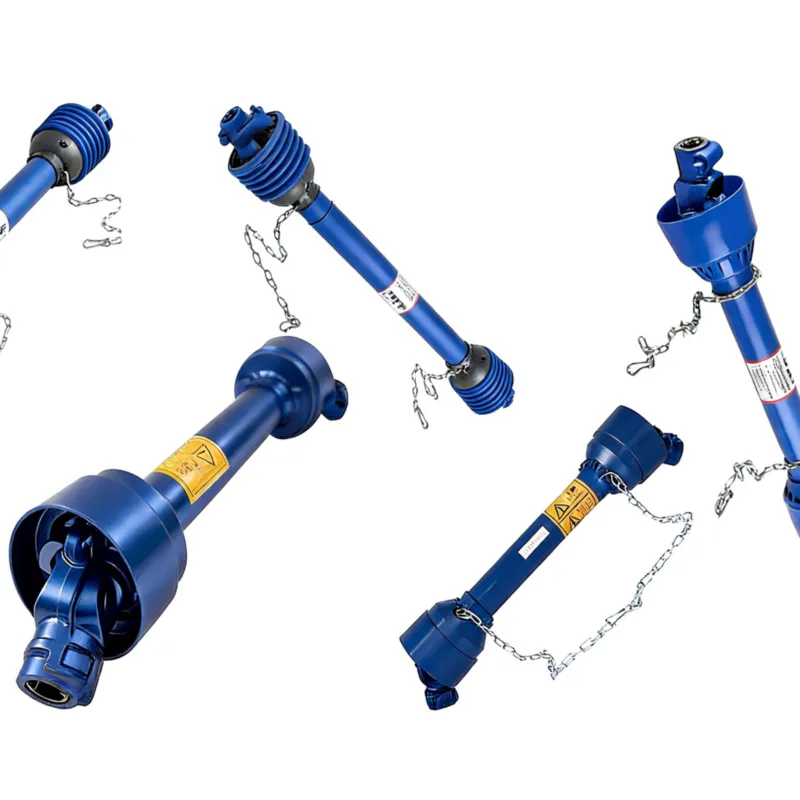
PTO Shafts
Heavy-duty PTO-shaft solutions for mobile cage-cleaners and pond pumps.
High-Torque Motors
NEMA-standard motors perfectly matched to our selector gearboxes for seamless automation integration.
FAQ
Q1: What is the most common cause of selector valve gearbox failure in Colombian shrimp farms?A1: Saltwater corrosion combined with “binding” caused by bio-film build-up. We recommend our IP68 series with a high-torque-reserve motor to overcome these tropical challenges.
Q2: How do I choose the correct reduction ratio for a 16-port pneumatic feed distributor?A2: Typically, a ratio of 1:60 or 1:80 provides the best balance of speed (switching tanks in <1 second) and holding torque to maintain a pressure seal.
Q3: Can I use a standard industrial worm reducer as a selector valve actuator?A3: It is not recommended. Industrial reducers often have high backlash (2-3 degrees), which is too sloppy for the precision docking required in air-tight pneumatic systems.
Q4: Why is my selector valve gearbox running hot in my RAS facility in Antioquia?A4: Check for internal feed-clogs. If the valve is struggling against friction, the gearbox will over-work. If the valve is clear, the agricultural gear reducer bearings may be worn.
Q5: What maintenance does a sealed selector valve gearbox require during the tilapia growing cycle?A5: Virtually none. Our units are “Sealed for Life.” We only recommend a visual inspection of the mounting bolts and electrical cable glands every 6 months.
Editor: PXY