Product Description
VARIANTS Design
Layout of a roller chain: 1. Outer plate, 2. Interior plate, 3. Pin, 4. Bushing, 5. Roller
If the chain is not getting utilised for a high dress in application (for occasion if it is just transmitting movement from a hand-operated lever to a control shaft on a machine, or a sliding doorway on an oven), then 1 of the simpler kinds of chain may possibly nevertheless be employed. Conversely, exactly where extra energy but the sleek generate of a smaller pitch is needed, the chain might be “siamesed” alternatively of just 2 rows of plates on the outer sides of the chain, there could be 3 (“duplex”), 4 (“triplex”), or a lot more rows of plates managing parallel, with bushings and rollers among each adjacent pair, and the exact same number of rows of enamel operating in parallel on the sprockets to match. Timing chains on automotive engines, for case in point, usually have multiple rows of plates referred to as strands.
Roller chain is manufactured in several dimensions, the most frequent American National Standards Institute (ANSI) requirements getting 40, 50, sixty, and eighty. The initial digit(s) point out the pitch of the chain in eighths of an inch, with the previous digit currently being 0 for regular chain, 1 for light-weight chain, and 5 for bushed chain with no rollers. As a result, a chain with 50 percent-inch pitch would be a #40 whilst a #one hundred sixty sprocket would have enamel spaced 2 inches apart, and so on. Metric pitches are expressed in sixteenths of an inch therefore a metric #8 chain (08B-1) would be equivalent to an ANSI #forty. Most roller chain is manufactured from basic carbon or alloy steel, but stainless steel is utilised in meals processing equipment or other areas where lubrication is a problem, and nylon or brass are at times seen for the same reason.
Roller chain is ordinarily hooked up using a master hyperlink (also recognized as a connecting hyperlink), which typically has 1 pin held by a horseshoe clip rather than friction match, enabling it to be inserted or eliminated with straightforward tools. Chain with a removable website link or pin is also acknowledged as cottered chain, which makes it possible for the duration of the chain to be adjusted. 50 % links (also identified as offsets) are available and are used to increase the length of the chain by a single roller. Riveted roller chain has the learn website link (also identified as a connecting url) “riveted” or mashed on the ends. These pins are manufactured to be durable and are not removable.
USE
An case in point of 2 ‘ghost’ sprockets tensioning a triplex roller chain program
Roller chains are utilized in reduced- to mid-velocity drives at around 600 to 800 feet for every moment even so, at larger speeds, around 2,000 to 3,000 ft per minute, V-belts are generally employed owing to wear and sound issues.
A bicycle chain is a form of roller chain. Bicycle chains might have a master website link, or may require a chain device for removal and installation. A similar but greater and thus more robust chain is utilized on most bikes although it is sometimes changed by both a toothed belt or a shaft push, which supply reduced noise amount and much less servicing needs.
The wonderful greater part of car engines use roller chains to drive the camshaft(s). Really high efficiency engines typically use gear drive, and starting in the early sixties toothed belts have been used by some companies.
Chains are also utilized in forklifts making use of hydraulic rams as a pulley to raise and lower the carriage nonetheless, these chains are not deemed roller chains, but are categorized as carry or leaf chains.
Chainsaw reducing chains superficially resemble roller chains but are much more closely related to leaf chains. They are driven by projecting push hyperlinks which also provide to find the chain CZPT the bar.
Sea Harrier FA.2 ZA195 front (cold) vector thrust nozzle – the nozzle is rotated by a chain push from an air motor
A perhaps abnormal use of a pair of motorcycle chains is in the Harrier Leap Jet, exactly where a chain travel from an air motor is utilised to rotate the movable engine nozzles, enabling them to be pointed downwards for hovering flight, or to the rear for normal ahead flight, a system known as Thrust vectoring.
Dress in
The impact of dress in on a roller chain is to boost the pitch (spacing of the backlinks), causing the chain to grow lengthier. Note that this is owing to use at the pivoting pins and bushes, not from true stretching of the steel (as does come about to some versatile steel elements this kind of as the hand-brake cable of a motor motor vehicle).
With present day chains it is strange for a chain (other than that of a bicycle) to dress in right up until it breaks, given that a worn chain sales opportunities to the fast onset of use on the teeth of the sprockets, with supreme failure getting the reduction of all the teeth on the sprocket. The sprockets (in specific the scaled-down of the two) suffer a grinding motion that places a characteristic hook shape into the driven face of the enamel. (This impact is produced worse by a chain improperly tensioned, but is unavoidable no subject what treatment is taken). The worn enamel (and chain) no for a longer time provides clean transmission of electrical power and this may turn into evident from the noise, the vibration or (in automobile engines employing a timing chain) the variation in ignition timing seen with a timing mild. The two sprockets and chain need to be replaced in these cases, considering that a new chain on worn sprockets will not previous lengthy. Even so, in significantly less serious instances it may possibly be achievable to conserve the bigger of the 2 sprockets, because it is usually the smaller 1 that suffers the most dress in. Only in extremely light-weight-excess weight apps this kind of as a bicycle, or in excessive cases of inappropriate stress, will the chain typically soar off the sprockets.
The lengthening due to wear of a chain is calculated by the following formulation:
M = the size of a number of hyperlinks measured
S = the number of hyperlinks measured
P = Pitch
In industry, it is normal to keep track of the movement of the chain tensioner (whether manual or computerized) or the exact length of a drive chain (a single rule of thumb is to exchange a roller chain which has elongated 3% on an adjustable generate or 1.5% on a fixed-center generate). A simpler approach, specifically suitable for the cycle or motorbike person, is to endeavor to pull the chain away from the larger of the 2 sprockets, whilst making certain the chain is taut. Any important motion (e.g. making it feasible to see by means of a gap) possibly indicates a chain worn up to and beyond the limit. Sprocket hurt will end result if the issue is overlooked. Sprocket put on cancels this influence, and may mask chain put on.
CHAIN Energy
The most common measure of roller chain’s energy is tensile power. Tensile power represents how considerably load a chain can stand up to beneath a one-time load ahead of breaking. Just as crucial as tensile energy is a chain’s tiredness energy. The critical factors in a chain’s fatigue power is the good quality of steel utilised to manufacture the chain, the warmth remedy of the chain elements, the quality of the pitch hole fabrication of the linkplates, and the type of shot plus the intensity of shot peen coverage on the linkplates. Other factors can consist of the thickness of the linkplates and the style (contour) of the linkplates. The rule of thumb for roller chain functioning on a continuous generate is for the chain load to not exceed a mere 1/6 or 1/9 of the chain’s tensile power, relying on the variety of learn back links used (push-suit vs. slip-suit)[citation needed]. Roller chains running on a continuous generate over and above these thresholds can and usually do fall short prematurely by way of linkplate exhaustion failure.
The normal bare minimum ultimate strength of the ANSI 29.1 steel chain is twelve,five hundred x (pitch, in inches)2. X-ring and O-Ring chains tremendously decrease put on by signifies of interior lubricants, growing chain lifestyle. The interior lubrication is inserted by indicates of a vacuum when riveting the chain jointly.
CHAIN STHangZhouRDS
Specifications businesses (this kind of as ANSI and ISO) keep specifications for design, dimensions, and interchangeability of transmission chains. For case in point, the subsequent Table demonstrates info from ANSI normal B29.1-2011 (Precision Power Transmission Roller Chains, Attachments, and Sprockets) designed by the American Society of Mechanical Engineers (ASME). See the references[8][9][10] for further data.
ASME/ANSI B29.1-2011 Roller Chain Standard SizesSizePitchMaximum Roller DiameterMinimum Ultimate Tensile StrengthMeasuring Load25
For mnemonic needs, underneath is an additional presentation of important proportions from the identical normal, expressed in fractions of an inch (which was part of the considering driving the decision of desired figures in the ANSI standard):
Notes:
1. The pitch is the distance among roller facilities. The width is the distance between the website link plates (i.e. somewhat far more than the roller width to let for clearance).
two. The appropriate-hand digit of the standard denotes 0 = typical chain, 1 = light-weight chain, 5 = rollerless bushing chain.
3. The left-hand digit denotes the variety of eighths of an inch that make up the pitch.
4. An “H” following the standard quantity denotes heavyweight chain. A hyphenated quantity following the standard number denotes double-strand (2), triple-strand (3), and so on. Therefore 60H-3 denotes quantity 60 heavyweight triple-strand chain.
A common bicycle chain (for derailleur gears) makes use of narrow 1⁄2-inch-pitch chain. The width of the chain is variable, and does not have an effect on the load ability. The more sprockets at the rear wheel (historically 3-6, today 7-12 sprockets), the narrower the chain. Chains are bought according to the amount of speeds they are designed to operate with, for instance, “ten speed chain”. Hub gear or single velocity bicycles use 1/2″ x 1/8″ chains, exactly where 1/8″ refers to the optimum thickness of a sprocket that can be utilised with the chain.
Normally chains with parallel formed back links have an even number of links, with every single slim hyperlink adopted by a broad one particular. Chains built up with a uniform type of url, slim at 1 and broad at the other end, can be made with an odd amount of links, which can be an advantage to adapt to a special chainwheel-distance on the other facet this sort of a chain tends to be not so sturdy.
Roller chains manufactured making use of ISO normal are occasionally known as as isochains.
WHY Choose US
1. Reliable Quality Assurance Program
2. Chopping-Edge Laptop-Controlled CNC Equipment
3. Bespoke Remedies from Extremely Experienced Specialists
four. Customization and OEM Offered for Specific Software
five. Substantial Inventory of Spare Elements and Equipment
six. Effectively-Developed Throughout the world Advertising Network
7. Efficient Following-Sale Service System
The 219 sets of superior computerized manufacturing equipment give assures for higher merchandise top quality. The 167 engineers and technicians with senior professional titles can layout and produce items to satisfy the actual demands of customers, and OEM customizations are also obtainable with us. Our sound international provider community can give consumers with timely following-sales complex solutions.
We are not just a maker and supplier, but also an market advisor. We work pro-actively with you to provide professional guidance and solution suggestions in order to end up with a most value effective solution accessible for your certain software. The consumers we provide throughout the world assortment from stop consumers to distributors and OEMs. Our OEM replacements can be substituted where ever required and suitable for the two mend and new assemblies.
| ASME/ANSI B29.1-2011 Roller Chain Standard Sizes | ||||
| Size | Pitch | Maximum Roller Diameter | Minimum Ultimate Tensile Strength | Measuring Load |
|---|---|---|---|---|
| 25 | 0.250 in (6.35 mm) | 0.130 in (3.30 mm) | 780 lb (350 kg) | 18 lb (8.2 kg) |
| 35 | 0.375 in (9.53 mm) | 0.200 in (5.08 mm) | 1,760 lb (800 kg) | 18 lb (8.2 kg) |
| 41 | 0.500 in (12.70 mm) | 0.306 in (7.77 mm) | 1,500 lb (680 kg) | 18 lb (8.2 kg) |
| 40 | 0.500 in (12.70 mm) | 0.312 in (7.92 mm) | 3,125 lb (1,417 kg) | 31 lb (14 kg) |
| 50 | 0.625 in (15.88 mm) | 0.400 in (10.16 mm) | 4,880 lb (2,210 kg) | 49 lb (22 kg) |
| 60 | 0.750 in (19.05 mm) | 0.469 in (11.91 mm) | 7,030 lb (3,190 kg) | 70 lb (32 kg) |
| 80 | 1.000 in (25.40 mm) | 0.625 in (15.88 mm) | 12,500 lb (5,700 kg) | 125 lb (57 kg) |
| 100 | 1.250 in (31.75 mm) | 0.750 in (19.05 mm) | 19,531 lb (8,859 kg) | 195 lb (88 kg) |
| 120 | 1.500 in (38.10 mm) | 0.875 in (22.23 mm) | 28,125 lb (12,757 kg) | 281 lb (127 kg) |
| 140 | 1.750 in (44.45 mm) | 1.000 in (25.40 mm) | 38,280 lb (17,360 kg) | 383 lb (174 kg) |
| 160 | 2.000 in (50.80 mm) | 1.125 in (28.58 mm) | 50,000 lb (23,000 kg) | 500 lb (230 kg) |
| 180 | 2.250 in (57.15 mm) | 1.460 in (37.08 mm) | 63,280 lb (28,700 kg) | 633 lb (287 kg) |
| 200 | 2.500 in (63.50 mm) | 1.562 in (39.67 mm) | 78,175 lb (35,460 kg) | 781 lb (354 kg) |
| 240 | 3.000 in (76.20 mm) | 1.875 in (47.63 mm) | 112,500 lb (51,000 kg) | 1,000 lb (450 kg |
###
| Pitch (inches) | Pitch expressed in eighths | ANSI standard chain number | Width (inches) |
|---|---|---|---|
| 1⁄4 | 2⁄8 | 25 | 1⁄8 |
| 3⁄8 | 3⁄8 | 35 | 3⁄16 |
| 1⁄2 | 4⁄8 | 41 | 1⁄4 |
| 1⁄2 | 4⁄8 | 40 | 5⁄16 |
| 5⁄8 | 5⁄8 | 50 | 3⁄8 |
| 3⁄4 | 6⁄8 | 60 | 1⁄2 |
| 1 | 8⁄8 | 80 | 5⁄8 |
| ASME/ANSI B29.1-2011 Roller Chain Standard Sizes | ||||
| Size | Pitch | Maximum Roller Diameter | Minimum Ultimate Tensile Strength | Measuring Load |
|---|---|---|---|---|
| 25 | 0.250 in (6.35 mm) | 0.130 in (3.30 mm) | 780 lb (350 kg) | 18 lb (8.2 kg) |
| 35 | 0.375 in (9.53 mm) | 0.200 in (5.08 mm) | 1,760 lb (800 kg) | 18 lb (8.2 kg) |
| 41 | 0.500 in (12.70 mm) | 0.306 in (7.77 mm) | 1,500 lb (680 kg) | 18 lb (8.2 kg) |
| 40 | 0.500 in (12.70 mm) | 0.312 in (7.92 mm) | 3,125 lb (1,417 kg) | 31 lb (14 kg) |
| 50 | 0.625 in (15.88 mm) | 0.400 in (10.16 mm) | 4,880 lb (2,210 kg) | 49 lb (22 kg) |
| 60 | 0.750 in (19.05 mm) | 0.469 in (11.91 mm) | 7,030 lb (3,190 kg) | 70 lb (32 kg) |
| 80 | 1.000 in (25.40 mm) | 0.625 in (15.88 mm) | 12,500 lb (5,700 kg) | 125 lb (57 kg) |
| 100 | 1.250 in (31.75 mm) | 0.750 in (19.05 mm) | 19,531 lb (8,859 kg) | 195 lb (88 kg) |
| 120 | 1.500 in (38.10 mm) | 0.875 in (22.23 mm) | 28,125 lb (12,757 kg) | 281 lb (127 kg) |
| 140 | 1.750 in (44.45 mm) | 1.000 in (25.40 mm) | 38,280 lb (17,360 kg) | 383 lb (174 kg) |
| 160 | 2.000 in (50.80 mm) | 1.125 in (28.58 mm) | 50,000 lb (23,000 kg) | 500 lb (230 kg) |
| 180 | 2.250 in (57.15 mm) | 1.460 in (37.08 mm) | 63,280 lb (28,700 kg) | 633 lb (287 kg) |
| 200 | 2.500 in (63.50 mm) | 1.562 in (39.67 mm) | 78,175 lb (35,460 kg) | 781 lb (354 kg) |
| 240 | 3.000 in (76.20 mm) | 1.875 in (47.63 mm) | 112,500 lb (51,000 kg) | 1,000 lb (450 kg |
###
| Pitch (inches) | Pitch expressed in eighths | ANSI standard chain number | Width (inches) |
|---|---|---|---|
| 1⁄4 | 2⁄8 | 25 | 1⁄8 |
| 3⁄8 | 3⁄8 | 35 | 3⁄16 |
| 1⁄2 | 4⁄8 | 41 | 1⁄4 |
| 1⁄2 | 4⁄8 | 40 | 5⁄16 |
| 5⁄8 | 5⁄8 | 50 | 3⁄8 |
| 3⁄4 | 6⁄8 | 60 | 1⁄2 |
| 1 | 8⁄8 | 80 | 5⁄8 |
Types of pulleys and their advantages and disadvantages
There are several types of pulleys. Learn the basic equations of the pulley system. Then learn about the different uses for pulleys. The disadvantages of using pulleys will be covered. Knowing these, you can buy the pulley that suits your needs. Here are some of the best pulley types and their pros and cons.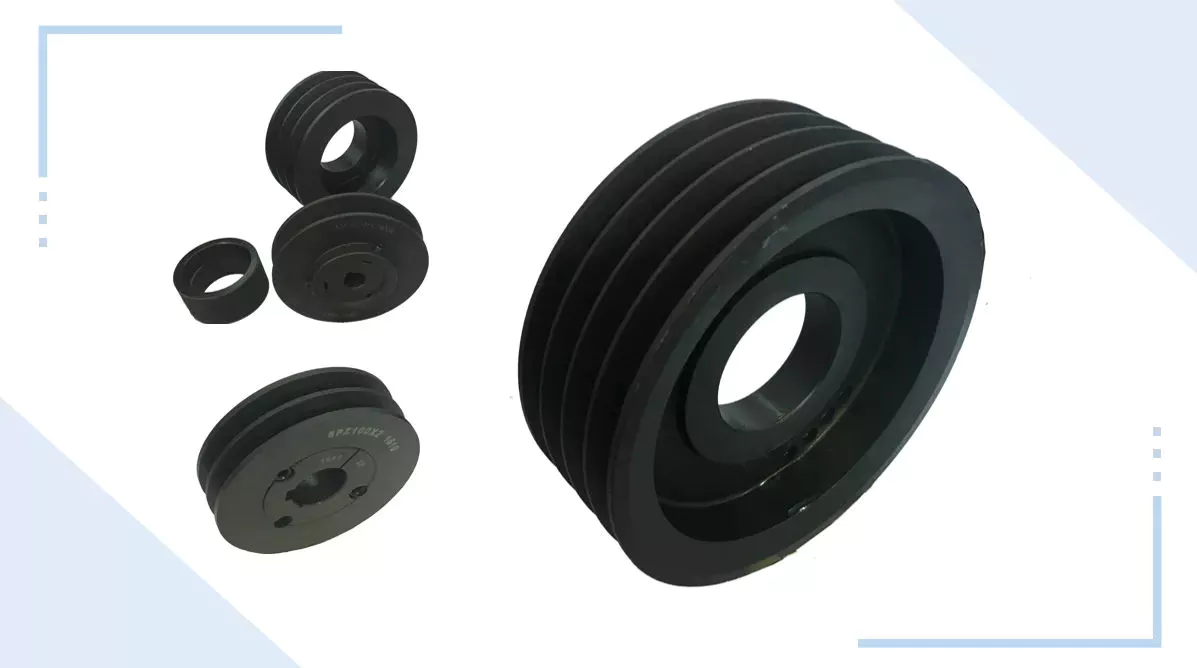
Basic equations of pulley systems
A pulley system is a mechanism that allows two blocks of a certain mass to be connected by a taut rope. The acceleration of each block is the same in magnitude and direction. The external force acting on each block is the weight of the block (10g) and the tension in the string. The tension between the two blocks is the total tension and the force acting on the pulley is the weight of the two blocks.
This simple mechanism uses two simple equations to explain how the system works. First, the mass of the weight on both sides of the pulley must be the same. When the weight is forced to move, the rope tightens and the second pulley descends. The weight is also attached to the second pulley and must be the same distance as the first pulley. This will result in a speed ratio of 2 times the distance covered by the first pulley.
Second, we have to calculate the force required to lift the object. The lower mass is supported by a wire configuration passing through all pulleys, while the uppermost pulley is used to apply the force. The lower block is used to support the weight. The applied force needs to travel a distance nx to move the weight. This distance, called MA, can be written as:
Once we have gathered the necessary information, we can apply the calculations to the pulley system. We can also use the Mechanical Advantage Calculator to calculate the force on the anchor. To do this, we must apply a force to the load as well as to the pulley itself. Using this equation, we can calculate the force required by the load to lift the load.
Types of pulleys
There are three basic types of pulleys: movable, fixed and compound. Both types of pulleys translate the force applied to them. The ideal mechanical advantage of pulleys is two. This is because a single movable pulley only doubles the force, whereas a compound pulley doubles or triples the force. This type of pulley is often used with other types of pulleys.
Movable pulls move with the weight of the load, and the force pulling them increases on the lift side. They are often found in utility elevators and construction cranes. These systems are very simple, inexpensive and quiet to use. The force required to lift the object depends on the mechanical advantage of the system. The two most common types of pulleys are listed below. Let’s take a closer look at each one.
V-shaped pulleys are used in vehicles and electric motors. These pulleys require a “V” belt to function properly. Some have multiple “V” grooves to avoid slipping. They are used in heavy duty applications to reduce the risk of power slip. These pulleys also have more than one “V” groove. V-belt pulleys are commonly used in vehicles and electric motors.
Composite pulleys are made from more than one type of cable or rope wrapped around the wheel. They can be fixed or hinged and are usually made of stainless steel or bronze. Composite pulleys have multiple layers and can be a single unit or many different components. There are three main types of pulleys: fixed pulleys and composite pulleys. These are the most common types. Almost every type of pulley is used for some type of application.
Fixed pulleys have one advantage over movable pulleys: they change direction as the weight of the load increases. They are typically used in heavy construction equipment. Gun tackles, patio tackles, and stationary tackles are examples of equipment that use a pulley mechanism. These devices are very common and can be found on most modern construction sites. They provide great convenience for lifting large loads.
application
What are the applications of pulleys? Simply put, a pulley is a mechanical device that transforms a difficult task into an easier one. It consists of ropes and pulleys. It is usually used to lift objects. Usually, people wrap a rope around a pulley and pull up to lift the object. One disadvantage of using pulleys is that they require the same force as lifting the object directly.
One of the most popular applications of pulleys is lifting heavy objects. They help people pull up heavy objects and blocks. The system can also be used in seeders, lifts, grinders, etc. Other applications include raising flags, loading cargo, pulling curtains and rock or mountain climbing. Students can learn about the various uses of pulleys and the physics behind them.
Pulleys can be made of many different materials, depending on the application. Some are movable, which means they move with the object they are used to lift. This pulley system can be made of nylon, wire rope or fiber material. The best part about these systems is that they are easy to install and maintain. For a better grasp, use the guide or video tutorial to learn more about the pulley system and how it works.
Tapered pulleys are common in paper mills. They are high-quality pulleys that transmit power to connected parts. They can be dynamic or static and have different balances. Because pulley systems are highly customized, most industrial applications require systems designed specifically for specific applications. In this way, the system is safe, simple and inexpensive. The benefits of this design are endless.
The most common use of pulleys is for motor drives. They are used to minimize noise by applying force to the shaft to reduce the workload. They are also less expensive than gears and do not require lubrication. Furthermore, they can change the direction of the applied force. They are also less expensive than gears and are often used with other components. A screw is a cylindrical member with helical ribs used to connect something.
shortcoming
Although the pulley system makes it easier to move heavy objects, it still has some drawbacks. When using a pulley system, you must remember that the force required to lift the weight increases with the number of cycles. In addition, the distance between the puller and the heavy object increases, which may lead to accidents. Also, moving heavy objects can be tricky if the rope slips. Pulley systems are not very expensive and can be easily assembled. However, it does require a lot of space.
First, it is not efficient. Besides being inefficient, pulleys produce different forces at different speeds. Fixed pulleys use more force than the load, while movable pulleys move with the load. A movable pulley requires less force than a fixed pulley, but the combined system travels a long distance. Therefore, this method is not as efficient as the fixed method.
Pulleys are not only used in industrial processes. You can see them in various places in your daily life. For example, large construction cranes use pulleys to lift heavy loads. Even flagpoles, blinds, clotheslines, ziplines, motors and climbing equipment use pulleys. Still, despite their advantages, the disadvantages are not too serious.
Another disadvantage of the pulley is its wear and tear. While a pulley’s housing is theoretically infinite, its bearings and locking components typically wear out over time. To overcome this problem, a new bearing and locking assembly can be installed. No need to replace the housing and shaft, the entire assembly can be re-bonded and painted to replicate the original look. Alternatively, the pulley can be replaced with a new housing and shaft.
Using pulleys can also reduce the advantage of pulleys. On the other hand, interception and tackle is a system in which two pulleys are connected to each other using ropes. Unlike pulleys, pulley pulley systems can be adjusted in the direction of travel and can move heavy loads up to four times their force when used in hydraulic lifts.

